
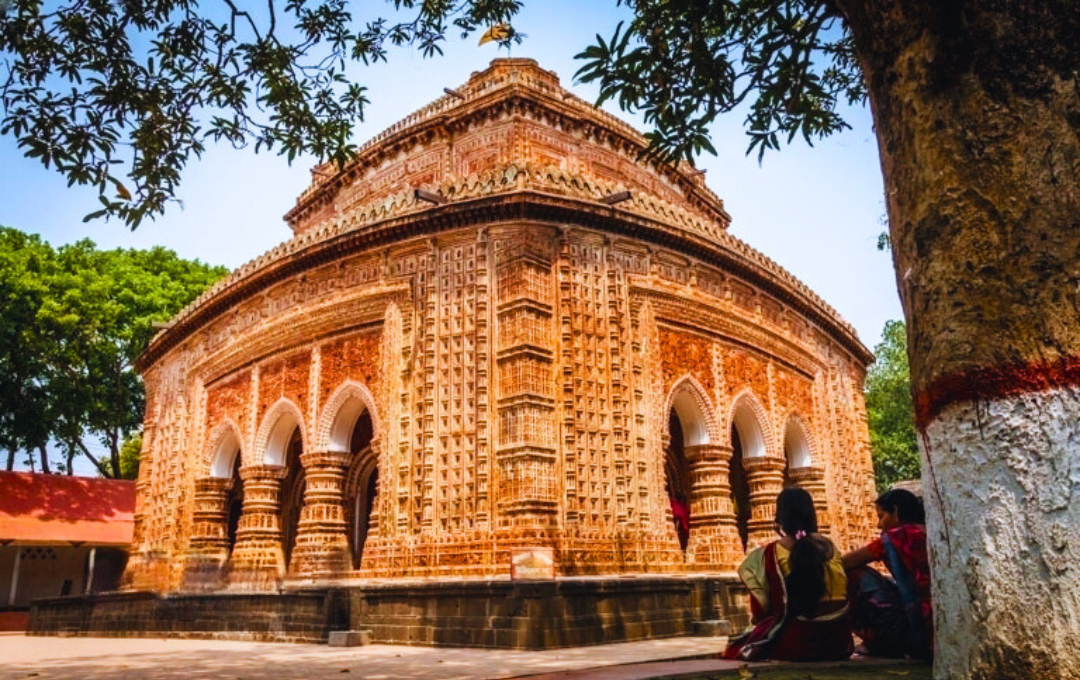
Kantaji Temple, also called Kantajew Temple or Kantanagar Temple, is an 18th-century Hindu temple in Kantanagar village, about 19 km north of Dinajpur town in Bangladesh. It is dedicated to Krishna and Rukmini, and it is famous for about 15,000 terracotta plaques that cover its walls. Maharaja Pran Nath began the temple in 1704, and his son Raja Ramnath finished it. It once had nine spires, but an earthquake destroyed them in 1897.
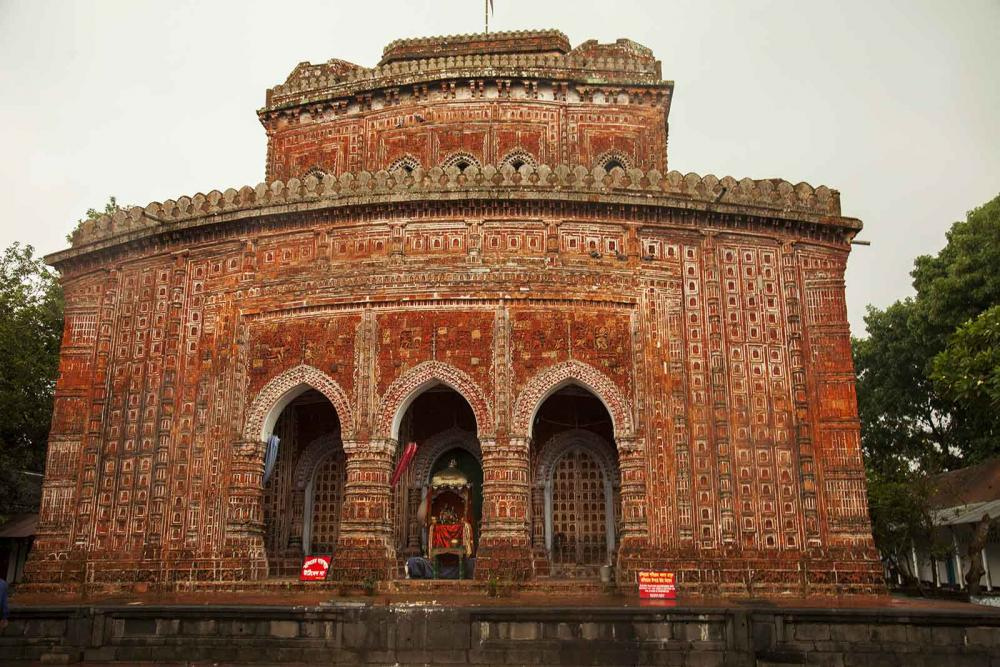
Walk across the lawn at Kantaji Temple and your eyes do not know where to stop. Every wall, every pillar and every arch is covered in tiny baked-clay pictures: dancing figures, battle scenes, flowers, birds, ships and village life. Hundreds of years ago, craftsmen pressed each one by hand, and it still tells stories to anyone who looks closely. For lovers of heritage and art, Kantaji Temple is one of the finest terracotta temples in South Asia.
Kantaji Temple at a Glance
- Also known as: Kantajew Temple, Kantanagar Temple, Kantojir Mondir
- Location: Kantanagar, Dinajpur District, Rangpur Division, about 19 km north of Dinajpur town
- Deities: Krishna and Rukmini
- Built: Begun in 1704 by Maharaja Pran Nath and finished by Raja Ramnath
- Style: Nava-ratna (nine-spired) terracotta temple on a high platform
- Terracotta plaques: About 15,000
- Festival: Rash Purnima, in the month of Agrahayan
- Status: On Bangladesh’s UNESCO tentative list
A Divine Dedication: Krishna and Rukmini
Kantaji Temple honors the divine love of Lord Krishna and his consort Rukmini. Maharaja Pran Nath of Dinajpur began it in 1704, and his son Raja Ramnath completed it. Dates vary by source. The Daily Star and several other sources give 1722 as the end of construction, while others point to an inscription that records the dedication in 1752. Pran Nath died in 1722, so it is likely that the main temple was finished under his son. The temple shows the devotion of two generations of Dinajpur’s ruling family.
A Tragic Earthquake and Architectural Splendor
The temple was built in the nava-ratna (nine-jewel) style. It had three storeys and was crowned by nine ornamental towers, or “jewels”, which made it look like a grand chariot resting on a high platform. In 1897, a powerful earthquake brought down all nine spires. The temple was repaired later, and Maharaja Girijanath Roy Bahadur, a descendant of Pran Nath, spent a lot of money on it, but the spires were never rebuilt, according to Nijhoom. Even without its towers, the raised platform and the stepped design still make a strong impression.
Terracotta Tales
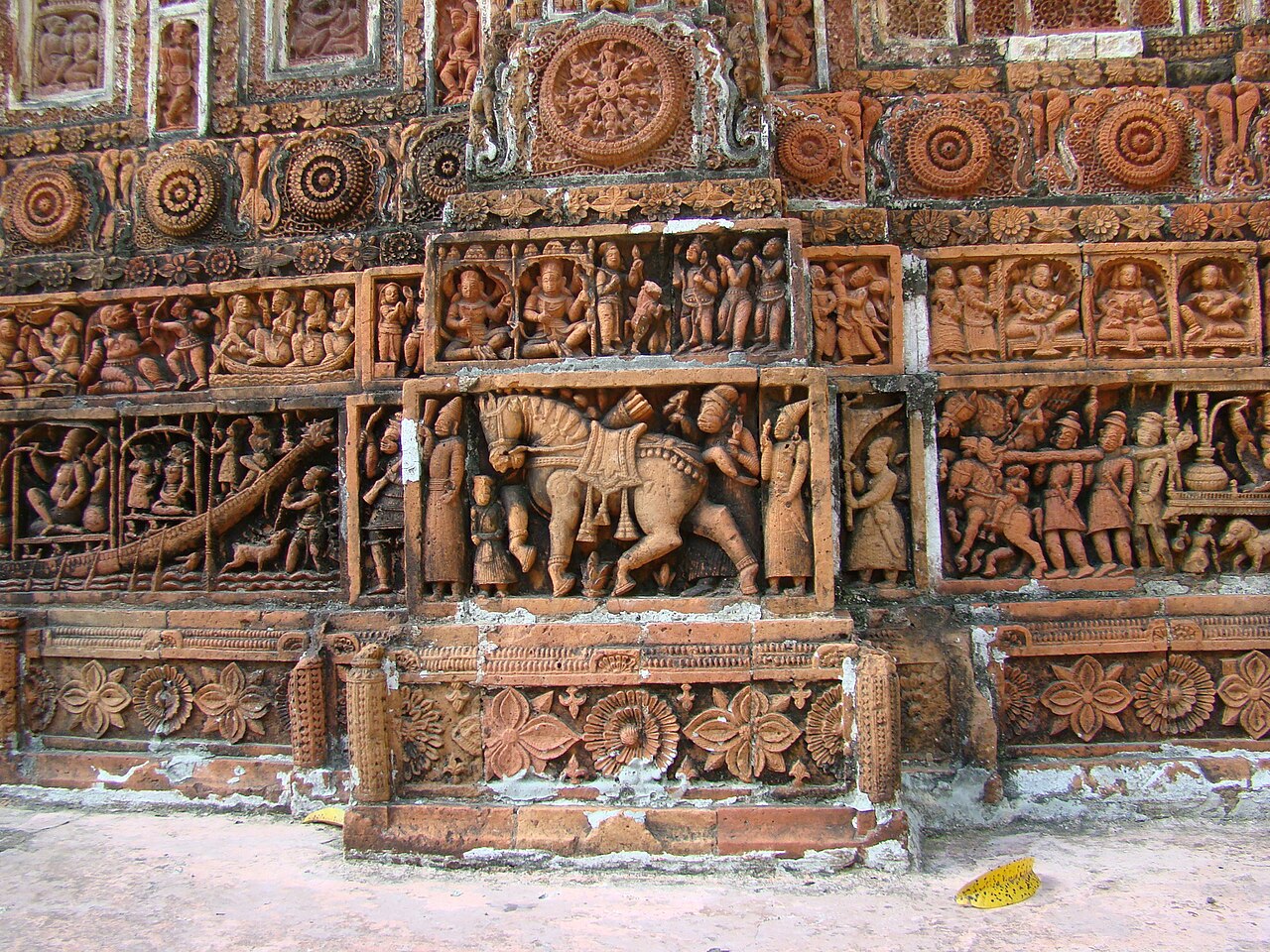
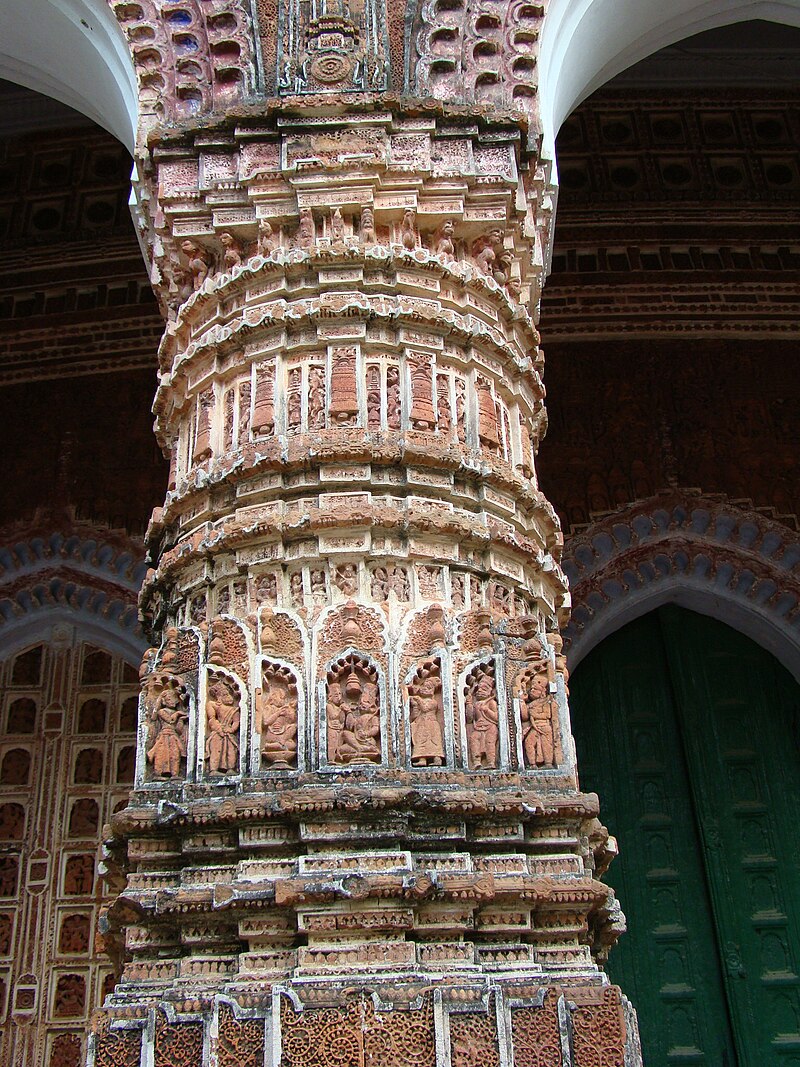
The real glory of Kantaji Temple is its terracotta. The Daily Star says that the walls carry more than 15,000 terracotta plaques showing scenes from the Ramayana and Mahabharata. The panels also show flowers, birds and animals, geometric patterns and scenes of everyday life from the time. Almost every surface of the temple, inside and out, carries some decoration.
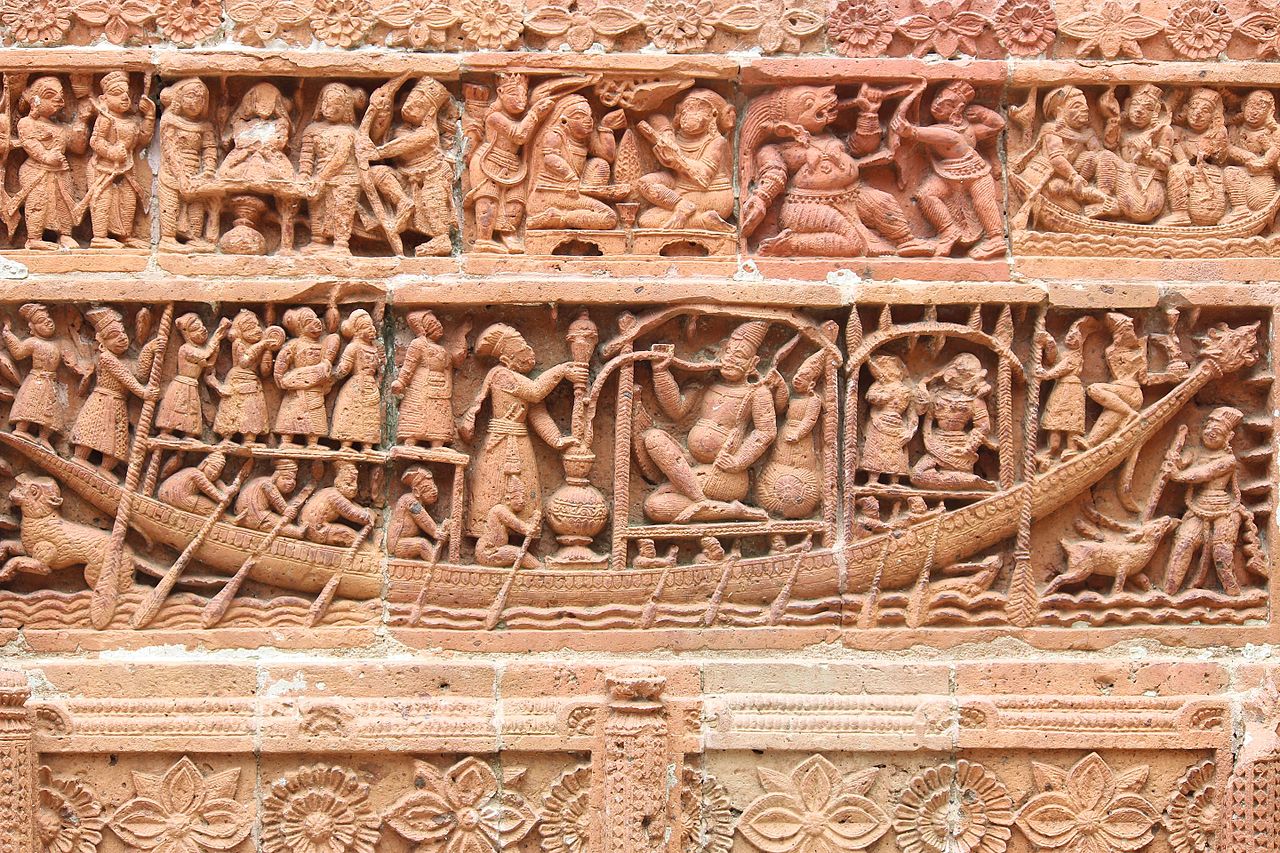
Kantaji Temple also shows how Bengal’s builders mixed styles. According to Wikipedia, its multi-faced corner towers rise above merloned parapets, and its domes show a phase of transition in design. If you love terracotta, you can compare it with the temples of Puthia in Rajshahi and the Chanchra Shiva Temple in Jashore, and read more about traditional arts and crafts in Bangladesh.
Preserving a Heritage
Kantaji Temple is a national heritage site, and the Department of Archaeology looks after it. Conservation and repair work have helped keep the terracotta from fading away, but weather, age and the crowd of visitors are a constant threat. If you visit, please do not touch the plaques, do not climb on the walls and take your litter with you.
UNESCO Status: On the Tentative List
Kantaji Temple is not a UNESCO World Heritage Site, although some pages say it is. It has been placed on Bangladesh’s tentative list for World Heritage nomination, which means it is being considered for the future, as Nijhoom explains. The tentative listing is still a sign of its value, and it puts the temple on the global map.
Festivals and Visiting Kantaji Temple
The biggest event at Kantaji Temple is the Rash Purnima festival. The Daily Star reports that devotees and heritage lovers gather every year at the start of the month of Agrahayan, in late autumn. Check our festivals and events page and local sources for the exact dates, since they follow the lunar calendar.
Kantaji Temple is a little over a kilometer off the main highway, across the Dhepa River, so allow time for the last stretch by rickshaw or van. Dress modestly and respect worshippers. Opening hours and entry rules can change, so confirm them locally. Make a day of Dinajpur: you can also visit the Archana Temple, Dinajpur Palace, Ramsagar and Mata Sagar, as the Daily Star suggests. The Nayabad Mosque nearby is reputedly built by the temple’s own architects. For more heritage places, browse our religious places, historical sites and archaeological sites. In the same division, see the Chini Mosque in Saidpur. Read our tips on local transport before you set out.
Frequently Asked Questions About Kantaji Temple
What is Kantaji Temple?
Kantaji Temple, also called Kantajew Temple or Kantanagar Temple, is an 18th-century Hindu terracotta temple in Dinajpur, Bangladesh, dedicated to Krishna and Rukmini.
Who built Kantaji Temple?
Maharaja Pran Nath began Kantaji Temple in 1704, and his son Raja Ramnath completed it.
Where is Kantaji Temple located?
Kantaji Temple is in Kantanagar village, about 19 km north of Dinajpur town in Rangpur Division, a little over a kilometer off the highway, across the Dhepa River.
How many terracotta plaques does Kantaji Temple have?
Kantaji Temple has about 15,000 terracotta plaques, showing scenes from the Ramayana and Mahabharata, plants, animals and everyday life.
What happened to the nine spires of Kantaji Temple?
An earthquake in 1897 destroyed all nine spires. They were never rebuilt.
Is Kantaji Temple a UNESCO World Heritage Site?
No. Kantaji Temple is on Bangladesh’s tentative list for UNESCO World Heritage nomination, but it is not yet an inscribed World Heritage Site.
When is the Rash Purnima festival at Kantaji Temple?
The Rash Purnima festival takes place every year around the start of the month of Agrahayan, in late autumn. The exact date follows the lunar calendar.
Final Thoughts on Kantaji Temple
Kantaji Temple is a quiet masterpiece. Its towers may be gone, but its walls still speak in thousands of small clay voices. Take your time, bring a camera, and let the stories unfold one plaque at a time. For more ideas, explore our places to visit in Bangladesh, our Places to Visit stories and our travel experiences.