
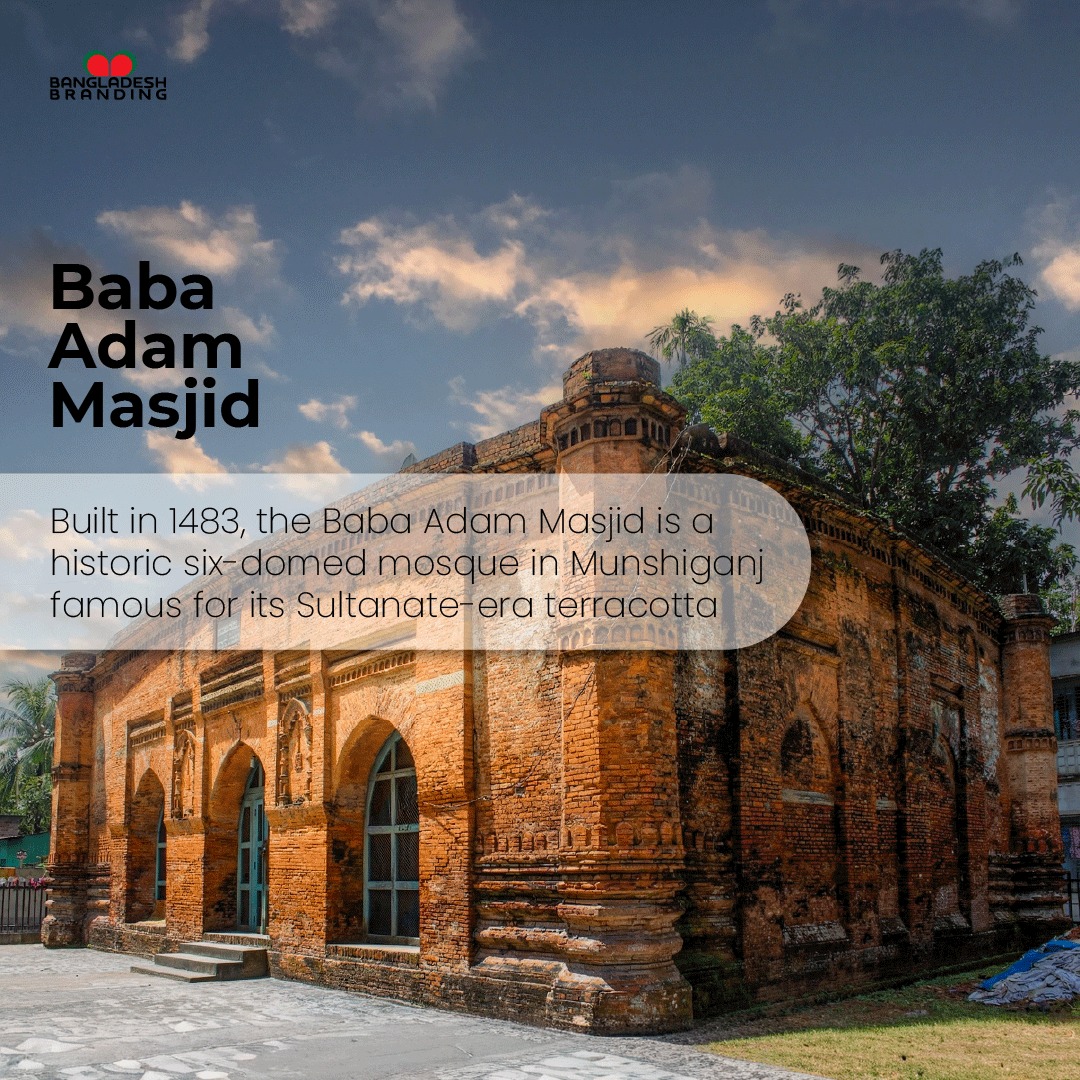
The Baba Adam Mosque is one of the most significant archaeological treasures of Bangladesh. Built in the late 15th century, it stands as a symbol of the transition from the Sultanate era to the early spread of Islam in the Bengal delta. Located in the village of Qadi Qasbah (Dargah Bari), Munshiganj, it is a masterpiece of pre-Mughal terracotta architecture.
Read More: The Pagla Mosque
Historical Background: The Legend of Baba Adam Shahid
The history of this mosque is intertwined with the legendary Sufi saint, Baba Adam Shahid.
- The Arrival: According to local lore, Baba Adam came from Mecca in the 12th century (c. 1173–1178 AD) during the reign of King Ballal Sena. He came to protect local Muslims who were being persecuted for practicing their faith.
- The Battle: A fierce battle took place between the King’s forces and the Sufi saint’s followers at Kanai Chang. It is said that the saint was martyred during the battle, but the King and his family eventually perished in a ritual fire (Agnikunda) due to a tragic misunderstanding involving a carrier pigeon.
- The Construction: Centuries after the saint’s death, in 1483 AD (888 Hijri), this mosque was built near his tomb by Malik Kafur during the reign of Sultan Jalaluddin Fateh Shah.
Architectural Marvel: A “Fortress” Style Mosque
The mosque is a classic example of Sultanate architecture, characterized by its robust, windowless walls and intricate terracotta work.
- The Structure: It is a rectangular, six-domed mosque. The exterior measures 43 feet by 36 feet.
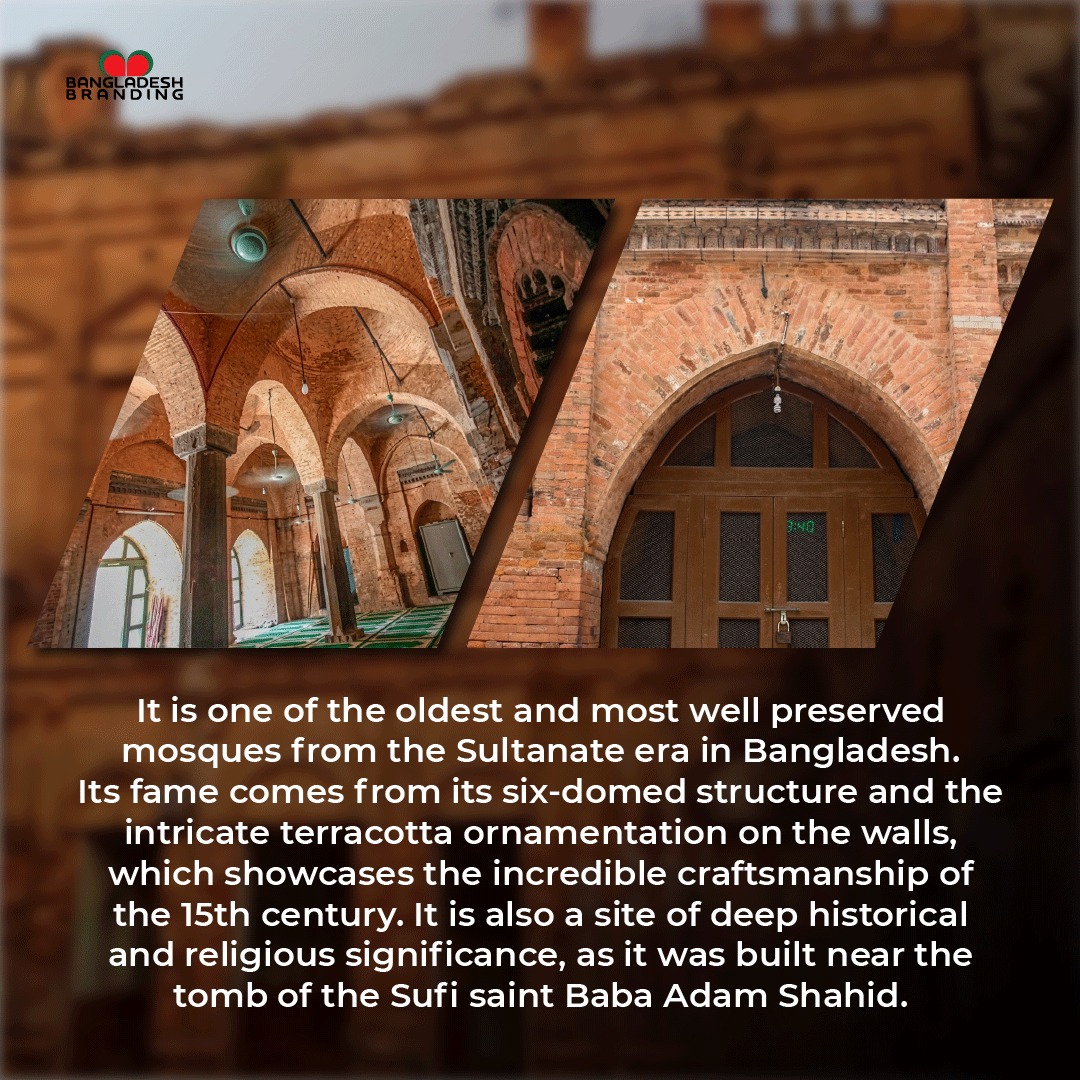
- Six Identical Domes: The roof is covered by six hemispherical domes supported by two massive black basalt pillars in the center. These pillars divide the interior into two aisles and three bays.
- Thick Walls: The walls are nearly 4 feet thick, giving the mosque a fortress-like appearance. This thickness helps keep the interior cool in summer and warm in winter.
- Terracotta Art: The facade and the mihrabs (prayer niches) are decorated with exquisite terracotta designs, including floral patterns, hanging chain motifs, and geometric shapes.
- No Minaret: Following the early Sultanate style, the mosque does not have a traditional minaret; instead, it has four octagonal corner towers that do not rise above the roofline.
Present Situation
- Active Worship: Unlike many archaeological sites, Baba Adam Mosque is still an active place of worship where locals perform five daily prayers.
- Preservation: It has been a protected monument under the Department of Archaeology since 1948. While the main structure is well-preserved, modern additions like a concrete courtyard have been made to accommodate more worshippers.
- National Recognition: In 1991, the Bangladesh Post Office issued a commemorative postage stamp featuring the image of this mosque, acknowledging its historical status.
Travel Guideline: How to Visit
Munshiganj is very close to Dhaka, making it an ideal day-trip destination.
Dhaka to Munshiganj
- By Bus: Take a bus from Gulistan or Jatrabari (e.g., Dighirpar Paribahan) headed for Munshiganj. Get off at Mukterpur Bridge.
- By Water: Take a launch from Sadarghat to Munshiganj Launch Ghat. This is a scenic and traffic-free route.
- From Mukterpur or the Munshiganj Launch Ghat, take an auto-rickshaw (Easy-bike) to Sipahipara.
- From Sipahipara, take another short rickshaw ride to Dargah Bari (Qadi Qasbah village). Locals simply call it “Baba Adam Masjid.”
Pro-Traveler Tips
- What to Eat: Don’t miss the famous Fortune sweets or Chittar Doi (curd) of Munshiganj.
- Nearby Attractions: You can combine this visit with the Idrakpur Fort, Jagadish Chandra Bose Memorial Museum, and the Bhagyakul Zamindar Bari.
- Best Time: Visit during the winter months (November to February) for comfortable weather.