
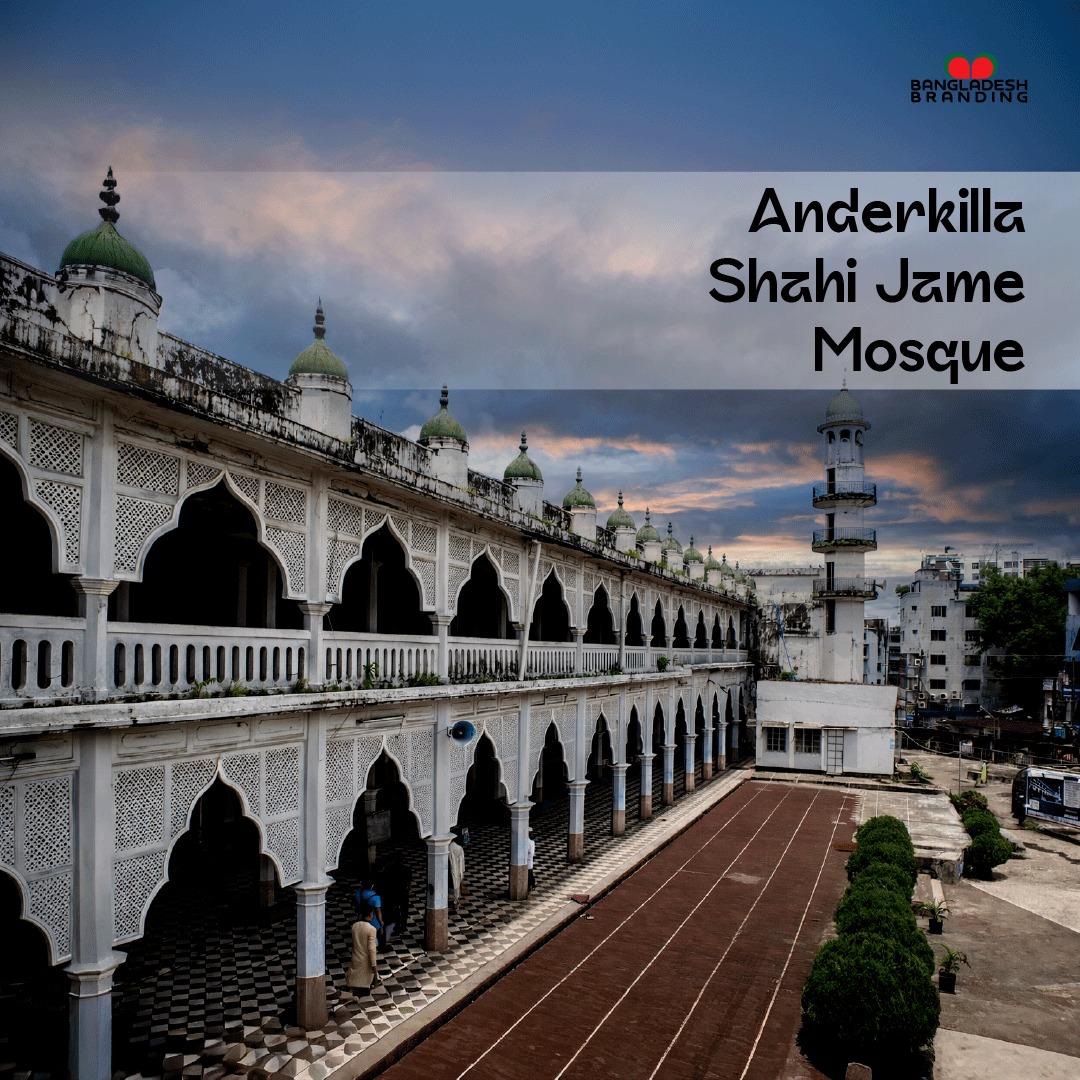
Perched atop a 30-foot hill in the heart of Chattogram, the Anderkilla Shahi Jame Mosque is more than just a place of worship; it is a grand monument of victory. Built in 1667 AD, this mosque marks the Mughal conquest of the region and remains the spiritual epicenter for the people of Chattogram.
Read More: The 201 Dome Mosque
History: The Legend of the “Inner Fort”
The name Anderkilla (meaning “Inner Fort”) originates from the Mughal victory over Magh and Portuguese pirates.
- The Conquest: On January 27, 1666, Buzurg Umed Khan (son of the Subahdar of Bengal, Shaista Khan) breached the pirates’ fortress. To commemorate this victory, Emperor Aurangzeb ordered the construction of a magnificent mosque on the site of the fort.
- The Dark Era: In 1761, the British East India Company seized the mosque and used it as a magazine (ammunition store) for nearly 94 years.
- The Reopening: It was only in 1855, after a persistent legal battle led by the local landlord Hamidullah Khan, that the mosque was returned to the Muslim community for prayer.
Architecture: The “Stone Mosque” of Bengal
The mosque is famously known as “Jame Sangin” (The Stone Mosque) because of the extensive use of massive stones in its construction, mimicking the style of the Great Jama Masjid of Delhi.
- Structure: The original building is 16 meters long and 6.9 meters wide, with incredibly thick walls (2.2 meters).
- The Domes: The roof features one large central dome flanked by two smaller ones, a classic Mughal signature.
- The Inscription: At the entrance lies a Persian stone plaque. Its famous translation reads:
“O wise man, tell the people of the world, today a Second Kaaba has been established in this world.”
- Materials: Uniquely, the western wall is made of burnt clay, while the other three walls are crafted from solid stone.
- The Hilltop View: The mosque is situated 30 feet above the surrounding ground level, offering a commanding view of the Anderkilla circle.
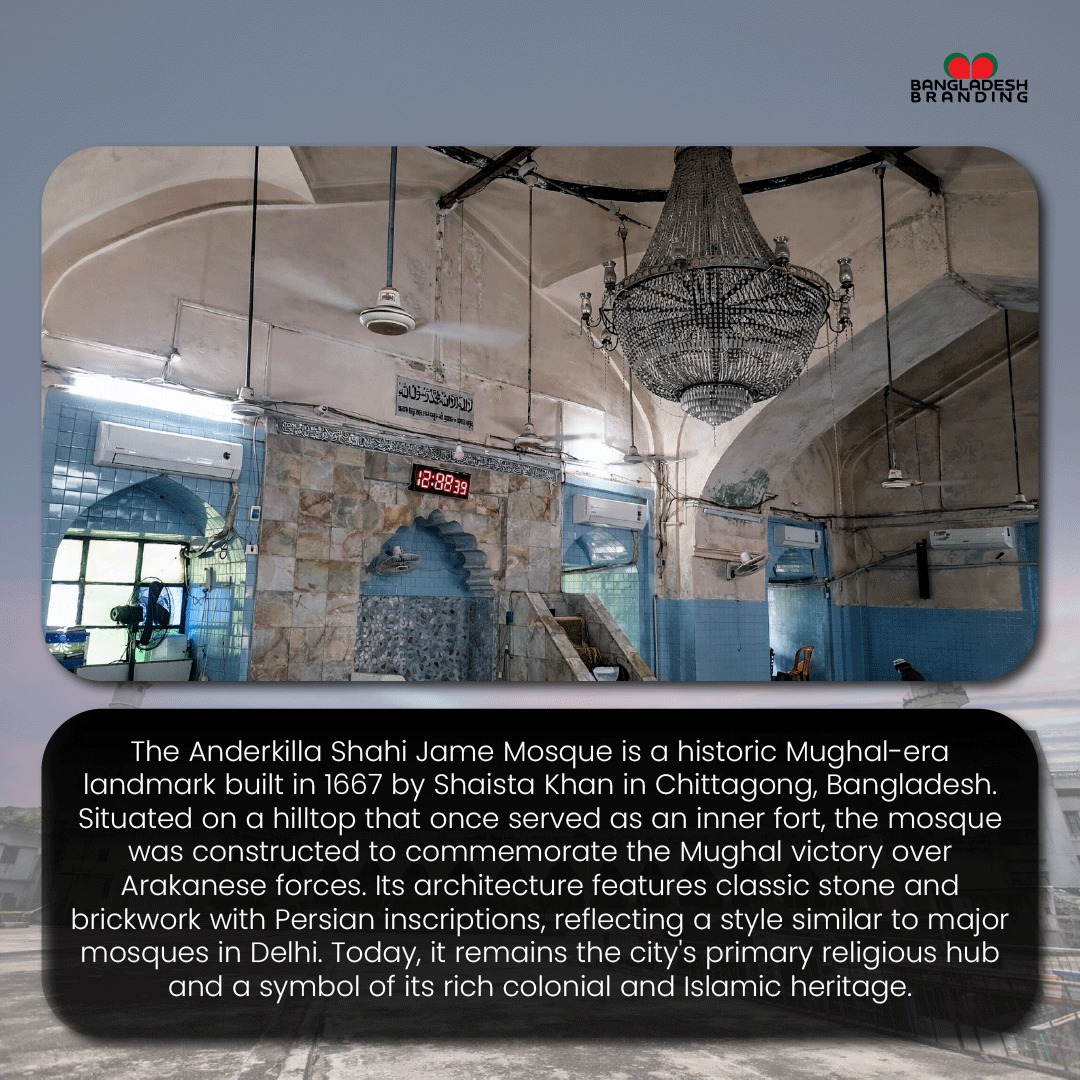
Cultural Significance: The Spiritual Hub
- The Tradition of Imams: Historically, the Khateebs (Head Imams) of this mosque were often appointed from the lineage of the Prophet (Aulad-e-Rasool) from Madinah, a tradition that carries immense respect.
- The Mass Iftar: For over 25 years, the mosque has hosted one of Bangladesh’s largest “Gono Iftars” (Mass Break-fast), where nearly 5,000 people from all walks of life sit together daily during Ramadan.
- The Decision Maker: To this day, the sighting of the Moon for Eid and Ramadan at Anderkilla is the final word for the residents of Chattogram.
How to Visit
Anderkilla is located in the busiest part of Chattogram city.
- From Dhaka: You can take a bus (Green Line, Hanif, Desh), a train (Suborno or Sonar Bangla Express), or a flight to Chattogram.
- Local Transport: From the Chattogram Railway Station or Bus Stand (Dampara), take a CNG or a rickshaw to Anderkilla Circle. The mosque is visible from the main road, though partially hidden by markets.
Traveler Tips
- Best Time to Visit: Friday (Jummah) is a spectacular time to see the crowd (often exceeding 20,000 people), but for photography and quiet exploration, a weekday morning is better.
- What to Eat: While in Anderkilla, walk to the nearby Mezban Haile Ayun or Mezbanile to taste the authentic Chattogrami Mezban and Kala Bhuna.
- Nearby Spots: After visiting the mosque, you can explore Laldighi Maidan or head to Pattenga Sea Beach for the sunset (about 45 minutes away).
Present Situation
Managed by the Islamic Foundation Bangladesh, the mosque complex now spans over 2.4 acres. While a massive modernization project funded by Kuwait is in the pipeline, the original Mughal structure remains preserved as a protected heritage site.