
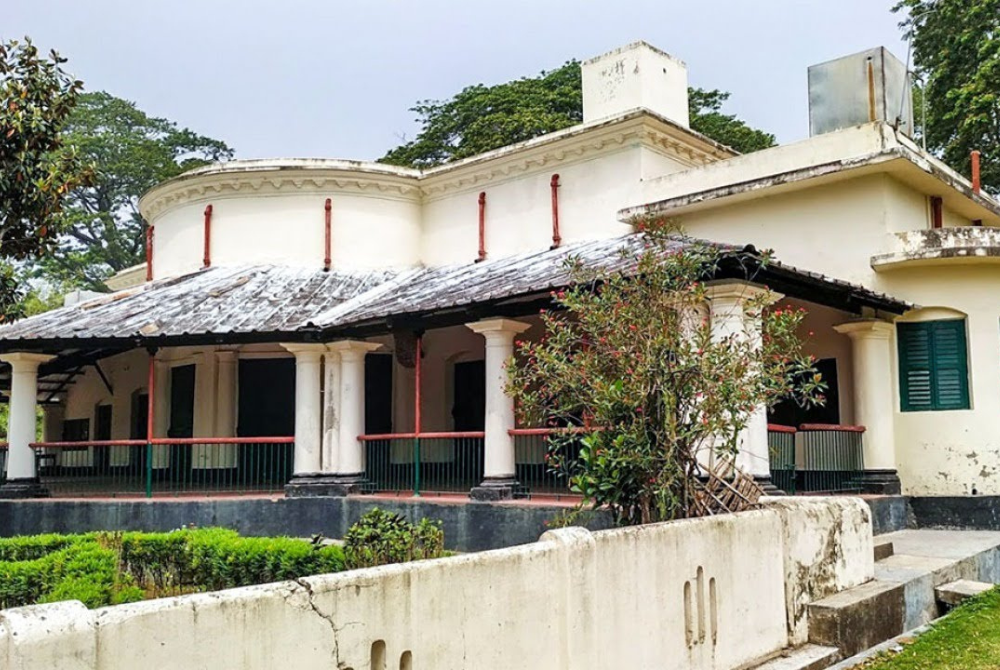
Amjhupi Nilkuthi is a protected indigo factory from the British colonial era in Amjhupi village, Meherpur Sadar Upazila, Khulna Division, about 7 km from Meherpur town. It stands on the bank of the Kajla River and is estimated to date from between 1800 and 1815. The building was a base for indigo planters, who forced farmers to grow indigo, and the site is remembered for torture and exploitation. A popular story says the Plassey conspirators met here in 1757, but historians reject it, because indigo factories did not yet exist in Bengal at that time.
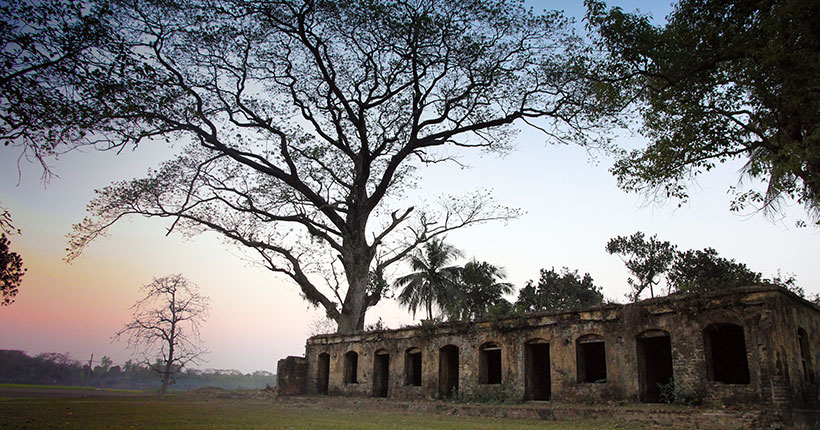
Many people drive past Amjhupi Nilkuthi on their way to Mujibnagar, and many stop for the quiet. Tall old trees shade a faded building, the Kajla River moves slowly nearby, and a plaque tells you what the place was. It is easy to find it beautiful. It is also important to remember that it was built on the labor and suffering of farmers who were forced to grow a crop they did not want. This guide covers its history, the Plassey myth, its link to 1971 and how to visit with respect.
Amjhupi Nilkuthi at a Glance
- Also known as: Amjhupi Neelkuthi, Aamjhupi Kuthi
- Location: Amjhupi village, Meherpur Sadar Upazila, Meherpur, Khulna Division
- Distance: About 7 km from Meherpur town, on the bank of the Kajla River
- Built: Estimated at 1800 to 1815 during the East India Company era, although some sources give other dates
- Purpose: An indigo factory and administrative base, later used as an office
- Status: Under the care of the Department of Archaeology
- Nearby: The Mujibnagar Memorial Complex and the ruined Bhatpara Neelkuthi
Amjhupi Nilkuthi: A Site with a Dark Past
Amjhupi Nilkuthi is one of the best-known archaeological sites of the English colonial period in Bangladesh. The word “nilkuthi” means a house or factory connected with indigo (neel). According to the Meherpur district portal, the building was erected for indigo cultivation on the Kajla River and was later used as an office of the East India Company, as The Financial Express has also reported. After British rule, a company from Midnapore was given charge of the factory, as BSS writes.
Amjhupi Nilkuthi stands for the harsh system of indigo planting. Planters forced farmers to grow indigo instead of food crops, and refusal could mean violence. The Meherpur district portal says Amjhupi Nilkuthi witnessed the exploitation by English planters, including Kenny, Simpson, James Heel, Fergun Crawford, Warts and Hamilton, among others. The wider anger against this system exploded in the Indigo Revolt of 1859 to 1860.
The Plassey Conspiracy Myth
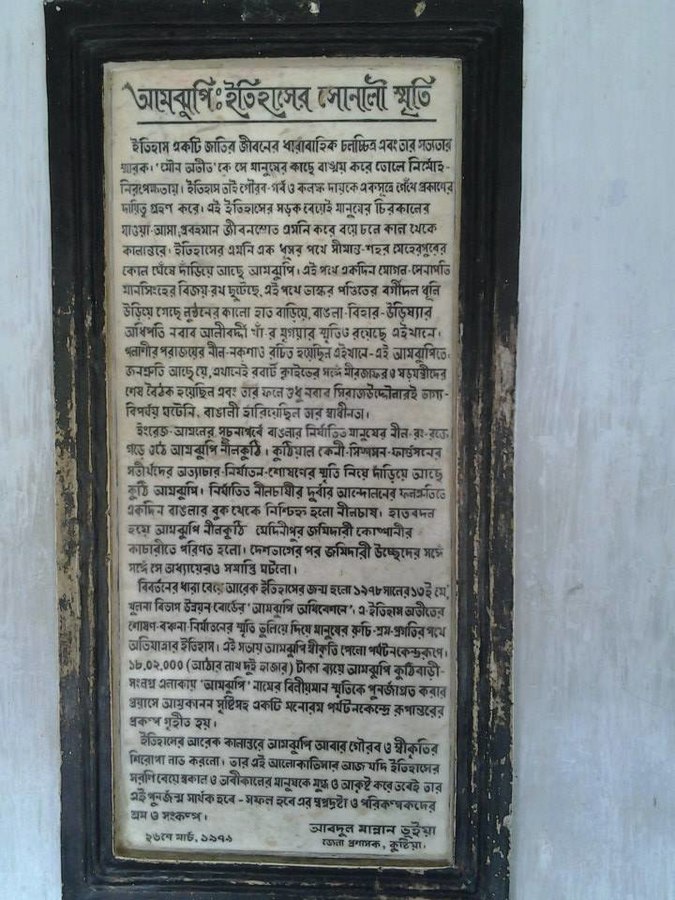
A popular story says that the conspirators against Nawab Siraj ud-Daulah held their last meeting at Amjhupi Nilkuthi before the Battle of Plassey. Local historians have rejected this, and the Meherpur portal and The Financial Express both call it untrue. The simple reason is timing. The Battle of Plassey took place on June 23, 1757. Indigo planting by European planters began in Bengal in 1777, when the French planter Louis Bonnaud started it, and the Meherpur factories came afterward. The ruined Bhatpara Neelkuthi in Gangni, for example, was built in 1778, according to Wikipedia. So Amjhupi Nilkuthi did not exist at the time of Plassey, and it could not have hosted figures such as Robert Clive, Mir Jafar or Rai Durlabh.
The local historian Aminul Islam also rejects the myth in his book on the history of Meherpur, and he points out that Amjhupi’s real dark history is its link to indigo, including accusations of murder, abduction and abuse.
Amjhupi in 1971
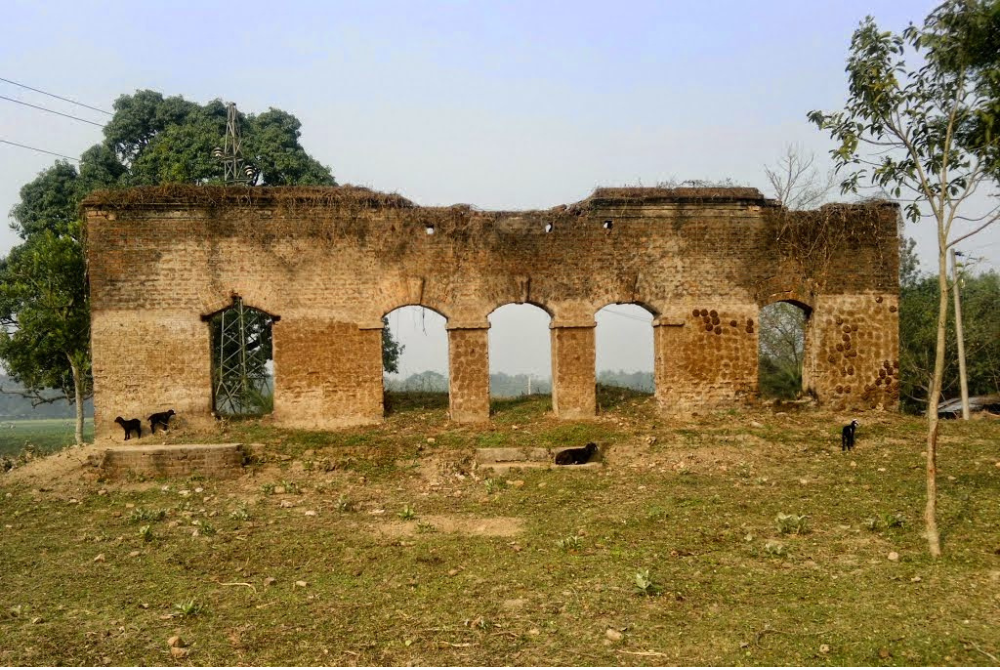
Amjhupi also appears in the story of the Liberation War. After the first government of Bangladesh was sworn in at Baidyanathtala (now Mujibnagar) in Meherpur on April 17, 1971, the Pakistani army killed eight people in Amjhupi village the next day, according to Banglapedia. The Mujibnagar oath-taking site, a short distance away, is a separate memorial and not part of the Nilkuthi. The old text that said the “government operated” from the Nilkuthi is not correct.
What You Can See at Amjhupi Nilkuthi
The main building is the center of Amjhupi Nilkuthi. Dhaka Tribune reports that the main building is under the supervision of the Department of Archaeology and that other indigo factories in Meherpur have already been destroyed. Reports describe a large compound with flower gardens, a building with many rooms and halls, and stone name boards in English and Bengali. Two indigo plants still grow in front of the building, and BSS says a young indigo plant is planted every year near the main building in remembrance.
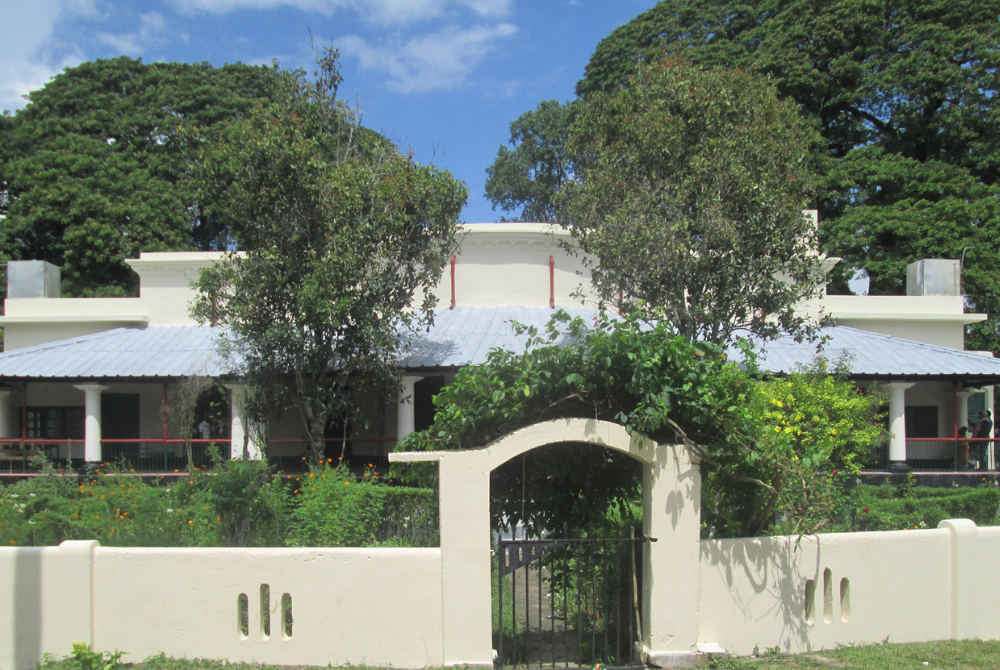
Sources disagree about the size of the Amjhupi Nilkuthi compound. Some reports give about 27 acres, while older web pages mention more than 77 acres, so please treat any figure as approximate. The riverside is also worth a look, and visitors often mention the brick steps that lead down toward the Kajla River.
Visiting Amjhupi Nilkuthi
Amjhupi Nilkuthi is about 7 km from Meherpur town. The Meherpur district portal suggests taking a bus or auto-rickshaw to the Amjhupi bus stop and walking about 830 meters to the Nilkuthi. Buses to Meherpur run from Dhaka, and the nearest airport is Jashore, about 110 km away, according to the portal. Winter is the most comfortable season for a visit. Opening hours and entry rules can change, so confirm them locally.
Treat Amjhupi Nilkuthi as a site of memory. Do not climb on walls, do not write on surfaces and take your litter with you. Nearby, you can visit the Mujibnagar Memorial Complex and the ruined Bhatpara Neelkuthi. Read our guide to Jashore District for a longer trip, and the story of another colonial-era landowning family in the Chanchra Shiva Temple post, or the zamindari remains of Magura District. You can also browse our historical sites and archaeological sites, and read our tips on local transport.
Frequently Asked Questions About Amjhupi Nilkuthi
What is Amjhupi Nilkuthi?
Amjhupi Nilkuthi is a British-era indigo factory in Amjhupi village, Meherpur, Bangladesh. It is now a protected archaeological site.
Where is Amjhupi Nilkuthi located?
It is in Amjhupi village, Meherpur Sadar Upazila, about 7 km from Meherpur town, on the bank of the Kajla River.
When was Amjhupi Nilkuthi built?
It is estimated to have been built between 1800 and 1815, during the East India Company era, although sources give some other dates.
Is it true that the Plassey conspirators met at Amjhupi Nilkuthi?
No. Historians reject the story. The Battle of Plassey took place in 1757, before European indigo factories were set up in Bengal.
What is a nilkuthi?
A nilkuthi, or neelkuthi, is a house or factory built by European planters for growing and processing indigo, which is called neel in Bengali.
How do you get to Amjhupi Nilkuthi?
Take a bus from Dhaka to Meherpur, then a bus or auto-rickshaw to the Amjhupi bus stop, and walk about 830 meters to the Nilkuthi.
What else can you see near Amjhupi Nilkuthi?
You can visit the Mujibnagar Memorial Complex, where Bangladesh’s first government was sworn in on April 17, 1971, and the ruined Bhatpara Neelkuthi in Gangni.
Final Thoughts on Amjhupi Nilkuthi
Amjhupi Nilkuthi is quiet, green and easy to walk through, and that is exactly why it deserves careful attention. It reminds us how a crop, a company and a system of force once ruled life in rural Bengal. Visit with respect, read the plaques and take the story home. For more ideas, explore our places to visit in Bangladesh, our Places to Visit stories and our travel experiences.