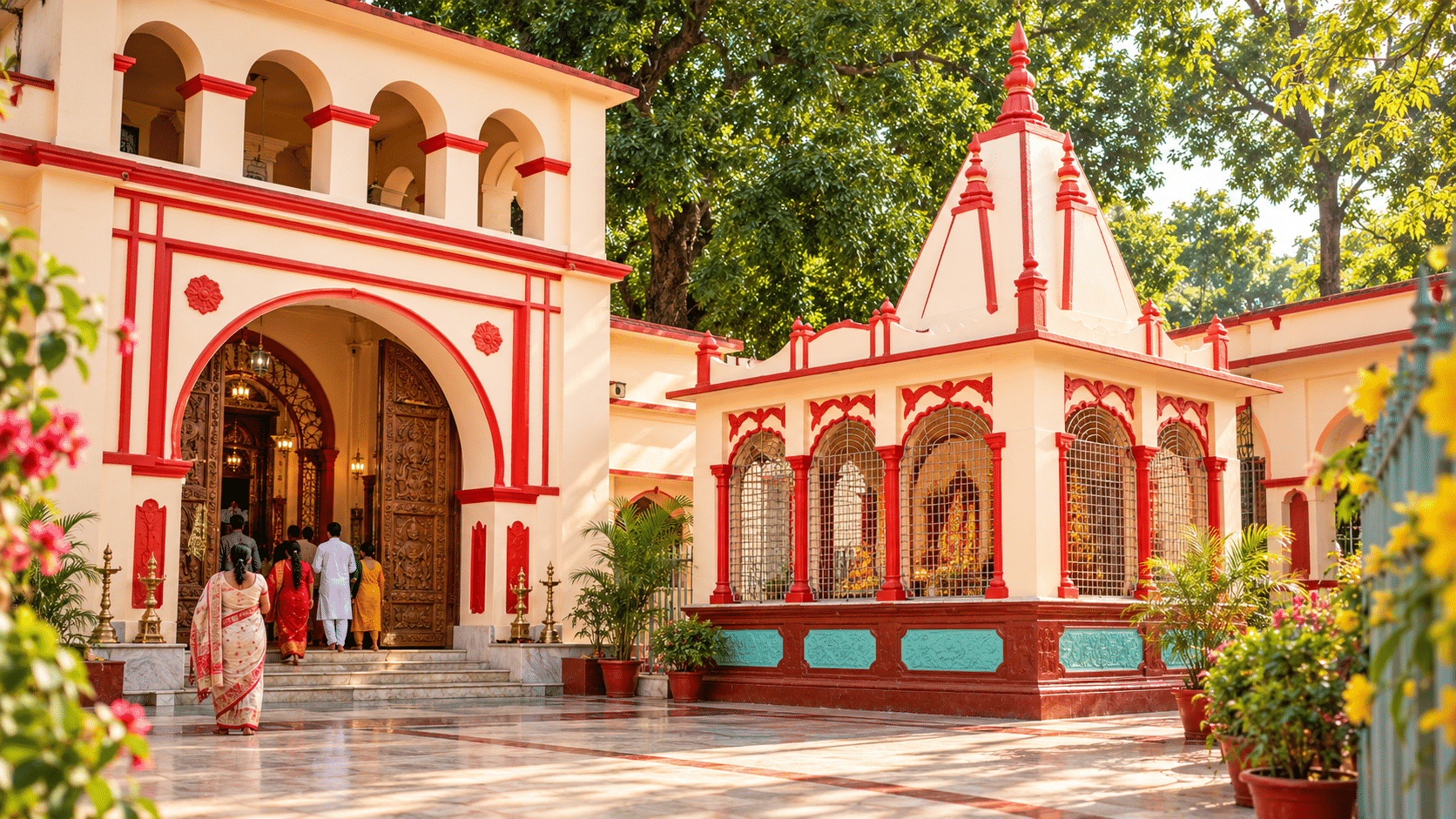
Dhakeshwari means “Goddess of Dhaka,” and according to the city’s own founding legend, that’s not a coincidence, popular tradition holds that Dhaka itself was named after the goddess enshrined here. Whether or not that’s literally true, Dhakeshwari National Temple has functioned as the center of Hindu religious and cultural life in the city for centuries, and it remains Bangladesh’s most important Hindu temple, formally designated the National Temple in 1996.
The temple’s origin story credits King Ballal Sen of the Sena dynasty with founding it in the 12th century, after reportedly discovering an idol of the goddess in a forest. Historians note that the current architecture doesn’t actually date that far back, the complex has been repaired, renovated, and rebuilt so many times over the centuries that it now reflects a genuine mix of periods and styles, including damage inflicted during the 1971 Liberation War that required significant later restoration.
Inside the compound, the main shrine to the goddess Dhakeshwari, worshipped as a form of Durga, sits alongside four smaller temples dedicated to Shiva, along with an open-stage Durga Temple used specifically for Durga Puja, Bengal’s largest Hindu festival. The complex becomes genuinely vibrant during major festivals, when devotees in colorful dress fill the courtyard and the temple becomes the focal point of citywide celebration.
Visitors are welcome throughout the day, with the temple closing briefly each afternoon. Modest dress and removing shoes before entering are expected, as at any active place of worship, and a small tip for shoe-minders is customary. The temple sits a short distance from Lalbagh Fort, making it an easy addition to an Old Dhaka heritage walk.