
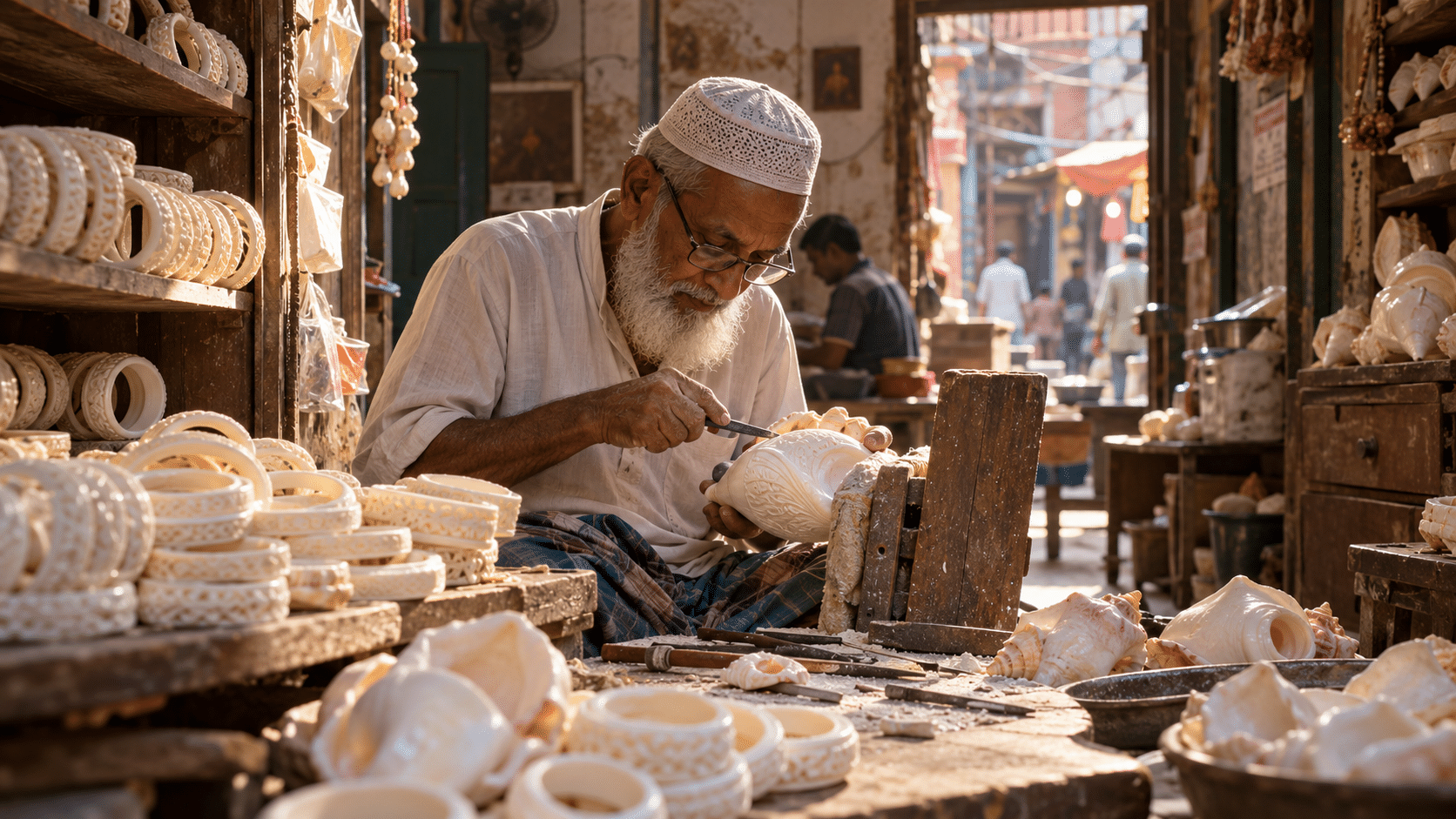
Shakhari Bazar is a single narrow street that has produced the same craft for roughly four hundred years. It takes its name from the Shakharis, artisans who carve and decorate shakha, ornate bangles cut from conch shells, worn by married Hindu women across Bengal as a symbol of their status. The community settled here during Mughal rule, and the trade itself may trace back even further, some accounts connect it to craft traditions from the 12th century.
Walking the street today means passing narrow, deep shophouses, many with 18th-century ground floors, where a shrinking number of artisans still hand-carve conch shells using techniques passed down through generations. A shankhari typically starts learning from a father or grandfather in childhood and spends years mastering the file work needed to carve flowers, peacocks, and scenes from Hindu scripture into shell surfaces using simple hand tools and a wooden easel called a terabari.
The craft has survived real disruption. Partition in 1947 emptied the street as Hindu artisans fled communal violence, and it took years of resettlement efforts before the trade recovered. Raw conch shells, once imported through Calcutta from South India and Sri Lanka, now come directly from Sri Lanka, and prices have risen dramatically, a batch of shells that cost a few taka in 1910 runs into the tens of thousands today.
What makes Shakhari Bazar worth visiting isn’t polish, it’s precisely the opposite. This is UNESCO-recognized intangible heritage practiced by perhaps only a handful of remaining artisans, in buildings that are themselves quietly disappearing to neglect and redevelopment. Visitors who come now are seeing something that genuinely might not exist in this form for much longer.