
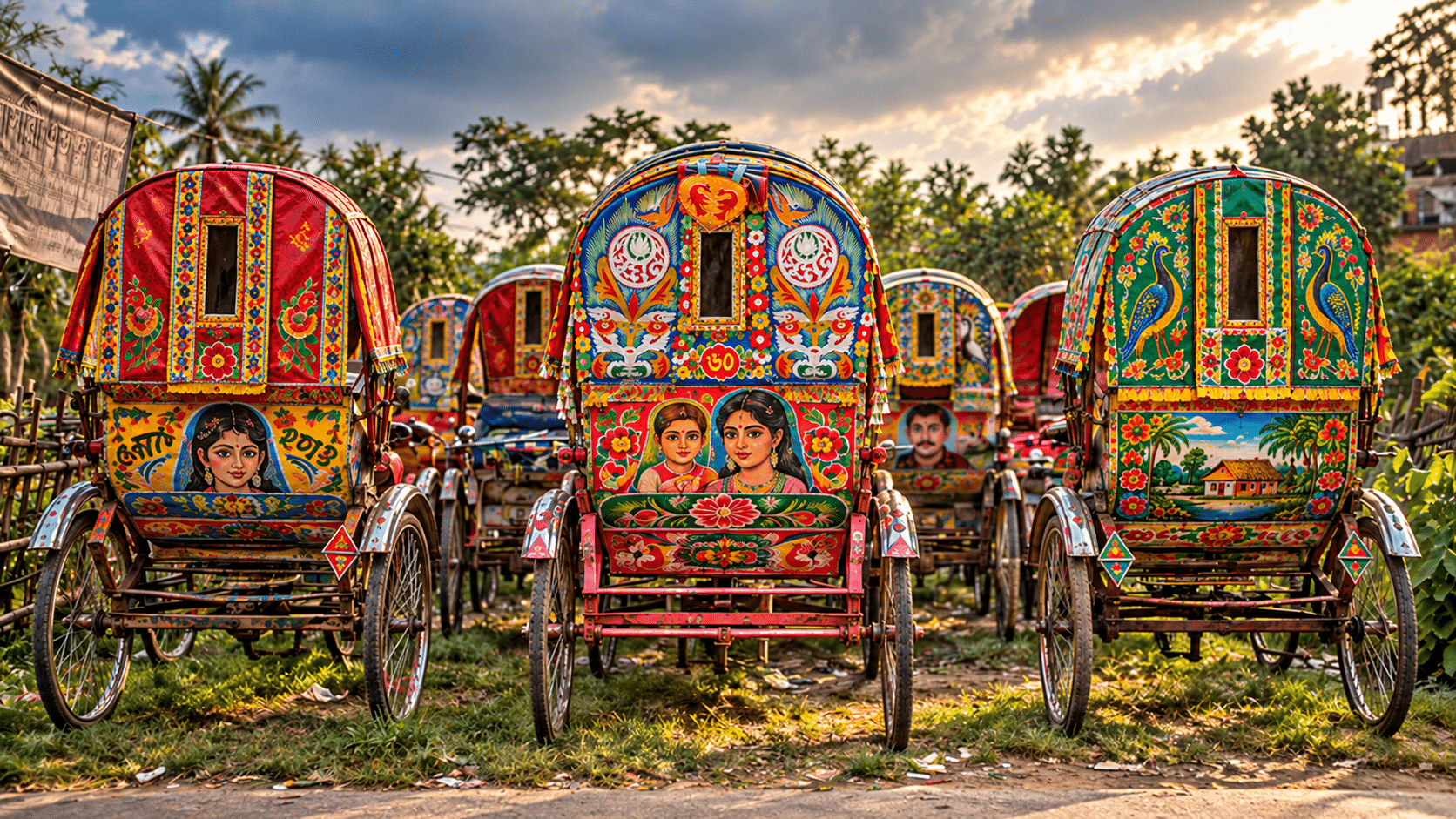
Bangladesh’s cycle rickshaws are rolling folk art, and Old Dhaka has more of them, more densely packed, than almost anywhere else in the country. Each rickshaw’s back panel and hood are hand-painted by local artists in a distinctive, vividly colored style, film stars, mythological scenes, flowers, tigers, imagined skylines, a genuine visual tradition that UNESCO recognized as intangible cultural heritage in 2023.
This experience is exactly what it sounds like: a slow walk through Old Dhaka’s narrow streets specifically to notice, photograph, and appreciate this art form most visitors walk past without a second glance. Good hunting grounds include the streets around Shakhari Bazar, Chawkbazar, and the lanes near Lalbagh Fort, wherever rickshaws queue or park between fares, giving you time to actually study the panels rather than catching a blurred glimpse as one passes.
It suits photographers and anyone with an eye for folk art specifically, casual sightseers may find the pace slower and more repetitive than a standard heritage walk. Midday light tends to be harsh and flat for photography; earlier morning or late afternoon gives better color and shadow. A polite request and a small tip go a long way if you want to photograph a specific rickshaw up close or ask the puller to pose, these are working vehicles and their owners appreciate being asked rather than just photographed.
This pairs naturally with almost any other Old Dhaka experience, since rickshaws are everywhere in the district regardless of your primary destination, it’s less a separate route than a lens to apply throughout an Old Dhaka day.