
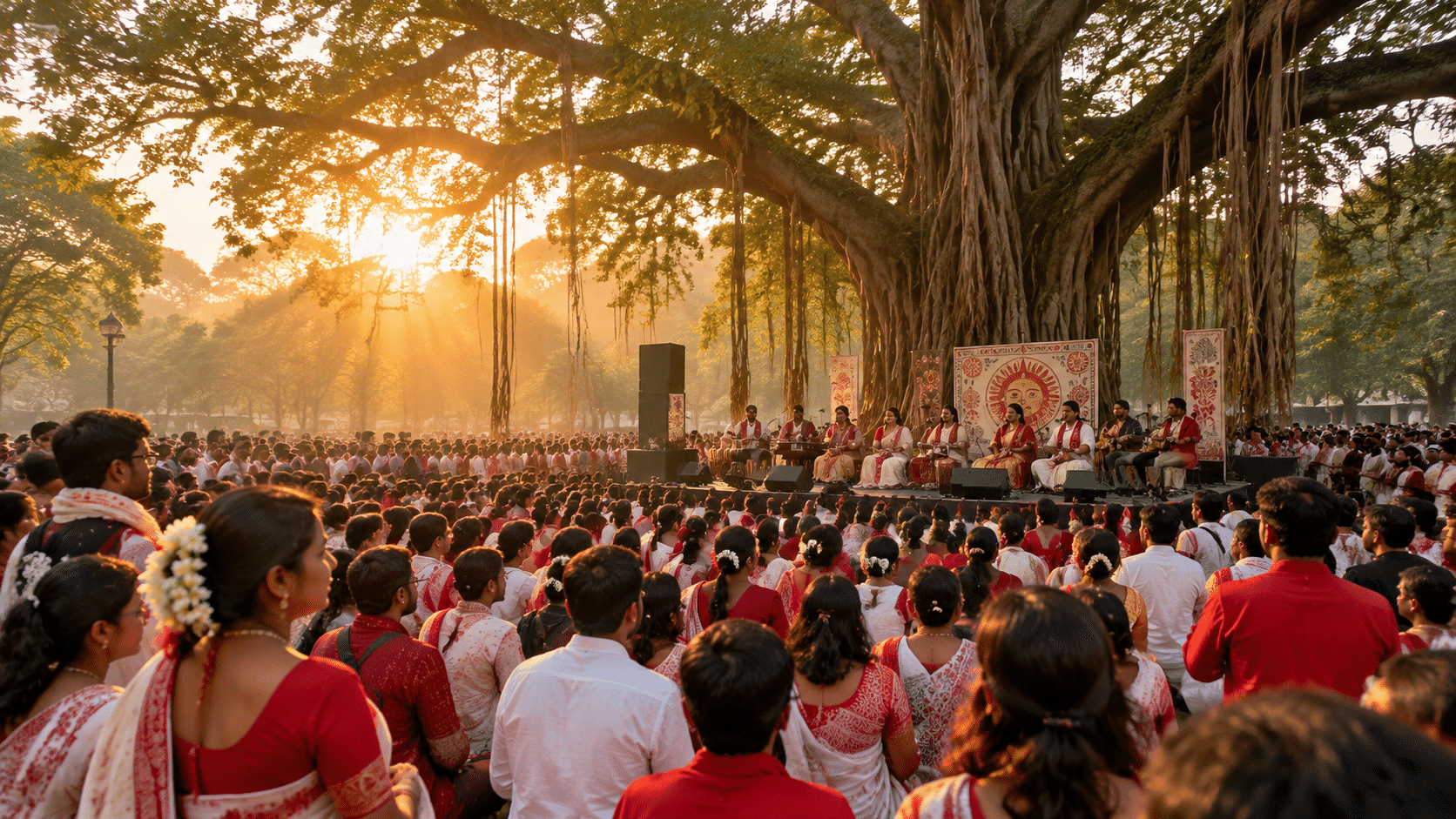
Pohela Boishakh marks the first day of the Bengali calendar year, and nowhere in Dhaka is it celebrated with more scale or cultural weight than at Ramna Park. Before sunrise on April 14, thousands of people begin gathering beneath the park’s old banyan tree, dressed in traditional red and white, the color combination most associated with the festival, for a program of Bengali music, poetry, and song that has run continuously for decades.
The centerpiece is Chhayanaut’s dawn musical program, a cultural organization that has led this specific Ramna gathering since 1967, even through periods of political restriction under Pakistani rule, when celebrating Bengali cultural identity carried real risk. That history gives the event a significance well beyond a simple new year celebration, it’s tied directly to the same cultural assertion that produced the Language Movement and, eventually, Bangladesh’s independence.
Beyond the formal program, the day spreads across the city with fairs, street food, and family outings, but Ramna remains the emotional and cultural center of it. Expect serious crowds, tight security given the event’s scale and history (a 2001 bombing attack at Ramna’s Pohela Boishakh gathering means security is taken seriously here), and a genuinely early start if you want to catch the dawn program itself, arriving by 5:30 to 6:00 AM is realistic for a good vantage point.
For visitors, this is less a spectator event than a chance to witness, and if welcomed, join, one of Bangladesh’s most emotionally resonant annual cultural moments, best combined with a broader Shahbagh-Ramna day given the crowds and road closures the event brings to the surrounding area.