
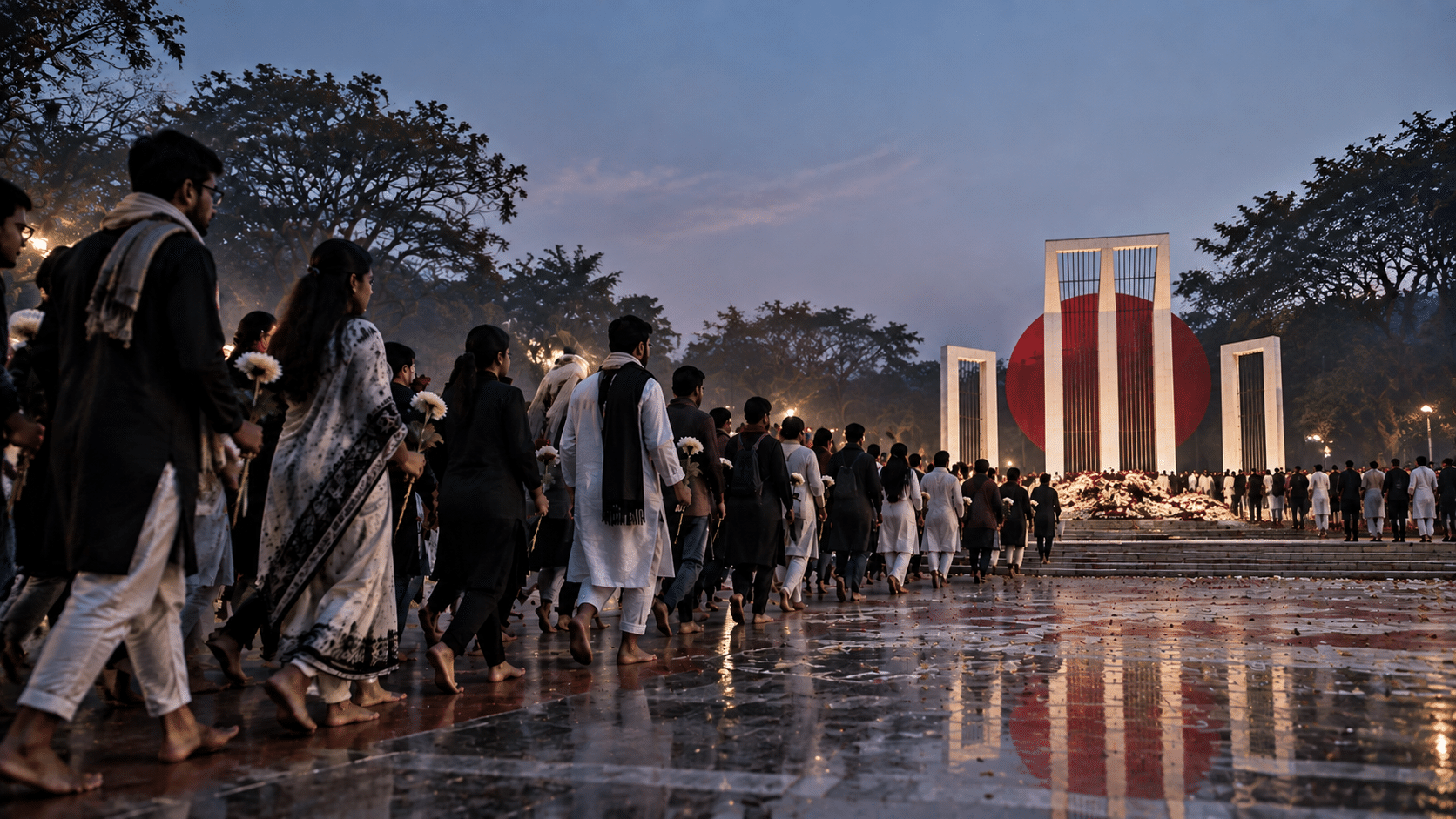
At the stroke of midnight on February 21, the President and Prime Minister of Bangladesh typically lead the first wreaths to the Central Shaheed Minar, opening a procession that continues through the night and into the following morning as ordinary citizens, students, and families walk barefoot to lay flowers at the monument. It’s the most solemn recurring public event in the country’s calendar, commemorating the students shot by police in 1952 while protesting the imposition of Urdu as Pakistan’s sole state language.
The date’s significance has since gone well beyond Bangladesh’s own borders. In 1999, UNESCO formally recognized February 21 as International Mother Language Day, and it’s now observed globally as a day for linguistic diversity, a direct legacy of the sacrifice this specific monument commemorates. That international recognition adds a layer most visitors don’t expect, standing at Shaheed Minar on this date means standing at the literal origin point of a day now marked in schools and institutions worldwide.
The atmosphere is unmistakably different from a typical festival. Expect a genuinely solemn crowd, barefoot as a mark of respect, moving in a slow, continuous procession rather than a festive gathering. Flower sellers line the approach roads, and the surrounding Shahbagh area sees heavy foot traffic and road closures throughout the day as schools, cultural organizations, and government bodies each send their own delegations to lay wreaths at scheduled intervals.
For visitors, this is a meaningful but demanding event to attend, expect very large crowds, limited facilities, and a genuinely emotional atmosphere rather than a typical tourist experience. Modest, respectful dress and a barefoot approach to the monument itself are expected, following local practice rather than observing from a distance is part of what makes the day significant.