
Madaripur Pottery: The Clay Craft Behind Baishakh Fairs
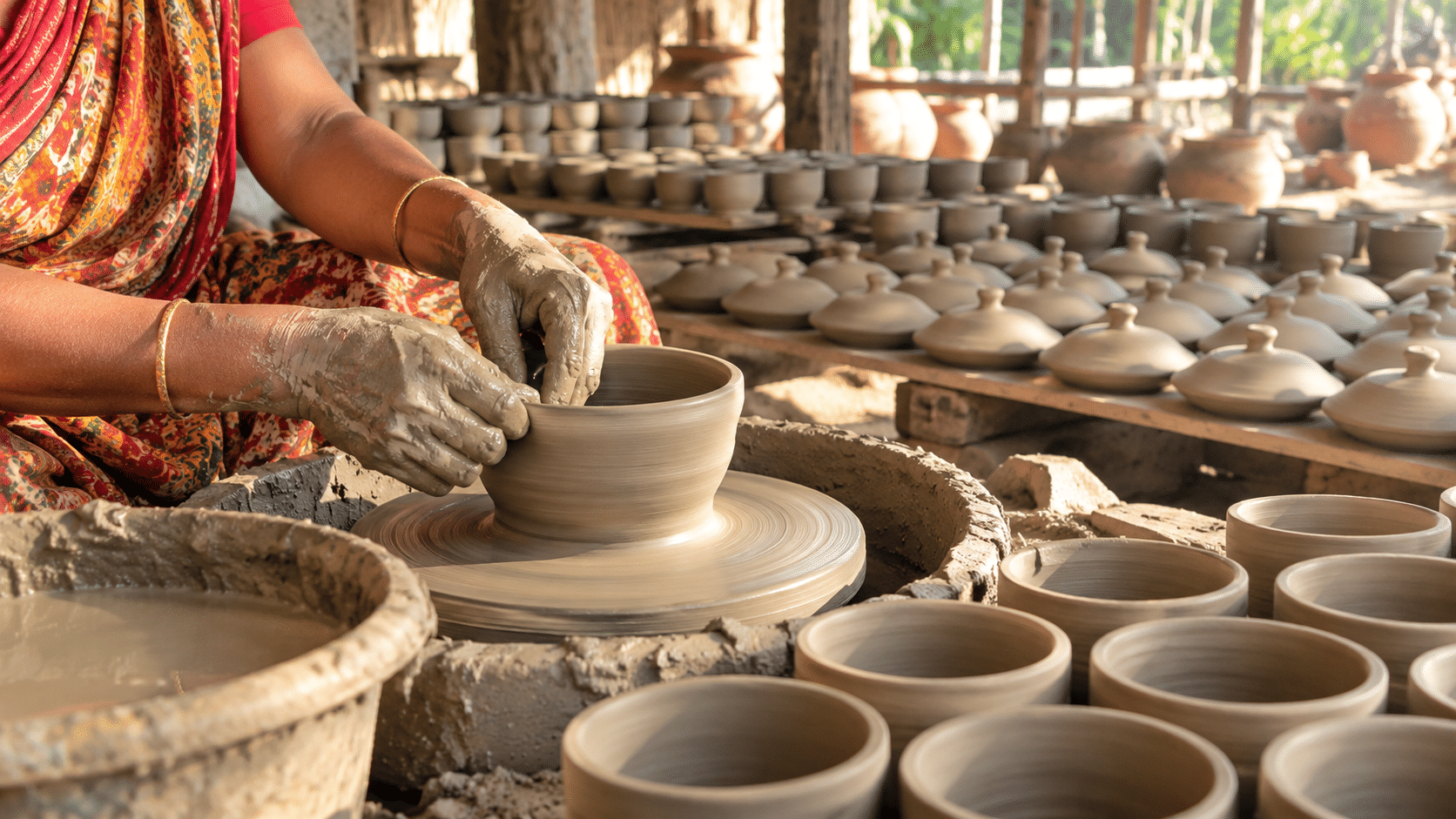
Madaripur pottery has a very seasonal heart. Each year, before Pahela Baishakh, the first day of the Bangla year, potters across the district make earthen items for the traditional fairs held in towns and villages. An earlier Daily Star report described them as busy at that time, shaping clay with skills learned over generations.
The Story of Madaripur Pottery
Madaripur’s deputy commissioner told the Daily Star that pottery is an age-old tradition in the district. A 65-year-old potter, Bishwajit Pal, said he learned the craft from his elders the way a child learns a mother tongue. He makes earthen items for Pahela Baishakh and farms for the rest of the year.
That detail shows how many potters live and work today. The craft is a seasonal skill, kept alive by passion and family memory. Madaripur pottery survives because people like him keep making it, even when it is not a full-time income.
Why Madaripur Pottery Is Under Pressure
Potters told the Daily Star that land is the main reason many have given up the family trade. As the population grows, available land shrinks, and clay, the main raw material, has become scarce and expensive. The report described the once-popular trade as having dwindled over the years. That is why Madaripur pottery is worth noticing now, before more of its knowledge is lost.
What Madaripur Pottery Looks Like
The report speaks of various earthen items made for traditional fairs. We could not find a verified list of Madaripur’s specific designs, so please look and ask rather than assume. Bangladesh’s Boishakhi fairs are widely known for folk crafts and pottery, so the clay items you see in the district’s fairs are part of that wider tradition.
What to Notice When You See Madaripur Pottery
The Hand-Shaped Finish
Look for the small marks of the maker’s hand. Madaripur pottery is shaped by people, not machines, and those marks are part of its charm.
The Seasonal Link
These items are made for celebration. Their timing around Pahela Baishakh connects the craft to the Bengali calendar and to community life.
The Story Behind the Clay
Ask where the clay comes from. The answer often reveals how the craft is changing, and it is a good way to open a respectful conversation.
When and Where to Find Madaripur Pottery
The best time is the weeks before Pahela Baishakh in mid-April, when potters are busiest. Look for earthen items at traditional fairs in towns and villages across Madaripur. We could not confirm a permanent potters’ village or market, so ask local people for the nearest working potter, and always ask permission before you watch or photograph.
How to Support Madaripur Pottery
- Buy directly from the potter when you can.
- Pay a fair price and avoid hard bargaining.
- Ask permission before photographing people at work.
- Share the story of Madaripur pottery with friends, and credit makers by name.
- Handle clay items gently, since they break easily.
Pair It with a Madaripur Trip
If you travel to Madaripur for Pahela Baishakh, add a visit to a local fair to your plan, then continue on a slow heritage walk in town. Madaripur pottery works best as a small cultural stop inside a longer trip, not as a stand-alone destination.
Who Will Enjoy Madaripur Pottery
Craft lovers, photographers, students and slow travellers will enjoy this craft. If you want a ready-made shopping street, look elsewhere. If you want to meet makers and understand a fading tradition, Madaripur pottery is worth your time.
Madaripur Pottery: Quick Answers
When is Madaripur pottery made?
Potters are busiest in the weeks before Pahela Baishakh, when they prepare items for the traditional fairs.
Why is Madaripur pottery declining?
Potters say land has shrunk, and clay has become scarce and expensive, so many have given up the ancestral trade.
Where can I buy Madaripur pottery?
Look at traditional fairs around Pahela Baishakh and ask local people. We could not confirm a permanent market.