Close Menu
Bangladesh Branding
  • Destinations
    • By Region
      • Dhaka
      • Chattogram
      • Sylhet
      • Rajshahi
      • Khulna
      • Barishal
      • Rangpur
      • Mymensingh
    • By Landscape
      • Beachs
      • Hills
      • Forests
      • Wetlands
      • Rivers
      • Historical Sites
      • Archaeological Sites
      • Religious Places
    • Popular Now
      • Cox’s Bazar
      • Sundarbans
      • Sajek
      • Bandarban
      • Sylhet
      • Srimangal
  • Experiences
  • Places to Visit
  • Festivals and Events
  • Plan Your Trip
  • Travel Stories
    • Travel Guide
      • Travel Tips
      • Hotels
      • Flights
      • Local Transport
      • Currency
    • News and Updates
      • News
      • Business and Brands
      • Buy Bangladeshi
    • Culture and Heritage
      • People
      • Culture
      • Food
      • Heritage Moshque
      • Arts and Crafts
  • Map
Facebook X (Twitter) Instagram YouTube
Facebook X (Twitter) Instagram
Bangladesh Branding
Subscribe
  • Destinations
    • By Division
      • Dhaka
      • Chattogram
      • Sylhet
      • Rajshahi
      • Khulna
      • Barishal
      • Rangpur
      • Mymensingh
    • By Landscape
      • Beachs
      • Hills
      • Forests
      • Wetlands
      • Rivers
      • Historical Sites
      • Archaeological Sites
      • Religious Places
    • Popular Now
      • Cox’s Bazar
      • Sundarbans
      • Sajek
      • Bandarban
      • Sylhet
      • Srimangal
    • Featured Destinations
  • Experiences
  • Places to Visit
  • Festivals and Events
  • Plan Your Trip
  • Travel Stories
    • Travel Guide
      • Travel Tips
      • Hotels
      • Flights
      • Local Transport
      • Currency
    • News and Updates
      • News
      • Business and Brands
      • Buy Bangladeshi
    • Culture and Heritage
      • People
      • Culture
      • Food
      • Heritage Moshque
      • Arts and Crafts
  • Map
Bangladesh Branding
Home » Crafts » Narsingdi Deshi Taat: The Handloom Cloth of Narsingdi

Narsingdi Deshi Taat: The Handloom Cloth of Narsingdi

October 20, 2026No Comments4 Mins Read
Narsingdi Deshi Taat
Share
Facebook Twitter LinkedIn WhatsApp Copy Link

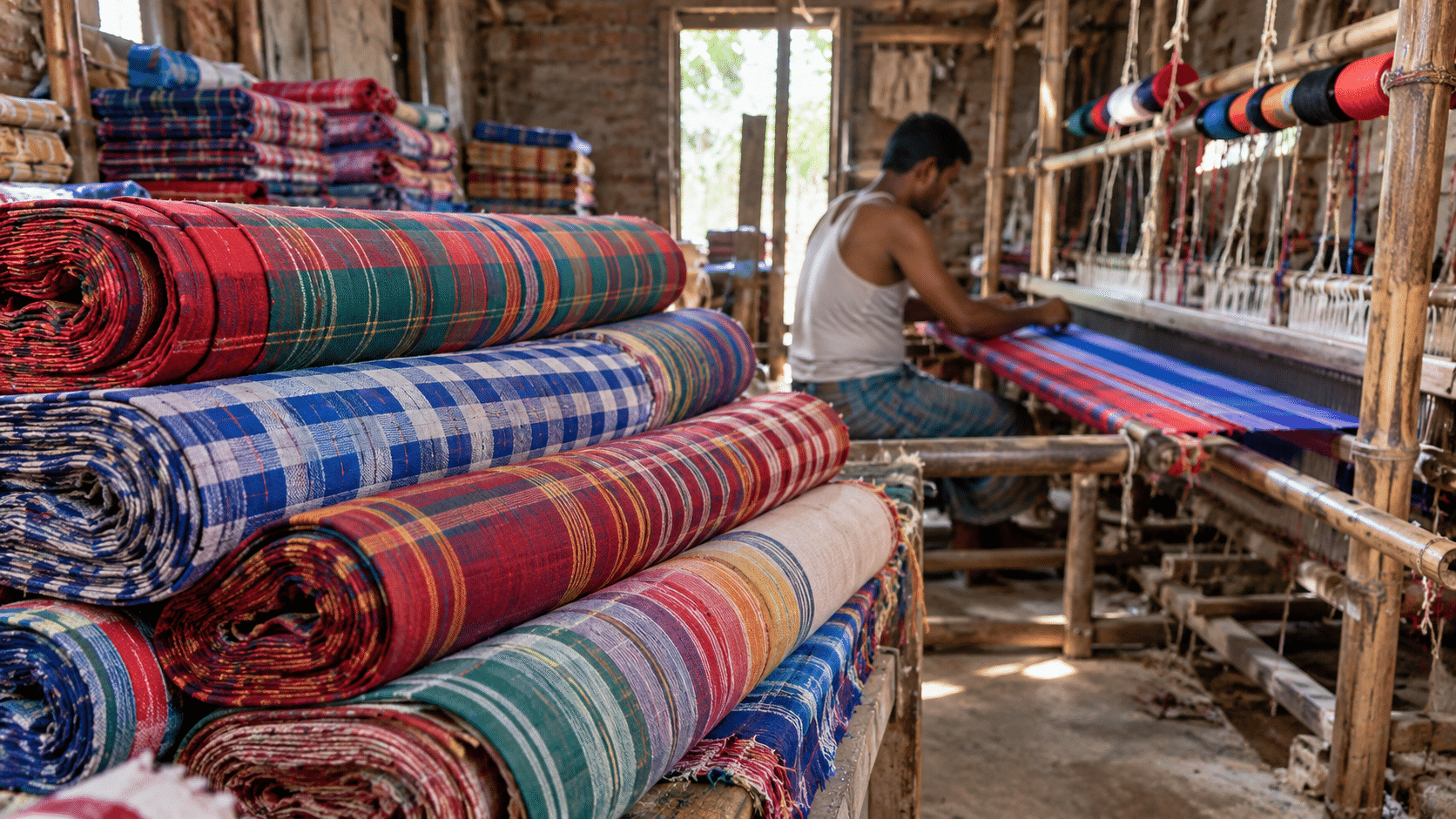
Narsingdi deshi taat is the district’s handloom cloth, the everyday fabric that gives Narsingdi its reputation as a textile centre. Deshi taat, which means local handloom, covers checks, stripes, plain cloth and many other designs woven in weaving units around Shekherchar, Baburhat and Madhabdi. This guide to Narsingdi deshi taat explains what it is, how the weaving units work and how to buy it with confidence.

What Is Narsingdi Deshi Taat?

Taat is the Bengali word for loom, and deshi taat is cloth woven on local looms. Narsingdi deshi taat is not a single product. It is the base cloth from which lungi, gamcha, sarees, bed sheets, curtains and tailored fabrics are made. Much of it is also sold as grey cloth for dyeing and stitching.

The Story Behind Narsingdi Deshi Taat

The Daily Star once described Narsingdi as the heart of Bangladesh’s deshi taat, saying that entrepreneurs had set up weaving factories where groups of weavers work together, mostly around Shekherchar and Baburhat. That feature noted that raw materials were largely collected from Madhabdi Bazar and that weaving machines were manufactured locally.

The same report said weavers worked long days and were paid according to production, with colour and pattern supervised by design and dyeing specialists. It also noted that many weavers learned through experience and not formal training. The details reflect the situation at the time of the report, but the basic picture of Narsingdi deshi taat as a locally built, locally supplied craft economy still describes the district well.

How Narsingdi Deshi Taat Is Made

  • Raw materials: yarn and dyes are sourced locally, with Madhabdi Bazar a key supply point.
  • Dyeing and design: colours and patterns are planned and supervised in the workshop.
  • Weaving: workers operate looms that produce rolls of fabric.
  • Selling: cloth moves to Baburhat and other markets for wholesale and retail trade.

The Challenges Facing Narsingdi Deshi Taat

Handloom is a hard business. Financial Express reported that many handloom units in Narsingdi have closed, with access to credit named as a major problem. At the same time, handloom checks have been used by garment makers for exportable clothes, which shows that demand for local fabric can reach beyond ordinary shops. For visitors, choosing local cloth is one way to support the craft.

How to Choose Good Narsingdi Deshi Taat

  • Check the weave by holding the cloth to the light.
  • Look for even colour, clean lines and no loose threads.
  • Ask what the cloth is made of and how it will wash.
  • Compare handloom and powerloom pieces, since price and feel differ.
  • Ask for the minimum quantity if you plan to buy by the roll.

Where to Find Narsingdi Deshi Taat

Baburhat at Shekherchar is the main wholesale market, with Madhabdi Hat and Karimpur Bazar among other noted markets in Narsingdi Sadar. Wholesale days run from Thursday night to Sunday afternoon. If you are a tailor, designer or small business owner, this is a good place to see fabrics in person.

What You Can Make From Narsingdi Deshi Taat

  • Panjabi, shirts and trousers from plain or checked cloth.
  • Bed sheets and curtains for the home.
  • Lungi, gamcha and sarees from specific weaves.
  • Bags, cushion covers and small crafts from leftover pieces.

Visit the Home of Narsingdi Deshi Taat

For a closer look, plan a day with our Narsingdi textile tour and read our Narsingdi handloom guide for tips on visiting weaving units politely. Always ask before entering a workshop or photographing weavers.

Narsingdi Deshi Taat FAQs

What does deshi taat mean?

Deshi taat means local handloom cloth, woven on looms in Bangladesh.

Where is Narsingdi deshi taat made?

Weaving units are concentrated around Shekherchar, Baburhat and Madhabdi in Narsingdi Sadar.

Can I buy Narsingdi deshi taat as a tourist?

Yes. Many shops at Baburhat and Madhabdi sell to individual buyers, though prices are set for wholesale trade.

Search
Recent Post
  • Chandpur District: Where the Great Rivers Meet September 13, 2026
  • Noakhali District: Islands, Estuary, and Gandhian Heritage September 13, 2026
  • Feni District: Migratory Birds, Ancient Tanks, and the Hill-Plains Edge September 13, 2026
  • Khagrachari District: Cave Country, Tribal Heartland, and Hill Panoramas September 9, 2026
  • Cumilla District: Ancient Buddhism and the Highway City September 9, 2026
  • Rangamati District: The Lake District of Bangladesh September 8, 2026
  • Cox’s Bazar District: The World’s Longest Beach September 8, 2026
  • Chattogram District: Bangladesh’s Port City and Hill Country Gateway September 8, 2026
  • Jhenaidah District: Ancient Mosques and Riverine Landscapes September 7, 2026
  • Magura District: Quiet Rivers and Zamindari Remnants September 7, 2026
  • Narail District: Where Art Lives on the River September 5, 2026
  • Kushtia District: The Soul of Bangladesh’s Folk Tradition September 3, 2026
  • Jashore District: The Flower Capital of Bangladesh September 2, 2026
  • Khulna District: Gateway to the World’s Largest Mangrove Forest September 2, 2026
  • Panchagarh District: Where Bangladesh Meets the Himalayas September 2, 2026
Who We Are

Bangladesh Branding, your premier source for uncovering the treasures of Bangladesh, a land where vibrant culture meets breathtaking landscapes and warm hospitality.

Facebook X (Twitter) Instagram YouTube LinkedIn
Explore
  • Destinations
  • Places to Visit
  • Experiences
  • Travel Stories
  • Events
  • Crafts
Plan your trip
  • Trip Planner
  • Travel Guide
  • Best Time to Visit
  • How to Reach
  • Travel Tips
About
  • About Us
  • Contact Us
  • Partner With Us
  • Media / Press
  • Submit a Place
Search
Copyright © 2026 Bangladesh Branding | Developed by Business Brillianz.

Type above and press Enter to search. Press Esc to cancel.

imunify-bot-check