
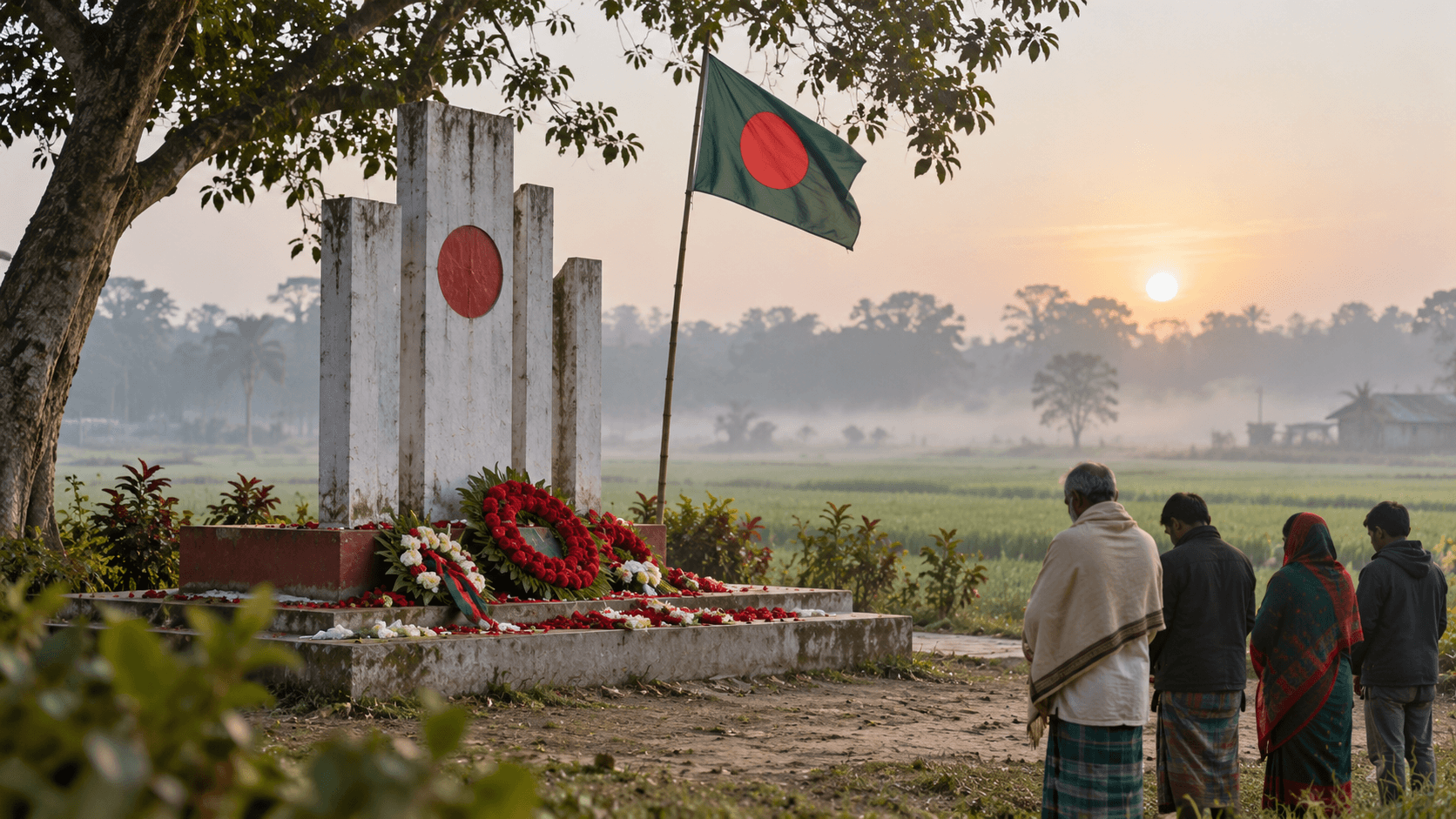
Victory Day Rajbari is a day of remembrance as much as celebration. On 16 December, Bangladesh marks its victory in the 1971 Liberation War, and in Rajbari that memory is close to the ground. Mass graves, memorial sites and local stories make Victory Day Rajbari a thoughtful occasion for anyone who wants to understand how the war touched the district.
About Victory Day Rajbari
Victory Day is a national holiday observed every year on 16 December. In Rajbari, observances are usually organised by local authorities, schools and community groups, and they are usually centred on memorial sites. Because programmes are organised locally, exact times and venues can change, so confirm details with local authorities or residents before you plan your visit.
Rajbari and the 1971 Liberation War
Banglapedia records that a Sangram Parishad (Council for Resistance) was formed in Rajbari on 26 March 1971, one of the early local responses to the war. In Baliakandi, freedom fighters had an encounter with razakars and police in November 1971, defeated them and captured their arms. Mass graves are recorded in Goalanda, Khankhanapur, Baharpur in Baliakandi and elsewhere. Against this history, Victory Day Rajbari carries real weight.
What to Expect on Victory Day Rajbari
National Victory Day observances in Bangladesh commonly include flag-raising, wreaths at memorials, processions, student programmes and cultural events. Exact programmes in Rajbari vary each year. As a visitor, you can expect:
- Quiet tributes at memorial sites.
- Student participation and school programmes.
- Local cultural events and speeches.
- A solemn but warm community atmosphere.
Memorial Sites to Know on Victory Day Rajbari
- Baharpur Mass Grave, Baliakandi: a 1971 memorial in farming country.
- Mass graves at Goalanda and Khankhanapur: recorded by Banglapedia as part of Rajbari’s war memory.
- Rajbari town: the district centre, where local observances are often concentrated.
Not every site has formal signage, so ask local residents for guidance and visit respectfully.
How to Observe Victory Day Rajbari Respectfully
Treat the day as a time of remembrance. Dress modestly, keep your voice low near memorials and ask before taking photographs of people. Listen to older residents with patience, and never push anyone to share painful memories. Avoid loud music or casual group behaviour at memorial sites.
A Small Story to Carry With You
Imagine standing in a quiet Baliakandi field that looks like any other farmland. Then someone tells you what happened there in 1971. The air changes. That quiet shift is what Victory Day Rajbari does for many visitors: it turns ordinary landscape into memory.
Combining Victory Day Rajbari With Other Stops
If you have extra time, add the Mir Mosharraf Hossain tomb, the Padamdi Nawab Estate area or the river views at Goalanda. A two-day Rajbari heritage tour fits naturally around Victory Day Rajbari, though December mornings can be foggy and cool, so plan travel carefully.
Why Victory Day Rajbari Matters for Younger Travellers
For young travellers, Victory Day Rajbari is a chance to learn history on the ground, not just from textbooks. Standing at a local memorial and hearing a local story is very different from reading a date in a book. It is a small, powerful way to connect with the country’s past.
Tips for Victory Day Rajbari
- Confirm local programme times in advance.
- Expect crowded roads and busier buses on national holidays.
- Carry a warm layer, water and cash.
- Be mindful of fog on early winter mornings.
Frequently Asked Questions
When is Victory Day Rajbari observed?
Victory Day Rajbari is observed on 16 December, the national Victory Day of Bangladesh.
Where can I observe Victory Day Rajbari?
Observances are usually centred on memorial sites and local public venues in Rajbari town and nearby upazilas, but confirm locally.
Is Victory Day Rajbari open to visitors?
Public memorial sites are generally open to respectful visitors, but programmes are organised locally, so confirm the details before you go.