
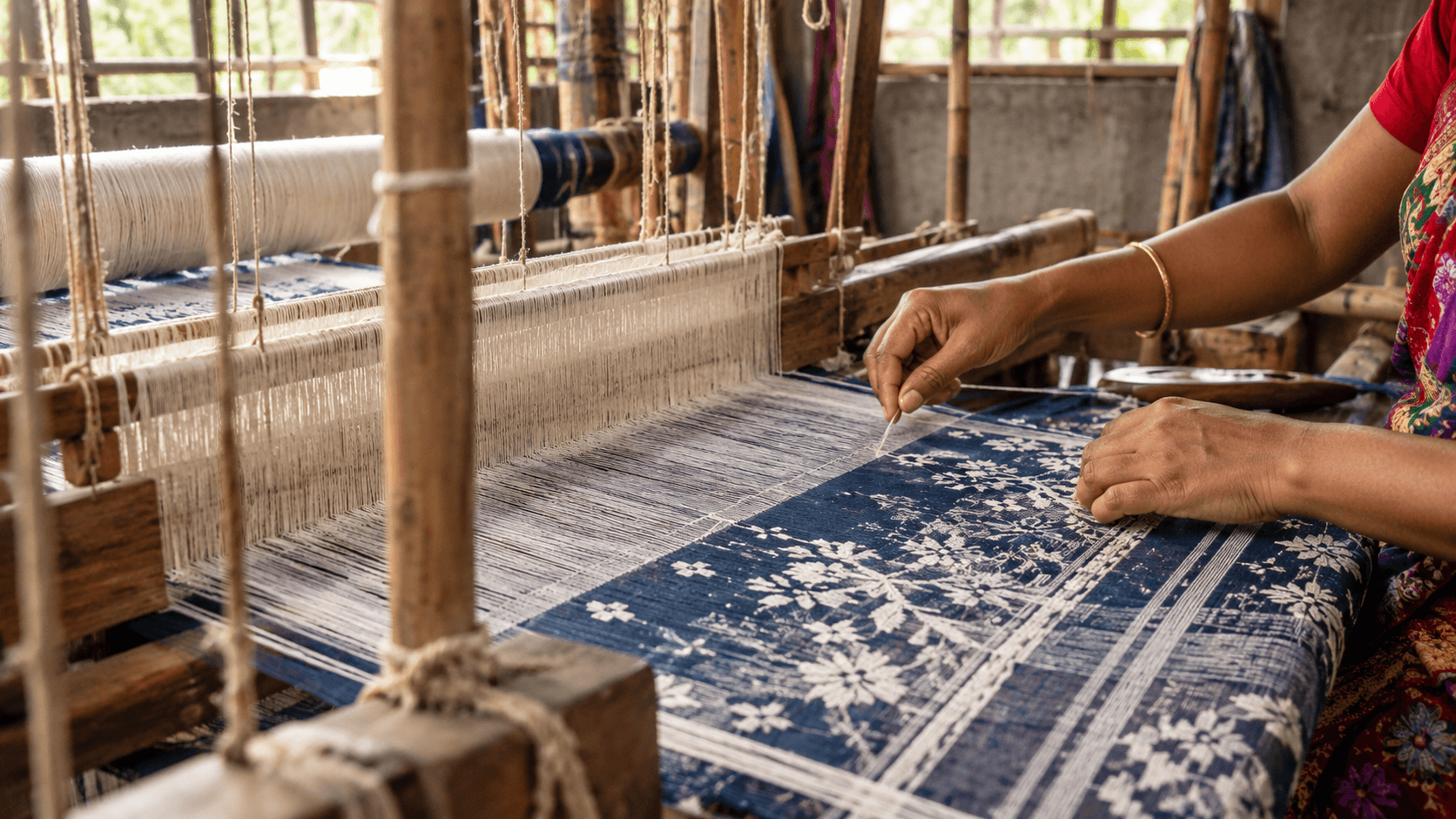
The Rupganj Jamdani village belt is where one of Bengal’s most loved textiles is still woven by hand, thread by thread. Close enough to Dhaka for an easy day trip, the Rupganj Jamdani village lanes are filled with the soft clack of looms, and the same upazila also hides a large green eco retreat and a colonial-era palace. It is a day of craft, calm and heritage in one place.
Inside a Jamdani Village in Rupganj
Rupganj, along the Shitalakshya, has long been tied to the story of Bengal muslin. Weavers here once made the famous fine cloth, and today the Rupganj Jamdani village clusters keep that skill alive, since the area is a centre of Jamdani weaving. Villages such as Rupshi are the best places to see it, and any Rupganj Jamdani village with open weaving homes will welcome respectful guests. UNESCO recognises the traditional art of Jamdani weaving as Intangible Cultural Heritage of Humanity, and a visit to a Rupganj Jamdani village shows you why.
The first surprise is the silence. The loom has no loud motor. It is worked by hands and feet, and the weaver adds each pattern by hand, thread by thread, while the base fabric grows slowly. On fine designs, a master may finish only a small stretch of cloth in a day. Watching that patience in action is the real highlight of any Rupganj Jamdani village visit.
What You Can Do in a Rupganj Jamdani Village
A Rupganj Jamdani village is not a museum. It is a working neighbourhood, so the experience depends on how you behave. Come with curiosity and these simple options:
- Watch the looms: Step into a weaving home and see how motifs such as flowers and geometric shapes appear on the cloth.
- Talk to weavers: Many families have woven for generations, and their stories add depth to the cloth.
- Buy directly: Buying from weavers helps the craft survive. Ask whether the piece is handloom Jamdani and how long it took to make.
- Take photos with permission: Always ask first. A smile and a short chat go a long way.
Zinda Park: A Green Break Beside Purbachal
Many travellers pair a Rupganj Jamdani village visit with Zinda Park, because the two sit in the same upazila.
After the looms, Zinda Park offers fresh air and open space. Also known as Oikotan Eco Resort, it covers about 33 acres in Daudpur union, along the Dhaka Bypass Expressway on the north-east side of Purbachal. Reports mention thousands of trees from around 250 species, along with reservoirs, tree houses, cottages, a restaurant and a library. It is popular with families who want a quiet day outside the city. Check opening hours and ticket details before you go, since they can change.
Murapara Rajbari: A Colonial Palace in Rupganj
Murapara Rajbari, close to the Rupganj Jamdani village trail, is a two-storey palace built by Ramratan Banerjee during the British colonial period. Its columns, balconies and wide frontage make it a rewarding stop for history and photography lovers. Like many old buildings, it is best enjoyed with care: look, photograph and leave nothing behind.
Best Time to Visit a Rupganj Jamdani Village
For a Rupganj Jamdani village trip, October to March is the most comfortable period, with mild weather that suits walking from home to home. Weekdays are best for seeing weavers at work, because some workshops are quieter on Fridays. Summer is hot and humid, and the rains can make village paths muddy.
How to Choose Real Jamdani
- Check the back of the cloth. Handwoven motifs look neat and slightly irregular, not printed.
- Ask how many days or weeks the piece took.
- Compare prices politely, but remember that fair pay keeps the craft alive.
- Buy from weaving homes in a Rupganj Jamdani village or from trusted shops, and ask for a clear receipt.
Plan Your Rupganj Day from Dhaka
A good plan is to leave early, spend the morning in a Rupganj Jamdani village, have lunch nearby, and finish at Zinda Park or Murapara Rajbari in the afternoon. Return before the evening rush. If you want a deeper look at the craft itself, our Crafts section covers Jamdani in detail, and our Trips section has the full route and budget.