
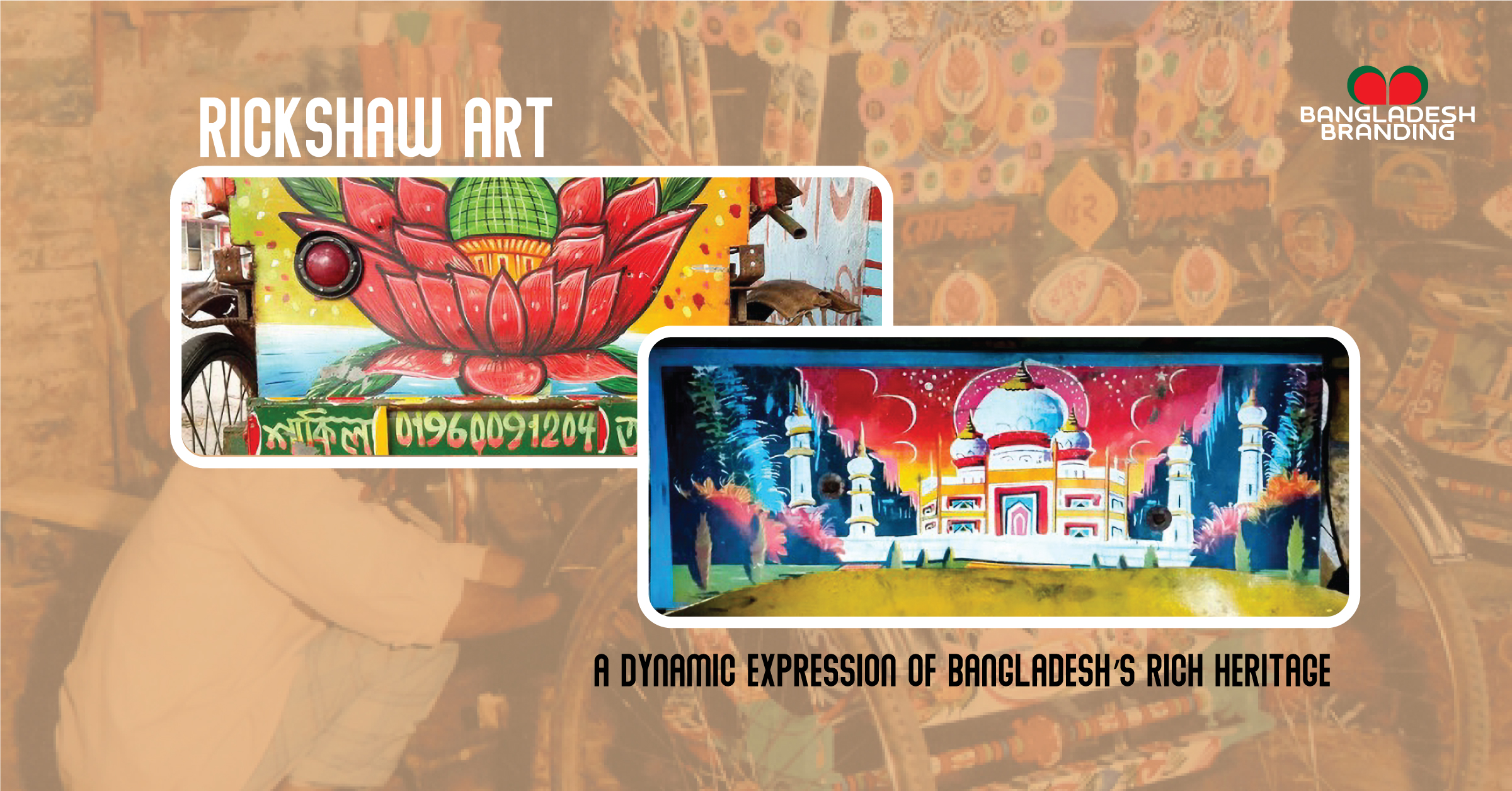
Rickshaw art is the hand-painted decoration on Bangladesh’s cycle rickshaws: bright flowers, birds, film stars and national heroes, painted on tin back plates and hoods. In December 2023, UNESCO added “Rickshaws and rickshaw painting in Dhaka” to its Representative List of the Intangible Cultural Heritage of Humanity. This guide explains where rickshaw art came from, what the paintings show, who makes them, and how the style now appears in fashion and home decor.
Picture a slow afternoon in Dhaka. Traffic has stopped, and the only thing worth looking at is the back of the rickshaw ahead of you: a tiger beside a river, a film hero with sunglasses, a garden that never wilts. That moving picture was made by hand, and it was made to catch your eye. What began as a way to attract passengers has grown into one of the most recognised symbols of Bangladeshi city life.
Rickshaw Art at a Glance
- What it is: Hand-painted decoration on cycle rickshaws, found mostly on the back plate and the hood
- Where: Dhaka and towns across Bangladesh
- UNESCO status: Inscribed in 2023, at the 18th session of the Intergovernmental Committee, as “Rickshaws and rickshaw painting in Dhaka”
- Who makes it: Rickshaw builders (all men, according to UNESCO) and painters (men and women), who learn in workshops and within families
- Common motifs: Flowers, birds, animals, film stars, historical events and heroes
- Today: Saris, shalwar kameez, kurtis, cushion covers, quilts and wall hangings
A Trip Back in Time
The cycle rickshaw is a fairly young arrival. Banglapedia records that European jute exporters imported the first cycle rickshaws from Calcutta in 1938. Dhaka had only 37 of them in 1941, and by 1998 there were more than 112,000 registered ones. Banglapedia adds that the painting “perhaps dates back to the 1950s”, so the exact start is not clear. Many painters came from the world of cinema billboards, which helps explain why the faces of film stars appear so often.
The themes changed with the mood of the country. After the Liberation War of 1971, rickshaw painters showed freedom fighters in battle, scenes of wartime suffering and portraits of war heroes, as The Daily Star and Banglapedia both describe. By the mid-1970s, film stars and ordinary people were on the back plates, followed by fable animals. In the early 1980s, film stars came back in a big way, with sunglasses, styled hair and dramatic eyes. Cities also saw cheerful animals, the Taj Mahal, flowers, religious motifs, village scenes and even aeroplanes.
How Rickshaw Art Is Made
The most famous paintings sit on tin plates fixed to the lower back of the rickshaw. According to Banglapedia, painters use ready-made enamel paints in bright primary colours, and the style is flat, with no shadows or perspective. Back plates are repainted every year. Painters usually learn from a master (ustad) and rarely sign their work, so the names behind these pictures are often lost.
UNESCO Recognition: What It Means for Rickshaw Art
In 2023, UNESCO inscribed “Rickshaws and rickshaw painting in Dhaka” on the Representative List of the Intangible Cultural Heritage of Humanity. The official UNESCO entry calls it “a dynamic form of urban folk art” that gives city residents a sense of shared identity. It also notes that nearly every part of the rickshaw can be painted, and that tassels, plastic flowers and tinsel add to the look. Because rickshaws move slowly, UNESCO says, their decoration works like a moving exhibition.
The UNESCO listing for rickshaw art is a form of recognition, not a guarantee of income. The painters work on commission, and they are rarely credited by name. If you love rickshaw art, the best support you can give is to buy from makers who credit the painters and pay them fairly.
The Rise of Rickshaw Art in Fashion
Rickshaw art first caught the eye of city dwellers, and it reached fashion in the 2000s. Designers took the bold flowers, birds and nature motifs of rickshaw art and printed them on saris, shalwar kameez sets and kurtis, for daily wear and for special days. The Daily Star credits local brands such as Aarong and Jatra with spreading the trend. You can see the result in the photo below.
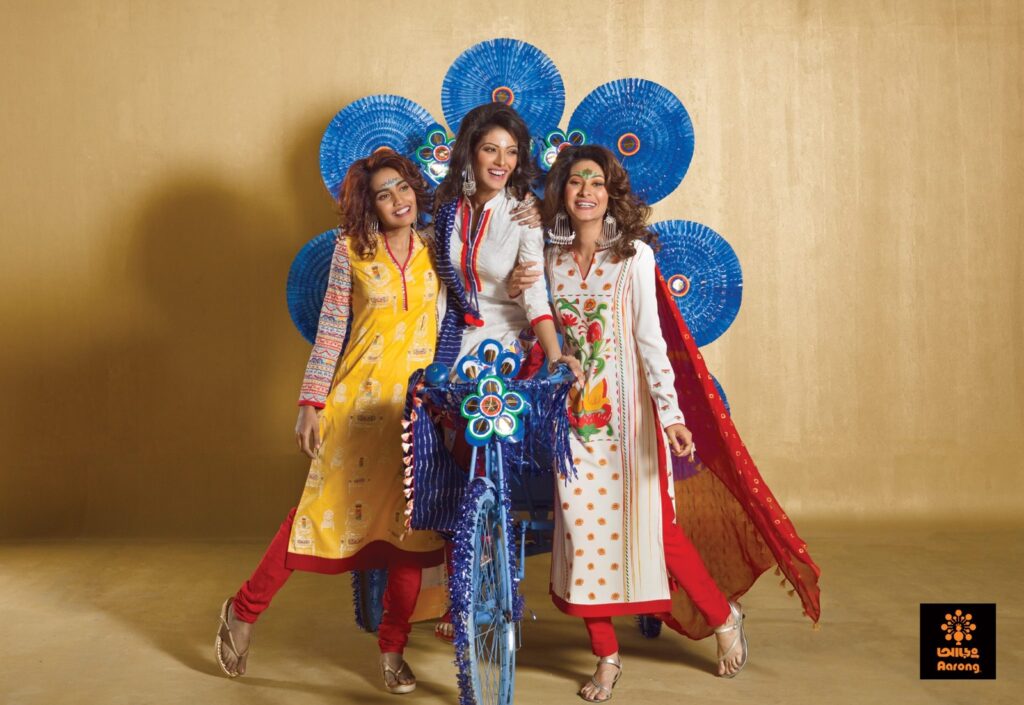
If you are shopping for rickshaw art clothing, look for a label that tells you who drew the design. Our Buy Bangladeshi stories are a good place to find more local makers.
Bringing Rickshaw Art into Home Interiors
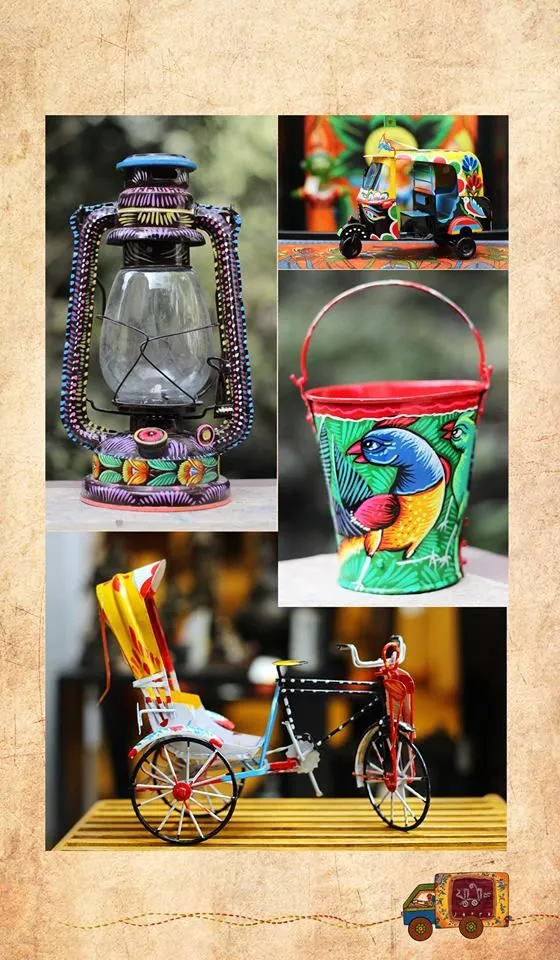
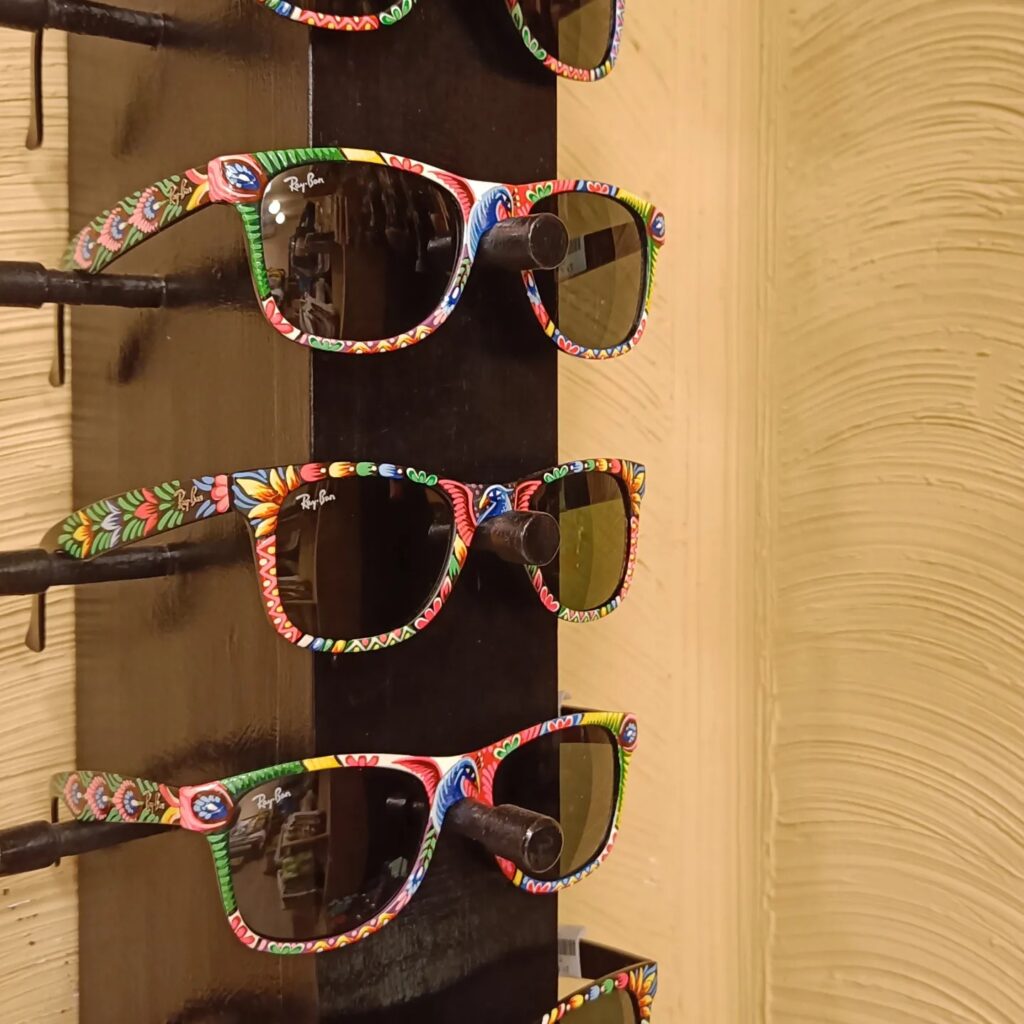
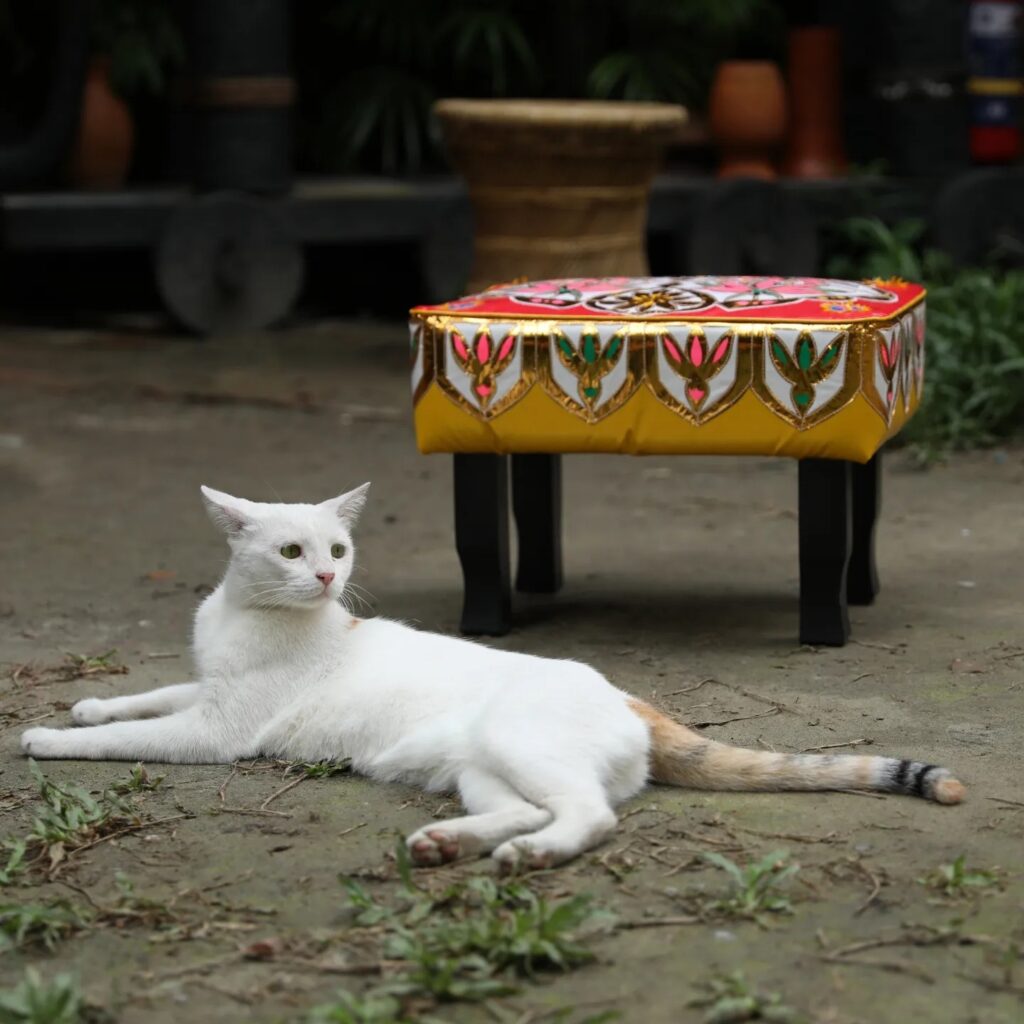
Rickshaw art has also moved indoors. A cushion cover with a flower motif or a city scene is an easy way to bring colour into a room. Patchwork quilts with rickshaw-style paintings add a handmade feel, while wall hangings and murals give you the full effect. The Daily Star notes that rickshaw art has been sold as wall decor since the 1980s, so this is a long-running habit, not a passing trend.
A few simple tips if you want to try it at home:
- Start small: One cushion cover or one framed panel is enough to set the mood.
- Let it be the star: Keep walls and furniture calm so the colours stand out.
- Check the credit: Ask who painted it, and buy from sellers who pay the artist.
Rickshaw art reflects our culture and our political history, and it carries a clear urban identity. A home with a rickshaw painting keeps a piece of Bangladesh close, even when you live far away.
Where to See Rickshaw Art in Dhaka
You do not need a ticket. Just look at the back of the rickshaws in Dhaka Division, especially in slow traffic. Old Dhaka is a good place to start, and you can pair a walk with a stop for lassi and falooda or a bite of bakarkhani. If you want to take photos, ask the rider first. The rickshaw is his workplace.
Frequently Asked Questions About Rickshaw Art
What is rickshaw art?
Rickshaw art is the hand-painted decoration on cycle rickshaws in Bangladesh, mainly on the back plate and hood. It shows flowers, birds, animals, film stars, historical events and heroes.
When did rickshaw painting start in Bangladesh?
Banglapedia says it perhaps dates back to the 1950s. Cycle rickshaws themselves were first imported from Calcutta in 1938.
Did UNESCO recognise rickshaw art?
Yes. In 2023, UNESCO inscribed “Rickshaws and rickshaw painting in Dhaka” on its Representative List of the Intangible Cultural Heritage of Humanity.
What do rickshaw art designs usually show?
Common subjects include flowers, birds, animals, film stars, national heroes, historical events and village scenes. After the 1971 war, many showed freedom fighters.
Who paints rickshaw art in Bangladesh?
According to UNESCO, painters include both men and women and work on commission. They usually pass their skills to children and close relatives.
Where else is rickshaw art used besides rickshaws?
It now appears on saris, shalwar kameez, kurtis, cushion covers, patchwork quilts, wall hangings and murals.
How can I support rickshaw painters?
Buy from brands and sellers that name the artist and pay fair rates, and ask permission before photographing a rickshaw or its rider.
Final Thoughts on Rickshaw Art
Rickshaw art turns an ordinary ride into a small gallery, and it now has global recognition. To explore more, read our Culture stories, browse Bangladeshi arts and crafts, see how another heritage craft lives on in our Jamdani story, and plan your own travel experiences.