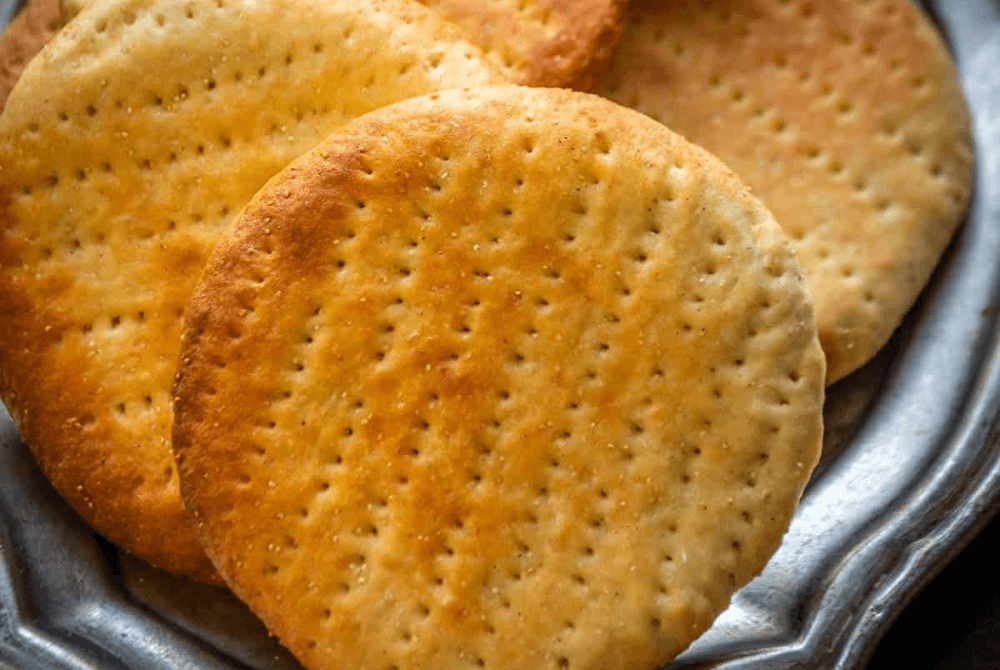
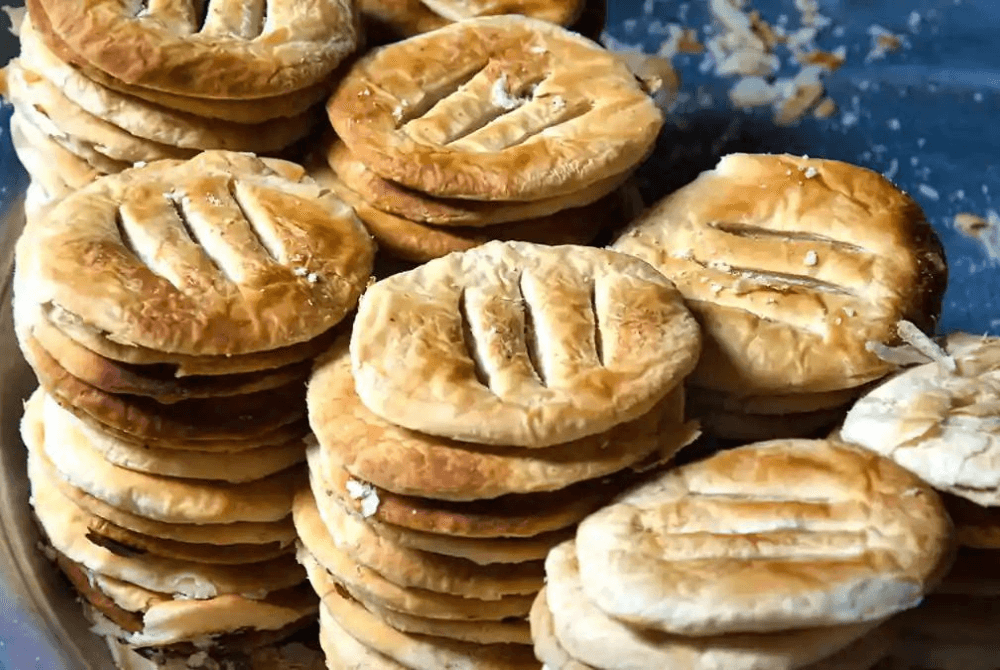
Bakarkhani is a thick, crisp, lightly sweet flatbread that is one of the best-loved foods of Old Dhaka. It is part of Mughlai cuisine, and it is made by folding dough with ghee and baking it on the wall of a tandoor, which gives it a hard crust and a biscuit-like bite. A popular legend says it is named after a general called Aga Bakar and his lost love, Khani Begum, though historians treat the story as folklore.
Ask someone in Old Dhaka what they have with their evening tea, and many will say the same word: bakarkhani. Stacks of it sit in bakery windows, golden and dry, with a sweet, buttery smell. Guests are offered a piece, children get one on weekends, and families buy a packet to take home. It looks plain, but it carries a story that locals have told for generations.
Bakarkhani at a Glance
- Also spelled: Bakorkhani, Bakorkhoni, Baqarkhani, Bakar Khani roti
- Other names: Shukha roti, or “dry bread”, in Old Dhaka
- Type: Spiced, layered flatbread, baked in a tandoor
- Main ingredients: Flour, ghee, sugar, milk and salt
- Texture: Crisp and hard-crusted, almost like a biscuit
- Home: Old Dhaka, in Dhaka Division
- Usually eaten: With tea, or offered to guests
Bakarkhani: A Tale of Love and Legendary Bread
Bakarkhani belongs to the Mughlai food tradition, which came to the region during the Mughal era. Wikipedia describes it as a thick, spiced flatbread, and notes that it is made on certain Muslim festivals in South Asia and is now popular as a sweet bread. In Dhaka, it has become more than a snack. Culinary historian Utsa Ray called it the “pride” of Dhaka’s food culture, and Hakim Habibur Rahman, who wrote about old Dhaka, said it could not be found anywhere else but Dhaka in the colonial period, according to Wikipedia.
The Legend of Aga Bakar and Khani Begum
The most famous story about bakarkhani is a love story. It is a legend, and the versions vary, so please read it as folklore.
In the best-known telling, a young nobleman called Aga Bakar (also Agha Baqer) came to Bengal in the circle of Murshid Quli Khan, the Mughal-era ruler. He rose to become a military commander in Chattogram. There he fell in love with Khani Begum, a dancer from Arambagh. A powerful rival, the kotwal (police chief) Jainul Khan, wanted her too. Bakar rescued her in a sword fight, and rumors then spread that he had killed Jainul. Bakar was condemned to a tiger’s cage, but he survived. In the end, Khani Begum was killed, and a grieving Bakar named a favorite bread after the two of them: “Bakar-Khani”.
The details change from one telling to the next. A Wikipedia version makes Baqer a son-in-law of Murshid Quli Khan II and a general under Siraj ud-Daulah, while older retellings place him around 1700 under the first Murshid Quli Khan. The Daily Star traces one popular version to Nazir Hossain’s book Kingbadantir Dhaka. The story also says that the Bakerganj area was named after Baker Khan, who built a tomb for Khani Begum there. There is no firm evidence that any of this happened, but the tale has helped keep the name alive.
How Bakarkhani Is Made
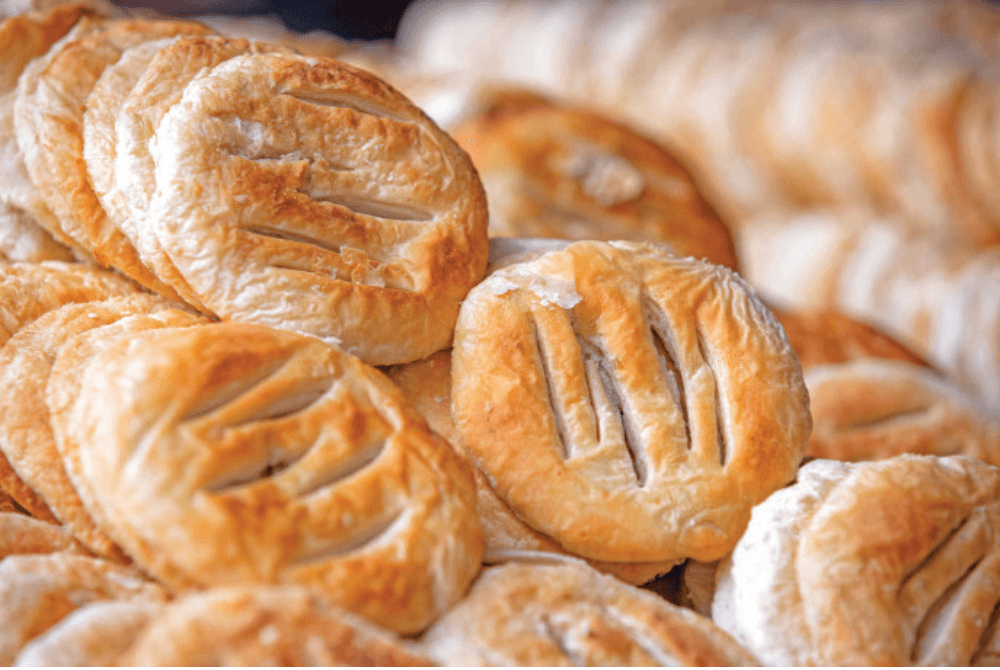
Bakers knead flour, ghee, sugar, milk and salt into a dough, then stretch it into thin sheets and fold in ghee, and in some versions molasses, saffron water, and poppy or nigella seeds. The layered dough is baked on the wall of a tandoor or on a griddle, until it is golden and crisp. The result is dry and crumbly, which is why Old Dhaka sometimes jokingly calls it “suka ruti” (dry bread), as BSS reports. A sweet smell, a hard crust and a soft crumble inside are the signs of a good one.
Types of Bakarkhani
- Gao-joban, shukha and nimshukha: The three types that Hakim Habibur Rahman lists.
- Kaicha-ruti, mulam and chinshukha: Other traditional variations from Dhaka.
- Sylhet and Chattogram styles: These look more like a sweet, syrupy paratha.
- Dinajpur style: Thick and doughy, often with pieces of morobba (fruit preserve).
Where Bakarkhani Comes From in Old Dhaka
Dhaka’s first bakarkhani shop reportedly opened near Lalbagh Fort, and many of the city’s bakarkhani sellers come from the Sylhet Division, according to Wikipedia. Today you will find it in bakeries across Old Dhaka, including the lanes around Nazira Bazar and Siddique Bazar, where The Daily Star profiled a bakery that still makes it fresh every morning.
Planning a Taste of Old Dhaka
For the freshest bakarkhani, go in the morning or late afternoon, when a batch comes out of the oven. Buy a small packet, ask for it warm if you can, and eat it with tea. Prices and shop timings change, so check locally. Pair it with another Old Dhaka classic, the lassi at Beauty Lassi, and for more food stories, browse our foods and cuisines, our post on what Bangladeshis eat for breakfast and the story of Sadek Golla of Jamtala. Read our tips on local transport before you head into the narrow lanes.
Frequently Asked Questions About Bakarkhani
What is bakarkhani?
Bakarkhani is a thick, crisp, lightly sweet flatbread from Old Dhaka, baked in a tandoor and eaten mostly with tea.
Why is it called bakarkhani?
A popular legend says it is named after Aga Bakar and his beloved Khani Begum, with the name made from “Bakar” and “Khani”. Historians treat the story as folklore.
Is the bakarkhani love story true?
There is no firm historical proof. The story is a folk legend, and its details change from one version to another.
What is bakarkhani made of?
It is made of flour, ghee, sugar, milk and salt. Some versions add molasses, saffron water, and poppy or nigella seeds.
What does bakarkhani taste like?
It is crisp and dry with a hard crust, a buttery smell and a mild sweetness. It is almost like a biscuit and is usually dipped in tea.
What are the types of bakarkhani?
Traditional types include gao-joban, shukha and nimshukha, plus kaicha-ruti, mulam and chinshukha. Sylhet, Chattogram and Dinajpur have their own styles.
Where can you eat bakarkhani in Dhaka?
You can find bakarkhani in bakeries across Old Dhaka, including the area around Nazira Bazar and Siddique Bazar.
Final Thoughts on Bakarkhani
Bakarkhani is a small bread with a long memory. Whether you believe the legend of Aga Bakar and Khani Begum or not, the crunch, the smell of ghee and the habit of sharing it with guests are real. Next time you are in Old Dhaka, buy a warm packet, pour some tea and taste a piece of the city’s history. For more ideas, explore our places to visit in Bangladesh and travel experiences.