
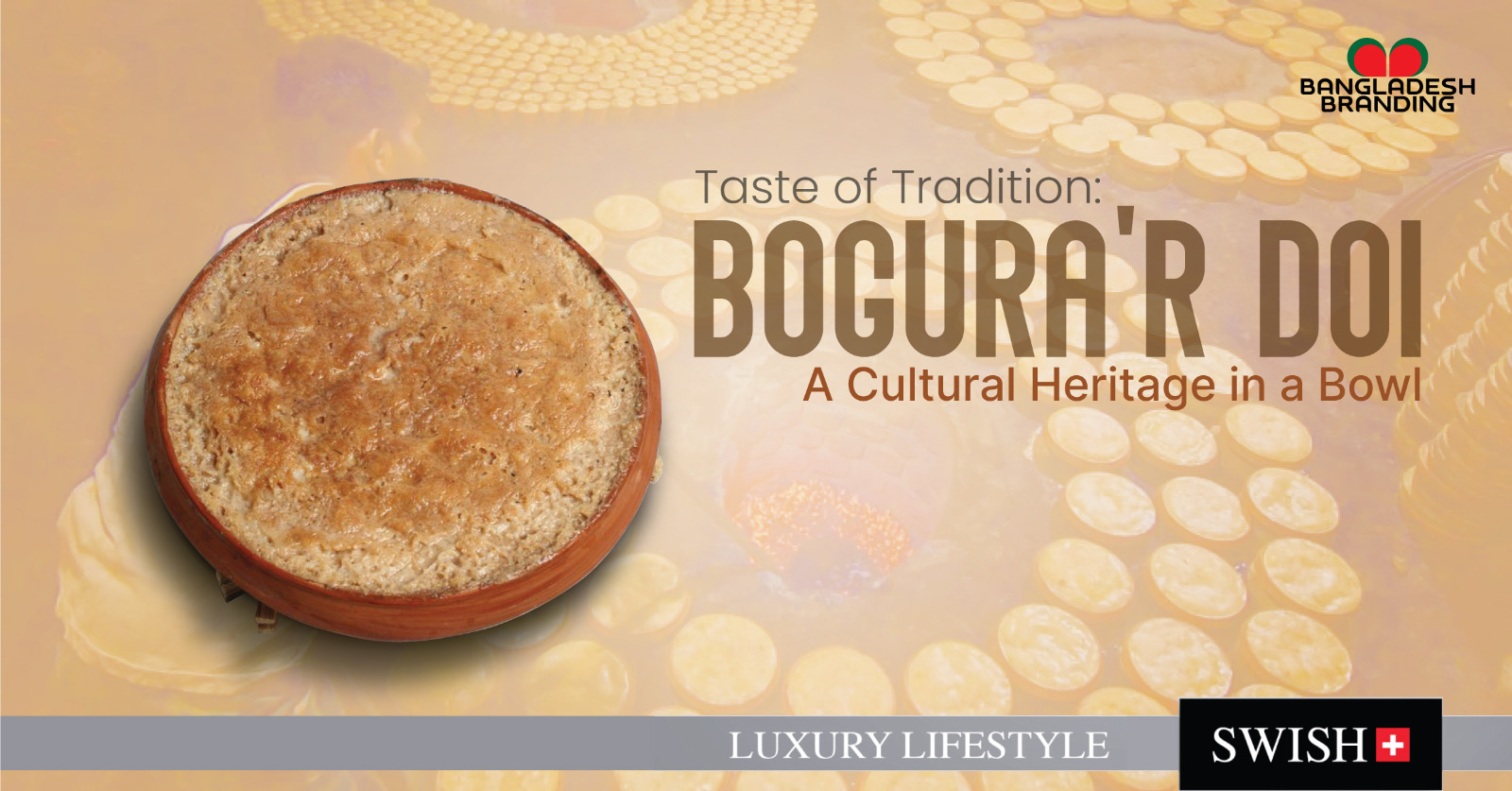
Bogura doi is a thick, sweet fermented-milk dessert from Bogura in northern Bangladesh, especially associated with Sherpur Upazila. Made by reducing milk, adding sugar and a curd starter, and setting the mixture in earthen pots, Bogura doi is valued for its creamy texture and distinctive flavour. In June 2023, the dessert received Geographical Indication (GI) recognition in Bangladesh, giving a formal name to a food tradition shaped by generations of makers.
Picture a family gathering after lunch. Someone opens a clay pot, gently lifts the lid and serves a spoonful of cool, firm doi. The dessert is simple enough to share at home, yet behind that spoonful are dairy farmers, potters, skilled sweet-makers and shops that have kept the tradition alive. The story of Bogura doi is about more than sweetness: it is about the people and place behind a familiar Bangladeshi food.
Bogura Doi at a Glance
- Food: Bogura doi, also written Bogurar doi or Bogra doi
- What it is: Sweetened fermented milk, commonly described in English as sweet curd or sweet yogurt
- Region: Bogura District, Rajshahi Division, Bangladesh; Sherpur is an important centre of production
- Main ingredients: Milk, sugar and a starter made from previously prepared curd
- Traditional container: An earthen pot, commonly called a sara
- Typical character: Rich, smooth and firmly set, with sweetness and a mild fermented tang
- GI recognition: Granted in June 2023; listed as registration number 13 by Bangladesh’s Department of Patents, Industrial Designs and Trademarks
- Food tradition: Served to guests, offered as a gift and shared at family and festive gatherings
Why Bogura Doi Is More Than an Ordinary Dessert
Doi is a familiar food across Bangladesh, but Bogura doi has built a strong identity around a particular place and style of making it. The milk is cooked down before fermentation, creating a thicker base than ordinary lightly set yogurt. The result is often richer, denser and sweeter, although texture and flavour vary between producers and varieties.
The clay pot is part of that identity. It is not just a decorative container for presenting dessert. Traditional makers use earthenware during setting, and researchers have documented how pot preparation, warmth and handling are woven into the work. A good bowl of Bogura doi reflects careful control of milk, starter culture and time, not a secret ingredient that can be proved to belong to every shop.
Where Did Bogura Doi Come From?
Sherpur Upazila is central to the history of Bogura doi. The town and surrounding area have long been associated with milk processing and sweet shops, and reports regularly describe Sherpur as a major production centre. However, the exact date the craft began and the identity of its first maker are disputed. Some accounts trace the tradition back more than a century; others describe an older history. There is not enough consistent evidence to name one unquestioned founder or invention year.
In a 2022 ethnographic study in Gastronomica, researcher Ishita Dey documented the memories and work of makers in Sherpur and Bogura Sadar. Interviewees discussed the Ghosh community’s role in traditional sweet-making, as well as changes in ownership, work and local identity. The study shows that Bogura doi cannot be explained only by a single family legend: it has been shaped by many people across generations.
This history gives the dessert its cultural depth. When a producer talks about preserving an old method, that tradition includes the experience of boiling milk, testing the mixture, arranging earthen pots and teaching younger workers to recognise when a batch is ready.
How Traditional Bogura Doi Is Made
The basic method for preparing Bogura doi is well documented, including in reports by The Daily Star in August 2024 and the Bangladesh Tourism Board. The steps below explain the general process rather than a fixed commercial recipe.
Step 1: Heat and Reduce the Milk
Fresh milk is heated in large vessels and simmered to remove some of its water. This concentrates the milk and helps develop the rich body associated with Bogura doi. Some documented preparations reduce the quantity to around half, but reduction levels differ among makers. This is skilled, hands-on work: heating too quickly or unevenly can change the result.
Step 2: Sweeten and Cool the Mixture
Sugar is added during the cooking process, and the milk is allowed to cool until it is warm rather than hot. Sweetness and colour can vary with the recipe and heating method. It is misleading to assume that every pot of Bogura doi has the same sugar content or colour simply because it shares a regional name.
Step 3: Add the Starter, or Beej
A small amount of previously prepared curd is mixed into the warm milk. Makers call this starter beej, meaning seed. It contains the cultures that ferment the milk and help it set. The temperature and condition of the starter matter, which is one reason the process takes practice. Bogura doi is a fermented dairy food, not merely milk thickened with sugar.
Step 4: Set the Doi in Clay Pots
The mixture is poured into earthen pots and kept in a warm environment while it sets. The pots are often covered and arranged near a heat source. Dey’s field research describes workers monitoring the pots and repeatedly checking the setting process. That makes Bogura doi production more demanding than a short recipe can suggest.
Step 5: Check the Texture and Prepare for Sale
When fermentation has produced the desired firmness, the finished doi is prepared for sale and distribution. Producers must consider hygiene, packaging and transport because fresh dairy desserts require careful handling. The characteristic thick spoonful comes from the interaction of the milk base, starter, setting conditions and experienced workers.
What Local Makers Say About Bogura Doi
In the August 2024 Daily Star feature, journalist Mannan Mashhur Zarif interviewed Md Mostafiz Al-Mamun, identified there as the owner of Chinipata Doi in Bogura. Al-Mamun emphasised the importance of details throughout production, from the quality of milk to the starter and earthen bowl. Those remarks were reported by The Daily Star; they were not an independent interview conducted by Bangladesh Branding.
His account fits a broader pattern documented by researchers: the appeal of Bogura doi rests on a collection of practical decisions, not just one formula. The available reporting does not independently confirm whether Al-Mamun still owns or operates the same outlet in November 2026, so this should be read as a dated account of the craft.
Why Bogura Doi Received GI Recognition
Bogura doi gained Geographical Indication recognition in Bangladesh in June 2023. The government’s official GI register lists Bogura’s doi as registration number 13, with the Bogura district branch of the Bangladesh Restaurant Owners Association as the applicant. The Business Standard reported the recognition in July 2023.
A GI identifies a product linked to a geographical origin and its recognised qualities or reputation. For Bogura doi, this makes the relationship between the dessert and its home district formally recognised. However, GI registration should not be confused with an independent food-safety inspection of every pot sold under the name. Buyers still need to consider the reputation and hygiene of individual sellers.
For readers exploring Bangladesh’s recognised regional foods, the Muktagachha monda tradition offers another example of a sweet strongly associated with its place of origin.
Bogura Doi, Local Jobs and the Work Behind the Clay Pot
The dessert supports more than sweet shops. The production and sale of Bogura doi involves milk suppliers, people who prepare the earthen pots, workers who heat and set the milk, shop staff and transport providers. Dey’s research draws particular attention to the physical labour and repeated practice involved in making each batch.
In June 2025 reporting, The Financial Express described stronger demand after GI recognition, quoting local producers about their business. Those figures reflect the reporting and industry statements at that time; they should not be treated as verified sales totals for 2026.
Preserving Bogura doi as a regional specialty means recognising the skilled people behind it. Modern equipment and wider distribution can help producers reach customers, but consistent quality, responsible dairy sourcing and safe preparation remain central to the product’s reputation.
Bogura Doi in Bengali Food Culture and Celebrations
A pot of Bogura doi can be a dessert after a family meal, a gift to take when visiting relatives or a sweet addition to a celebration. The cultural role is familiar even to people who have never watched the production process. A shopkeeper packs the clay container carefully, someone carries it across town and a family brings it to the table to share.
The 2024 Daily Star feature recalled a Bangla childhood rhyme mentioning chini-pata doi. That reference captures the nostalgic place curd has in everyday food memories. The article also connected doi with Pohela Boishakh, Eid and puja celebrations. These are examples of occasions when families may enjoy the dessert, not claims that every household follows the same custom.
Bangladesh has other regional sweets with equally strong identities. Cumilla is associated with roshmalai, and Tangail’s Porabari with chomchom. See Bangladesh Branding’s Cumilla guide for more food and heritage context. These foods are different, but each shows how local craftsmanship can become part of a district’s identity.
How to Choose and Enjoy Bogura Doi
If you are buying Bogura doi in Bogura or elsewhere, start with freshness and the condition of the shop. Clay pots look attractive, but their appearance alone cannot show whether the product has been stored safely. Ask when the batch was made and how it should be carried or refrigerated. Choose an established seller whose packaging and handling appear clean.
- Check the variety: Ask whether the doi is sweet, white or a richer shahi-style version, since shops may offer different preparations.
- Consider the portion: Rich sweet doi is a dessert; serving size and sweetness vary by maker.
- Protect it during travel: Keep the pot upright, avoid leaving a dairy dessert in a hot vehicle and refrigerate it promptly.
- Confirm details: Prices, shop hours and availability change; check with the seller rather than relying on old travel posts.
- Ask before photographing: If a maker allows you to watch a workshop, respect the workers and food-preparation area.
Visitors exploring the region can pair a food stop with Bangladesh Branding’s Bogura district visitor guide. That page focuses on the wider area’s places to visit, while this article explains the dessert’s cultural and production history.
Frequently Asked Questions About Bogura Doi
What is Bogura doi?
Bogura doi is a thick, sweet fermented-milk dessert associated with Bogura District in Bangladesh. It is usually prepared by heating milk, adding sugar and starter curd, and setting the mixture in clay pots.
Why is Bogura doi famous?
It is known for its rich texture, traditional clay-pot preparation and long association with skilled makers in Bogura, particularly Sherpur. It also received Bangladesh GI recognition in June 2023.
Where did Bogura doi originate?
Sherpur Upazila in Bogura is a historic centre of production. Accounts differ on the exact founding date and first producer, so no single origin story is firmly established.
How is Bogura doi made?
Milk is heated and reduced, sweetened, cooled and mixed with starter curd. It is then placed in earthen pots and kept warm until fermentation sets the dessert. Recipes and timings vary.
Is Bogura doi a GI product?
Yes. Bangladesh granted Bogura doi Geographical Indication recognition in June 2023, and the government GI register lists it as registration number 13.
Are Bogura doi and mishti doi the same?
Bogura doi is a regional form of sweet fermented milk, so it belongs to the broader family of mishti doi. Its name points specifically to the tradition and reputation associated with Bogura.
Can I carry Bogura doi home from Bogura?
Yes, sellers commonly package it in clay pots for customers, but it is a perishable dairy food. Ask how it has been stored, protect it from heat and refrigerate it promptly.
Final Thoughts: A Tradition Served by the Spoonful
Bogura doi brings together the pleasure of a familiar sweet and the history of a local craft. Its story runs from milk and starter culture to clay pots, long workshop hours, family tables and formal GI recognition. The exact beginning of the tradition may remain debated, but the work of generations of makers is visible in every careful stage of preparation.
When you next taste Bogura doi, there is more to notice than sweetness. Consider the people who made the pot, handled the milk and brought the dessert to your table. For more stories about regional dishes, browse Bangladesh Branding’s Foods and Cuisines category and the Gopalganj sweets experience.
Sources and Reporting Dates
- Department of Patents, Industrial Designs and Trademarks, GI register (checked November 2026) — official registration of Bogura doi.
- The Business Standard, July 5, 2023 — GI recognition announced in 2023.
- Ishita Dey, Gastronomica, August 2022 — ethnographic research on craft, labour and food identity.
- Mannan Mashhur Zarif, The Daily Star, August 12, 2024 — Chinipata Doi interview, preparation and cultural context.
- Bangladesh Tourism Board, Bogura curd feature — overview of traditional preparation.
- The Financial Express, June 13, 2025 — local makers’ accounts of the industry after GI recognition.