
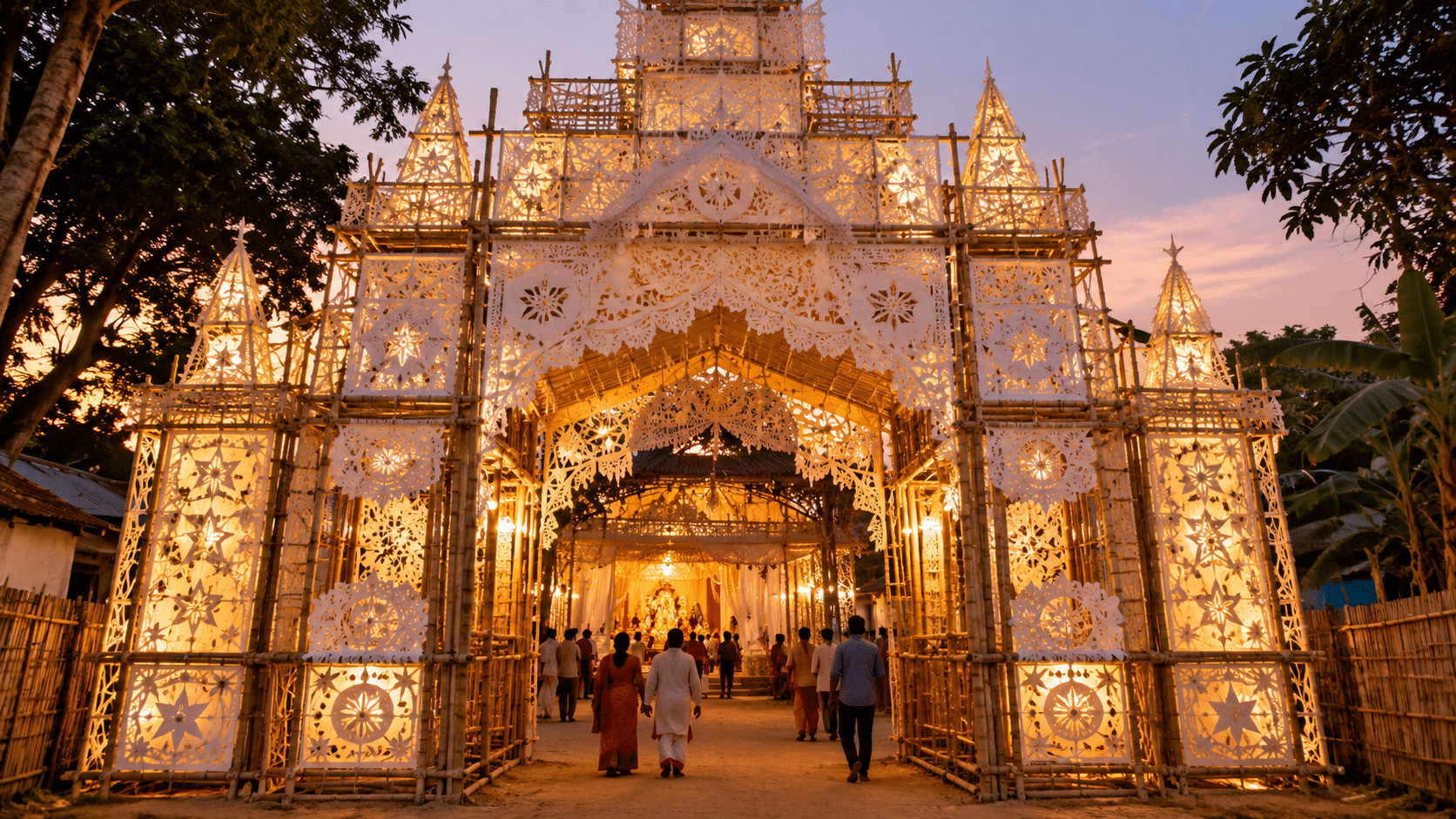
The Gopalganj puja mandap is one of the most beautiful temporary crafts in Bangladesh. Every autumn, during Durga Puja, bamboo frames in villages and towns across Gopalganj are covered in delicate paper cut-outs, turning simple structures into glowing, patterned halls. The Gopalganj puja mandap is not made to last. It is made to be admired for a few days and then taken apart, and that is part of its charm. This page explains how the craft works, the story behind it and how to see it respectfully.
What Is a Gopalganj Puja Mandap?
A mandap, often called a pandal, is the decorated temporary structure that shelters the idols during a Hindu festival. Banglapedia notes that Hindu puja mandaps in villages across Bangladesh have used bamboo structures artistically ornamented with paper cut-outs for centuries. It also lists Gopalganj among the districts known for the best mandap displays with paper cut-outs during Durga Puja. In other words, the Gopalganj puja mandap sits inside a long Bengali craft tradition, and the district is recognised for doing it well.
Why the Gopalganj Puja Mandap Thrives Here
Gopalganj has the highest percentage of Hindus of any district in Bangladesh, so Durga Puja is a district-wide festival, not a small neighbourhood event. A community that celebrates together tends to invest in its craft together, and that is likely one reason the Gopalganj puja mandap tradition stays so lively.
Materials Behind the Gopalganj Puja Mandap
- Bamboo poles and strips for the frame and arches
- Coloured and shiny paper for the cut-out patterns
- Cloth for walls, ceilings and canopies
- Rope, string and paste to hold everything together
- Lights and lamps that make the cut-outs glow at night
How a Gopalganj Puja Mandap Is Made
Building the Frame
Craftspeople usually begin with the bamboo frame. Poles are tied together to form pillars, arches and a roof, and the shape can range from a simple hall to a grand gate or even a small fort or temple replica.
Cutting the Paper
Paper is folded and cut into repeating patterns such as flowers, stars, vines and geometric borders. Each fold must be precise, because one careless cut can spoil a whole sheet. When the paper is opened, the pattern appears like lace.
Decorating and Lighting
The cut-outs are then pasted along arches, ceilings and walls, often layered over coloured cloth so that the pattern stands out. At night, lamps and lights shine through and behind the paper, which is when the Gopalganj puja mandap looks its best.
The People Who Make the Gopalganj Puja Mandap
The craft is usually carried out by local puja committees, artisans and volunteers, with skills passed on by working side by side. A young helper may start by cutting simple shapes and, within a few years, lead the design of an entire arch. Because the work is done in the weeks before Durga Puja, it often becomes a community project that brings neighbours together.
A Story From a Mandap Workshop
Picture a boy in a Gopalganj village who spends his school holiday folding paper beside an uncle. At first his stars come out crooked. By the end of the week they are sharp and even, and one of them is pasted high on the main arch. On the first night of the puja, he stands in the crowd, pointing at his star and saying nothing. That quiet pride is what keeps the craft alive.
Where and When to See a Gopalganj Puja Mandap
Durga Puja takes place in autumn, usually in October, and its dates change each year with the lunar calendar. Mandaps appear in villages and towns across Gopalganj, and the best time to see them is after sunset, when the lights are on. Ask locals which mandaps are the most elaborate this year, since designs and venues change. Some communities also mark the end of the puja season with traditional boat races, which you can read about in the Gopalganj boat race guide.
Visiting a Gopalganj Puja Mandap Respectfully
- Remember that a mandap is a place of worship during the festival, not only a photo spot.
- Remove your shoes where asked and dress modestly.
- Ask before photographing worshippers or priests, and avoid flash near idols.
- Do not touch the decorations or pull off paper pieces.
- Thank the organisers, and give donations only through the puja committee.
Can You Buy a Gopalganj Puja Mandap Piece?
Usually no. The decorations are made for the festival and taken down afterwards. If you want to support the craft, speak politely with the artisans, ask whether they make paper cut-out pieces for sale and buy directly from them.
Honest Notes About the Gopalganj Puja Mandap
- The craft’s link to Gopalganj comes from Banglapedia’s mention of the district, so specific mandaps and artisans must be confirmed locally.
- Durga Puja dates change every year, so confirm dates and venues before you travel.
- Designs vary from year to year, so no two seasons look exactly alike.
Gopalganj Puja Mandap FAQs
What is a Gopalganj puja mandap?
It is a temporary bamboo structure decorated with paper cut-outs, built to shelter the idols during Durga Puja in Gopalganj.
When can I see a Gopalganj puja mandap?
During Durga Puja in autumn, usually October, with the best views after sunset.
What is a Gopalganj puja mandap made of?
Mainly bamboo, coloured paper, cloth, rope and paste, lit with lamps and lights at night.