Gopalganj sweet making is a craft as much as a cuisine. Behind every soft roshogolla, golden jilipi and creamy roshmalai in the district stands a sweet-maker, known in Bangla as a moira, who works with milk, sugar and patience. Gopalganj sweet making has made the district famous across Bangladesh, and this page explains the craft: what goes in, how the sweets are made, who makes them and where to find them.
The Craft Behind Gopalganj Sweet Making
Gopalganj is most famous for its sweets, including chhana sweets, sondesh, roshmalai, roshogolla, doi, jilipi, rajbhog and chomchom. Locals say the sweet-making tradition goes back a very long time, and shops in the district still prepare sweets for weddings and big programmes. Gopalganj sweet making is a family skill, learned by watching and doing over many years.
Materials in Gopalganj Sweet Making
- Fresh milk, the base for almost every sweet
- Chhana, the soft fresh cheese made by curdling milk
- Sugar, melted into syrup for soaking and cooking
- Flavourings such as cardamom or rose water, which are common in Bengali sweets
- Clay pots or cups for setting doi, the thick sweet curd
How Gopalganj Sweet Making Works
Making the Chhana for Gopalganj Sweet Making
Milk is heated and curdled, then the solids are drained and pressed. A good chhana must be soft but not wet. This first step decides the texture of the final sweet, which is why sweet-makers treat it so seriously.
Kneading and Shaping
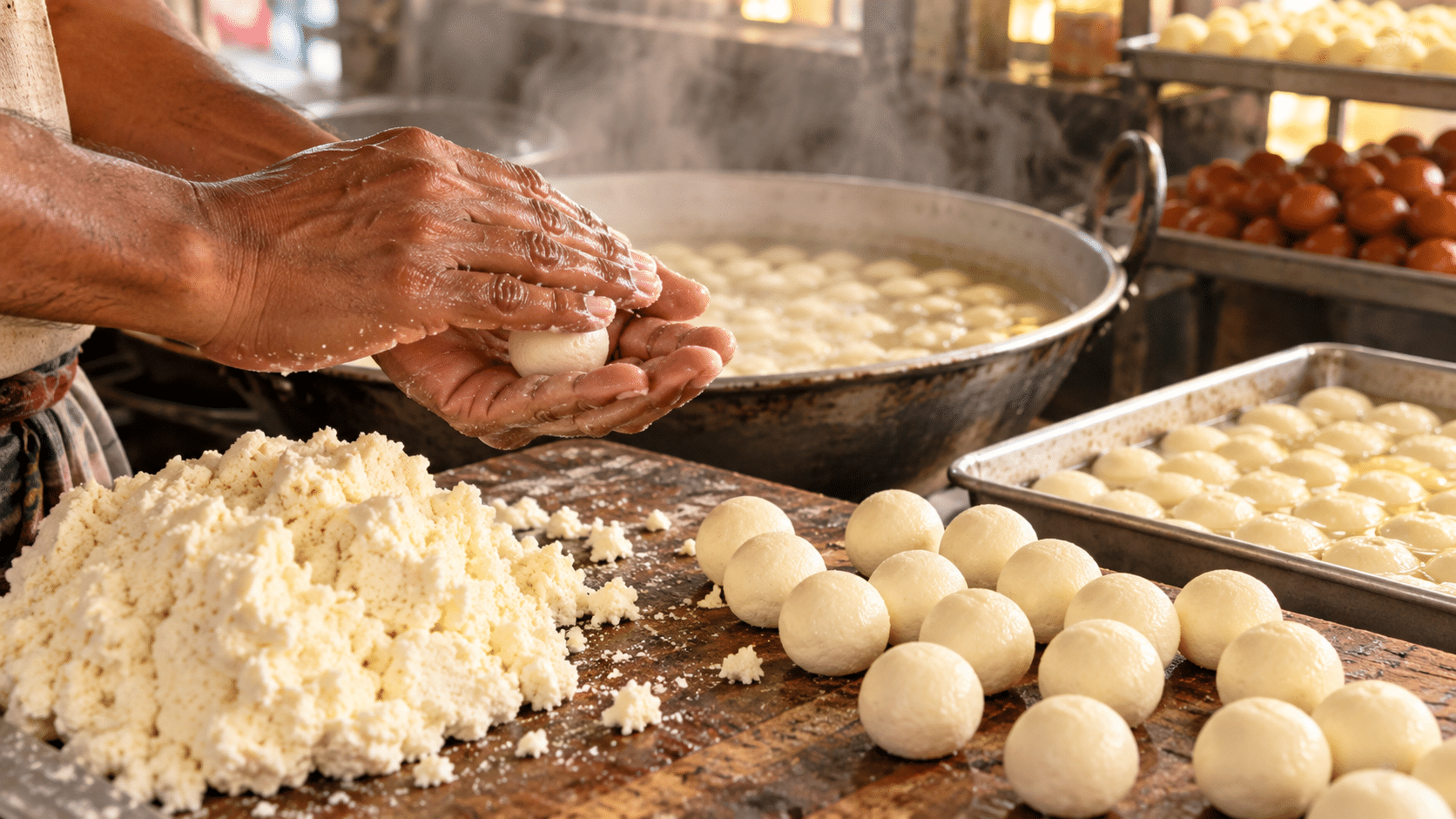
The chhana is kneaded until it becomes smooth and fine. It is then shaped into small balls for roshogolla, longer pieces for chomchom or blocks for sondesh. Skilled hands can tell by touch whether the dough is ready.
Cooking and Soaking
Shaped pieces are cooked in sugar syrup, or fried in the case of jilipi, and then rested so they absorb sweetness evenly. Roshmalai is finished in thickened milk, while doi is set slowly in clay pots. Timing and temperature matter, because small mistakes make sweets hard or heavy.
Celebrations and Gopalganj Sweet Making
In Gopalganj, sweets are tied to weddings, family visits and festivals. At the Jowariya rural fair in Tungipara, past reports describe large sweets such as Raj Bhog, Kola Bhog and Komola Bhog, with prices ranging from BDT 10 to 500. Sweet-makers prepare large batches before such events, often working through the night.
A Morning in Gopalganj Sweet Making
Picture a sweet-maker in a small Gopalganj shop who begins long before sunrise. Milk bubbles in a wide pot, steam rises, and his assistant kneads chhana at the counter. By the time the first customer arrives, trays of roshogolla sit in syrup in glass cases. He tastes one, nods and adds a little more syrup to the next batch. That quiet routine is what a famous reputation really looks like.
Where to Find Gopalganj Sweets
Sweet shops in Gopalganj town are the best place to start, and some allow you to sit inside and eat from a plate. You will also find sweets at village fairs such as the Jowariya rural fair, and at weddings and local programmes if you are invited. Ask locals which shop they trust, because reputations are personal and prices vary.
How to Buy Good Gopalganj Sweets
- Choose sweets that look fresh and smell of milk and cardamom rather than oil.
- Ask when the batch was made, since fresh sweets taste best the same day.
- Buy small quantities of several varieties instead of one large box.
- Check that the packaging is clean and sealed if you plan to travel.
- Ask politely before taking photographs inside a working kitchen.
Supporting Gopalganj Sweet Making
Gopalganj sweet making depends on small family shops. Buying directly from the shop, paying fair prices and sharing good reviews all help the craft survive. If you enjoy a sweet, tell the maker. That feedback means more than any advertisement.
Honest Notes About Gopalganj Sweet Making
- This page does not name individual shops, because they could not be verified, so confirm recommendations locally.
- Prices and varieties change by season and shop, so treat figures as examples.
- Fresh milk sweets spoil quickly, so eat or refrigerate them soon after buying.
Gopalganj Sweet Making FAQs
What is Gopalganj sweet making?
It is the traditional craft of preparing chhana-based sweets, doi and jilipi in Gopalganj, using milk, sugar and skilled handwork.
Which sweets is Gopalganj famous for?
Roshogolla, chomchom, roshmalai, sondesh, jilipi, rajbhog and doi are among the best known.
Where can I see Gopalganj sweet making?
In sweet shops in Gopalganj town, and at village fairs and local events. Ask the shopkeeper politely before watching or photographing the kitchen.