
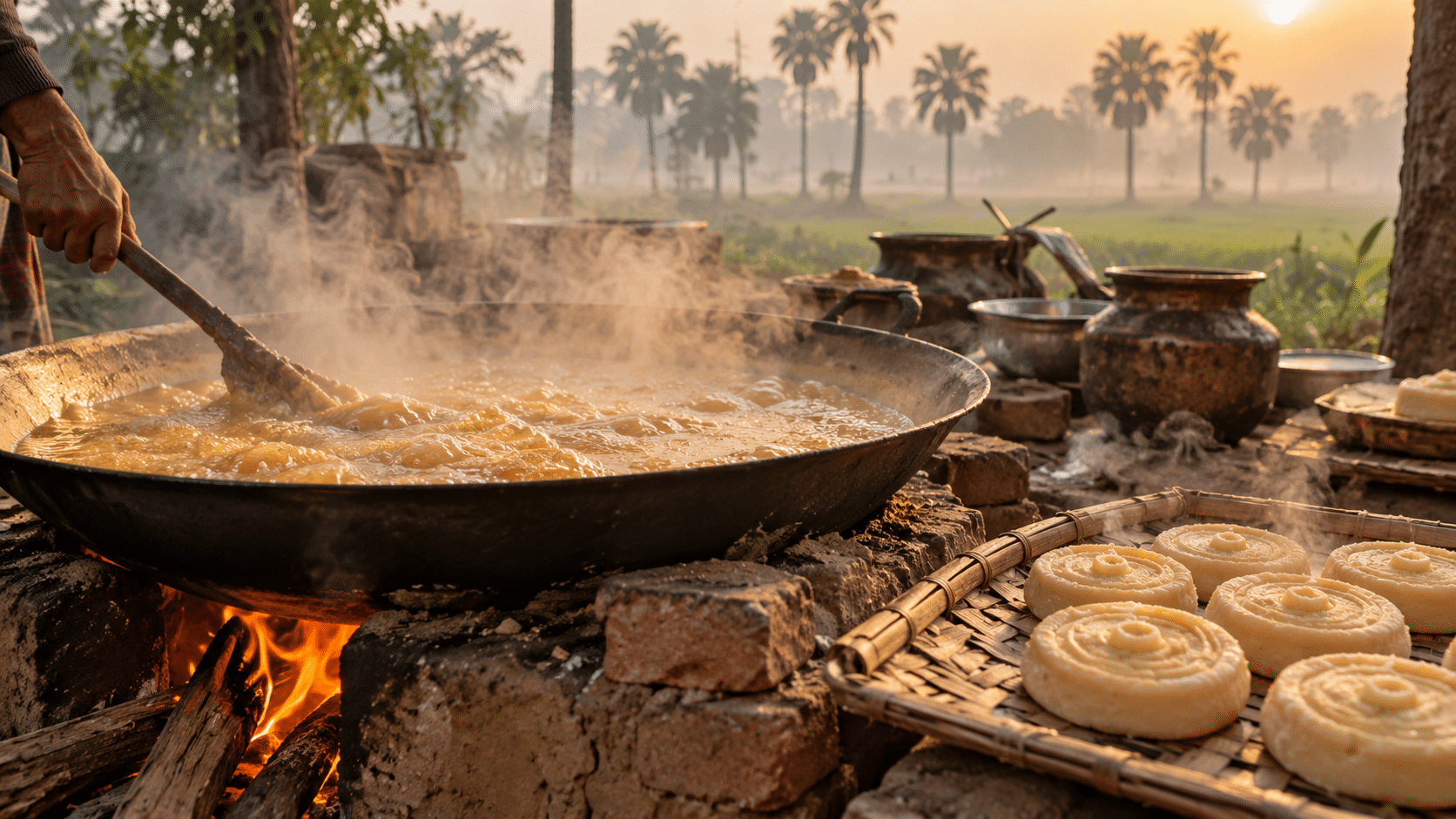
Hazari Gur making is one of the most patient crafts in Manikganj. In the cool months, villagers in Jhitka and nearby parts of Harirampur turn fresh date palm sap into a golden jaggery that has been prized for nearly 200 years. The process looks simple, but Hazari Gur making depends on timing, skill and family knowledge that is passed from one generation to the next.
What Is Hazari Gur?
Hazari Gur is a traditional date palm jaggery from Harirampur upazila in Manikganj. It is produced mainly in the Jhitka, Gopinathpur and Uttarpara areas. Reports say the gur has a distinct taste and aroma, and that Hazari Gur making uses the first sap of the season. In 2026, news reports said it received geographical indication recognition, which formally links the name to Manikganj.
The Story Behind Hazari Gur Making
Stories about the origin differ. One version says a man named Mohammad Hazari began the craft around two centuries ago. Another credits a date sap collector named Hazari Pramanik. A third links the name to the Bangla word for thousand. Whatever the truth, Hazari Gur making has stayed in families for generations. One producer in Jhitka says he is the fifth generation to make the white version.
Materials Used in Hazari Gur Making
The key material is fresh date palm sap, collected by trained sap collectors known as gachhis. Reports say about 10 to 13 litres of sap are needed to make just one kilogram of gur. That is why the quality of the sap, and the care taken in collecting it, matters so much.
How Hazari Gur Making Works
Collecting the sap
Sap collection happens in the cool winter season. Collectors climb the trees, cut the bark and let the sap drip into pots. For the white Hazari Gur, one producer says sap is collected for three days in a row for each batch.
Boiling the sap
The fresh sap is boiled slowly in large pans until it thickens. Timing is critical, because too little heat leaves the gur soft and too much can spoil the colour and flavour.
Setting and shaping
The thick syrup is poured out to cool and set. Skilled hands decide when it is ready, and the finished gur is sold in blocks or pieces.
Why Hazari Gur Making Is Under Pressure
Hazari Gur making faces real challenges. Producers complain that fake gur is sold under the same name, sometimes with a copied brass seal. A Daily Star report has also described the craft as a fading tradition. The recent GI recognition is meant to help protect the name and the families behind it.
Where to Find Real Hazari Gur
The best place to find Hazari Gur is the home region itself: Jhitka, Gopinathpur and Uttarpara in Harirampur. Ask locally for Jhitka Bazar and buy from named producer families. Fresh production follows the winter sap season, so supply is best from November to February.
How to Buy Hazari Gur Wisely
- Buy from known producer families, not random roadside sellers.
- Reports say genuine gur carries a brass seal, but fakers can copy it, so ask about the sap and process.
- An older report quoted around Tk 800 per kilogram for pure gur, but prices may differ today.
- Store gur in a clean, dry, airtight container.
Supporting the Craft Respectfully
Hazari Gur making is a family craft, not a tourist show. If you visit, ask permission before watching or photographing, buy something small and thank the producers. Every purchase from a genuine maker helps keep the tradition alive.
Quick Answers About Hazari Gur Making
What is Hazari Gur made from?
Fresh date palm sap, boiled and set into jaggery.
Where does Hazari Gur making happen?
Mainly in Jhitka, Gopinathpur and nearby areas of Harirampur, Manikganj.
When can I see Hazari Gur making?
In the cool winter months, when date palm sap is collected.
Read More
To plan a visit, read our Hazari Gur experience guide and our Manikganj winter trip plan.