
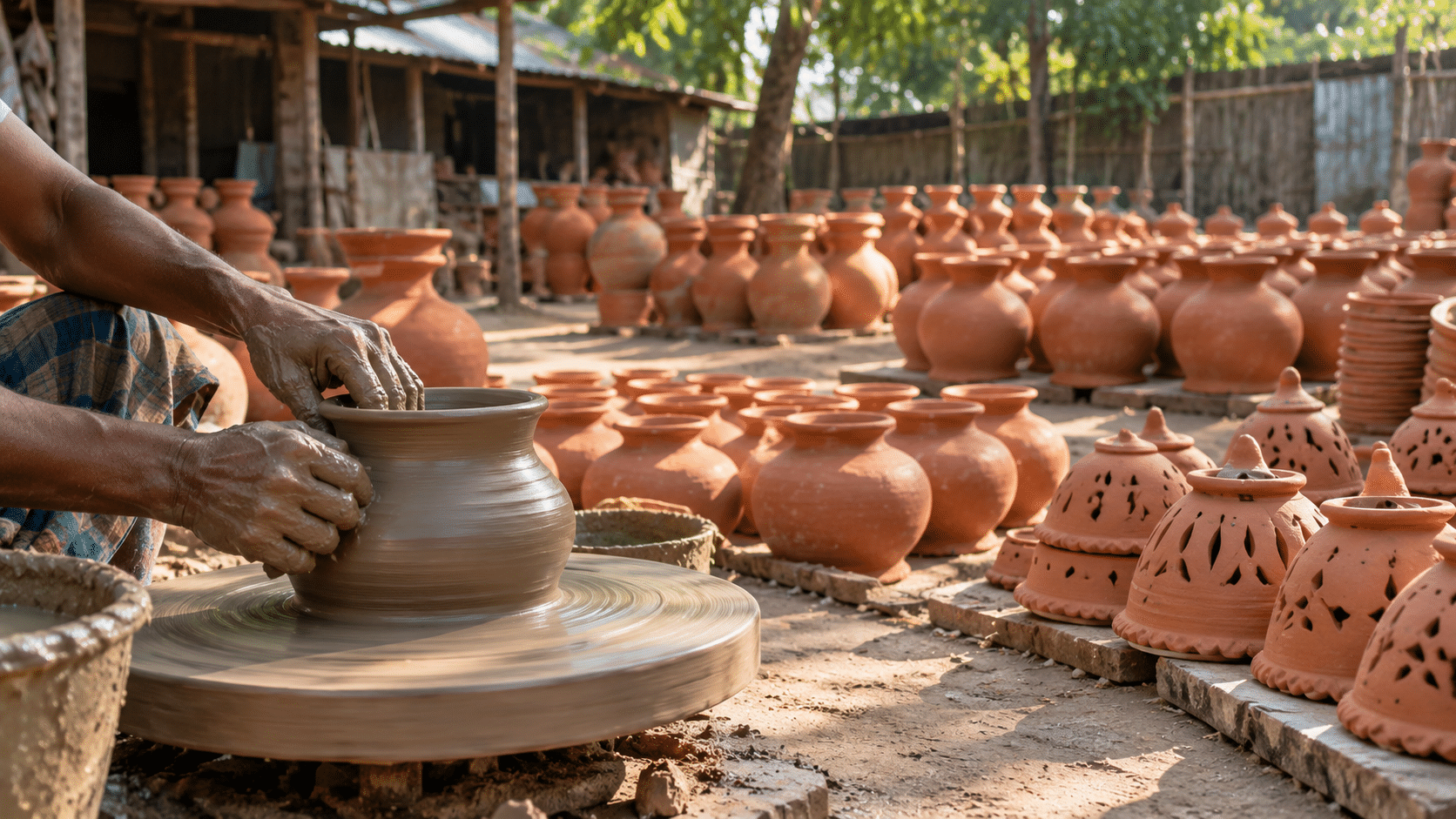
Kartikpur pottery is the quiet craft of a village in Bhedarganj, Shariatpur, where red clay becomes pots, lamps, tiles and home decor. Banglapedia lists Kartikpur among the notable pottery villages of Bangladesh, and a government craft map describes it as famous for pottery. If you want to see a traditional craft that is still alive and still changing, Kartikpur pottery is worth a stop.
Where Is Kartikpur Pottery Made?
Kartikpur village lies in Ramvadrapur union of Bhedarganj upazila in Shariatpur district. Please do not confuse it with a different Kartikpur in Naria upazila, which is known for its old zamindar family history. For pottery, you want the Bhedarganj village. This distinction matters when you ask for directions, so say Kartikpur pottery, Bhedarganj, to locals and drivers.
Who Makes Kartikpur Pottery?
A village blog reports that artists from the Pal and Kumar communities have worked with clay here for many generations. The Pal and Kumar names are traditionally linked with potters across Bengal. In family courtyards, rows of drying pots are a common sight, and elders often teach younger family members how to make tiles and figures. This family passing-down is a big part of what keeps Kartikpur pottery alive.
What Is Made in Kartikpur?
- Everyday items: Pots, jars (kolosh), and similar household ware.
- Garden items: Flower pots and tubs.
- Home decor: Terracotta lamp shades, candle stands, coin boxes and wall pots.
- Figures and tiles: Hand-shaped figures and tiles, according to village accounts.
The same blog says that a few workshops now make close to three thousand types of items and that hundreds of people from nearby villages work in them. Please treat these numbers as reported claims and confirm them locally.
The Clay and the Process
Kartikpur pottery begins with river clay, which is soft, red and rich in the delta. In general, the clay is cleaned and softened, shaped by hand or on a wheel, dried in the sun and then fired to turn it into hard terracotta. Details differ from workshop to workshop, so ask the potter to show you each stage. Watching a pot rise from a lump of wet clay in a few minutes is one of the best parts of visiting Kartikpur pottery.
From Village to City Shelves
The blog also says that NGOs and brands buy Kartikpur pottery and sell it in Dhaka, across the country and in other markets. That matches a wider trend: old craft products are finding new buyers as decor and gifts. If you buy directly from the village, ask whether a workshop can pack items safely for travel.
How to Visit Kartikpur Pottery
- Travel to Bhedarganj and then ask locally for Kartikpur village in Ramvadrapur union.
- Ask permission before photographing workshops, kilns and people.
- Do not touch drying pieces, because they break easily.
- Ask about the price before you buy, and respect handmade value.
- Carry small cash notes and a soft cloth or newspaper to wrap fragile items.
Best Time for Kartikpur Pottery
Dry weather is better, since clay pieces dry in the sun and workshops are busier then. November to February is comfortable for travel in Shariatpur, but check locally because workshop schedules change.
Simple Care Tips
Terracotta can crack with sudden temperature changes, so avoid placing a hot item on a cold surface. Wipe decor gently with a dry or slightly damp cloth, and keep pieces away from heavy impact.
Plan It With Other Stops
Bhedarganj is also home to Burir Hat Mosque and the Mahisar area, so you can pair Kartikpur pottery with a heritage day. It fits perfectly into the second day of a Shariatpur 2 day trip.
Quick Answers About Kartikpur Pottery
Where is Kartikpur pottery?
In Kartikpur village, Ramvadrapur union, Bhedarganj upazila, Shariatpur district.
What makes Kartikpur pottery special?
It is a family tradition of the Pal and Kumar communities that mixes everyday ware with modern terracotta decor.
Can I buy directly from the village?
Often yes. Ask at the workshops, check prices and ask about safe packing.