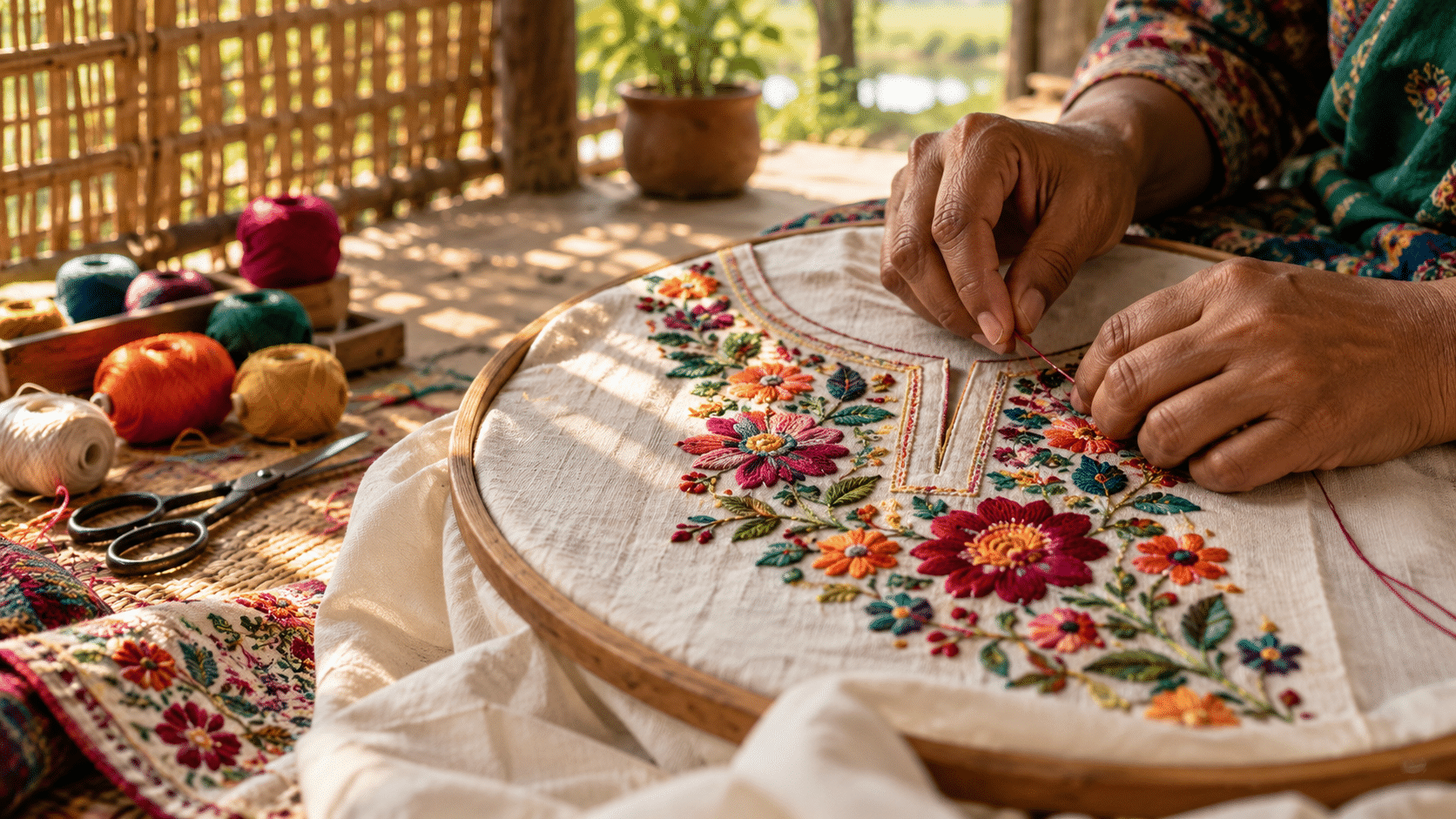
Manikganj embroidery is a craft that lives inside homes, on verandas and in quiet afternoons. Across the district, thousands of women stitch designs onto clothes that later appear in showrooms in Dhaka. The Manikganj embroidery story is not about a single famous product, but about a whole network of skill and daily work that supports many families.
What Is Manikganj Embroidery?
Manikganj embroidery means hand embroidered clothing made by women in and around the district. Reports describe items such as panjabi, three piece sets, saris, fatua and baby dresses, all decorated with different designs. A 2017 report said around 30,000 women in Manikganj were doing this work throughout the year, so it is one of the district’s most important home based crafts.
The Story Behind Manikganj Embroidery
Manikganj embroidery grew through several organisations that gave women access to training, orders and markets. The report named Brac’s Ayesha Abed Foundation, Monami, Nakshi, Yusuf-Ibrahim Handicraft, Shankhaneel, Mycraft, and Janani Craft and Fashion among the notable groups. Women usually work at home, which lets them earn while managing household duties.
Materials Used in Manikganj Embroidery
The craft uses fabric, embroidery thread and hand stitching. Designs are chosen by customers and organisations, and the stitching is done by hand at home. The finished items are then sent to Dhaka and sold under different labels, according to reports.
How Manikganj Embroidery Work Happens
Orders and designs
Women receive fabric and design instructions based on customer demand. Quality is checked before items go to market.
Stitching at home
Embroiderers stitch at home throughout the year. Work increases before festivals, especially Eid, when demand for new clothes grows.
Reaching the market
Finished clothes are sent to showrooms in Dhaka, where they are sold under well known brand labels. This means many buyers never know where the stitching took place.
Why Manikganj Embroidery Matters
For many women, Manikganj embroidery is a source of income and independence. The work happens at home, so it fits around family life. It also keeps hand skills alive in a time when machine made clothes are everywhere. In that sense, Manikganj embroidery is both a craft and a livelihood.
A Craft Behind the Label
Many shoppers see only the brand tag. Behind each embroidered panjabi or sari are hours of patient stitching by a woman working at home. Knowing this changes how you look at the garment, and it shows why fair payment and honest labelling matter so much for the people who keep this skill alive.
Where to Find Manikganj Embroidery
Unlike a market craft, Manikganj embroidery is mainly made to order, so it is not always sold directly in the district. Finished pieces often appear in Dhaka showrooms under brand names. If you want to meet embroiderers, contact the organisations listed above and ask whether visits or direct purchases are possible. Please do not walk into homes without permission.
How to Support Manikganj Embroidery
- Buy from brands and organisations that say clearly where their embroidery is made.
- Ask about fair payment and working conditions.
- Choose hand embroidered pieces and take care of them, so they last.
- Respect the privacy of artisans, especially if you visit homes.
Quick Answers About Manikganj Embroidery
How many women do Manikganj embroidery work?
A 2017 report said around 30,000 women in the district.
What items does Manikganj embroidery decorate?
Panjabi, three piece sets, saris, fatua, baby dresses and other clothes.
Can I buy Manikganj embroidery directly in Manikganj?
It is mostly made to order, so ask the organisations first. Many pieces reach Dhaka showrooms.
Read More
For more heritage in the district, read our Manikganj heritage walk guide and the Hazari Gur making guide.