Manikganj musical instruments are part of the quiet music behind Bangladesh’s folk life. In villages across the district, families still shape wood, stretch animal skin and tune drums by hand. The Manikganj musical instruments tradition is not famous in guidebooks, but anyone who loves folk music or craft will find it deeply rewarding.
What Are Manikganj Musical Instruments?
Manikganj has long been known for families who make traditional instruments. A Daily Star report lists the dhak, dhol, khol, tabla, khamak, dugdugi, khanjani, baya and ektara among the Manikganj musical instruments made here. These are the instruments of folk songs, devotional music, weddings and festivals, which is why the craft is tied so closely to local culture.
The Story Behind Manikganj Musical Instruments
The craft has passed down within families. An artisan in Baliakhora Rishipara of Ghior says he and his four brothers learned from their late father, and they still work together. Manikganj also has a strong folk music identity, and the district brand has been linked with Baul music, so the story of Manikganj musical instruments is also the story of local song.
Materials Used in Manikganj Musical Instruments
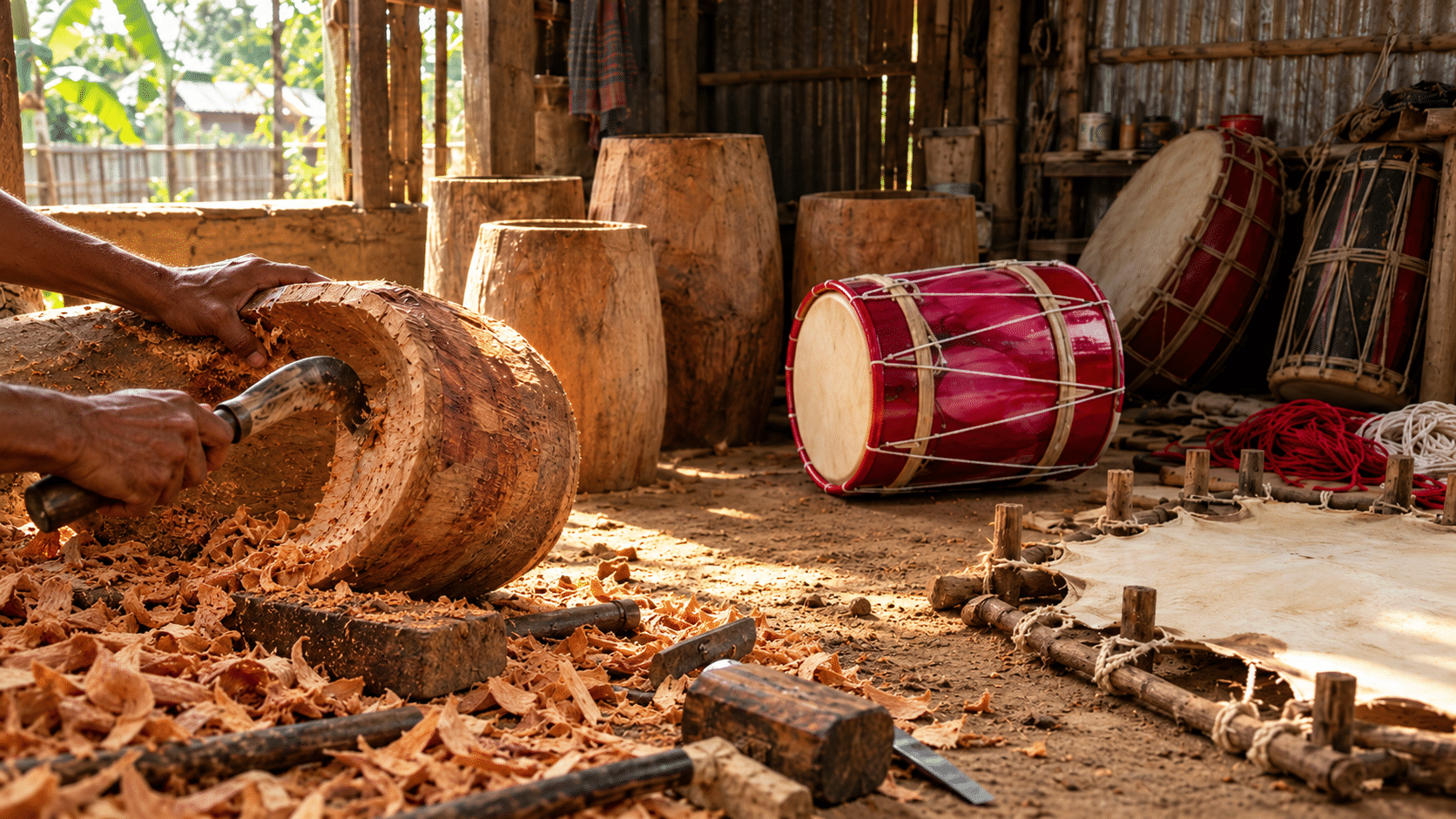
Makers use woods such as mango, neem, renti-karai, shishu and mahogany. Goat and buffalo skins are used for drumheads, and earthen pots and steel frames also appear in some instruments. Rising costs of transport and raw materials have made these materials harder to afford, which is one reason the craft is under pressure.
How Manikganj Musical Instruments Are Made
Shaping the body
Wood is cut and shaped into the body of the instrument, such as a drum shell or a long barrel. Some instruments use earthen pots or metal frames instead.
Preparing the skin
Animal skin is cleaned, stretched and fitted to the drumhead. This stage decides the sound, so makers work carefully.
Tuning and finishing
The instrument is tuned by hand, then finished for sale. Many makers work on orders from shop owners and produce what is requested.
Where Manikganj Musical Instruments Are Made
Reports name several villages: Baliakhora Rishipara in Ghior upazila, Puran Goaria and Dhankora in Saturia, Garpara in Sadar, Shimulia and Basail in Shivalaya, Zionpur in Daulatpur and Kalai in Harirampur. This spread shows how widely the craft once reached across the district.
Why Manikganj Musical Instruments Are Under Threat
Artisans say modern instruments are replacing traditional ones, and production costs keep rising. A decade ago, a household reportedly made around Tk 15,000 profit a month, and now many barely make ends meet. Fewer young people are choosing to learn the craft, which puts the whole tradition at risk.
Why This Craft Deserves Attention
Instruments like the khol and dugdugi are commonly used in folk and devotional singing, while the dhak and dhol set the rhythm at festivals and weddings. When a maker stops working, a village loses more than a product. It loses a small part of its musical life, and the knowledge of how the sound is built.
How to Find and Support Makers
- Visit the villages named above and ask locally for instrument makers.
- Buy directly from the artisan, and offer a fair price.
- Ask permission before photographing workshops or people.
- Ask about the materials and the maker’s family story.
Quick Answers About Manikganj Musical Instruments
What instruments are made in Manikganj?
Reports mention the dhak, dhol, khol, tabla, khamak, dugdugi, khanjani, baya and ektara.
Where can I see Manikganj musical instruments being made?
In villages such as Baliakhora Rishipara in Ghior and Dhankora in Saturia.
Is the craft of Manikganj musical instruments declining?
Artisans say yes, because of higher costs and the rise of modern instruments.
Read More
For nearby culture, read our Garpara Imam Bari and Manikganj heritage walk guides.