
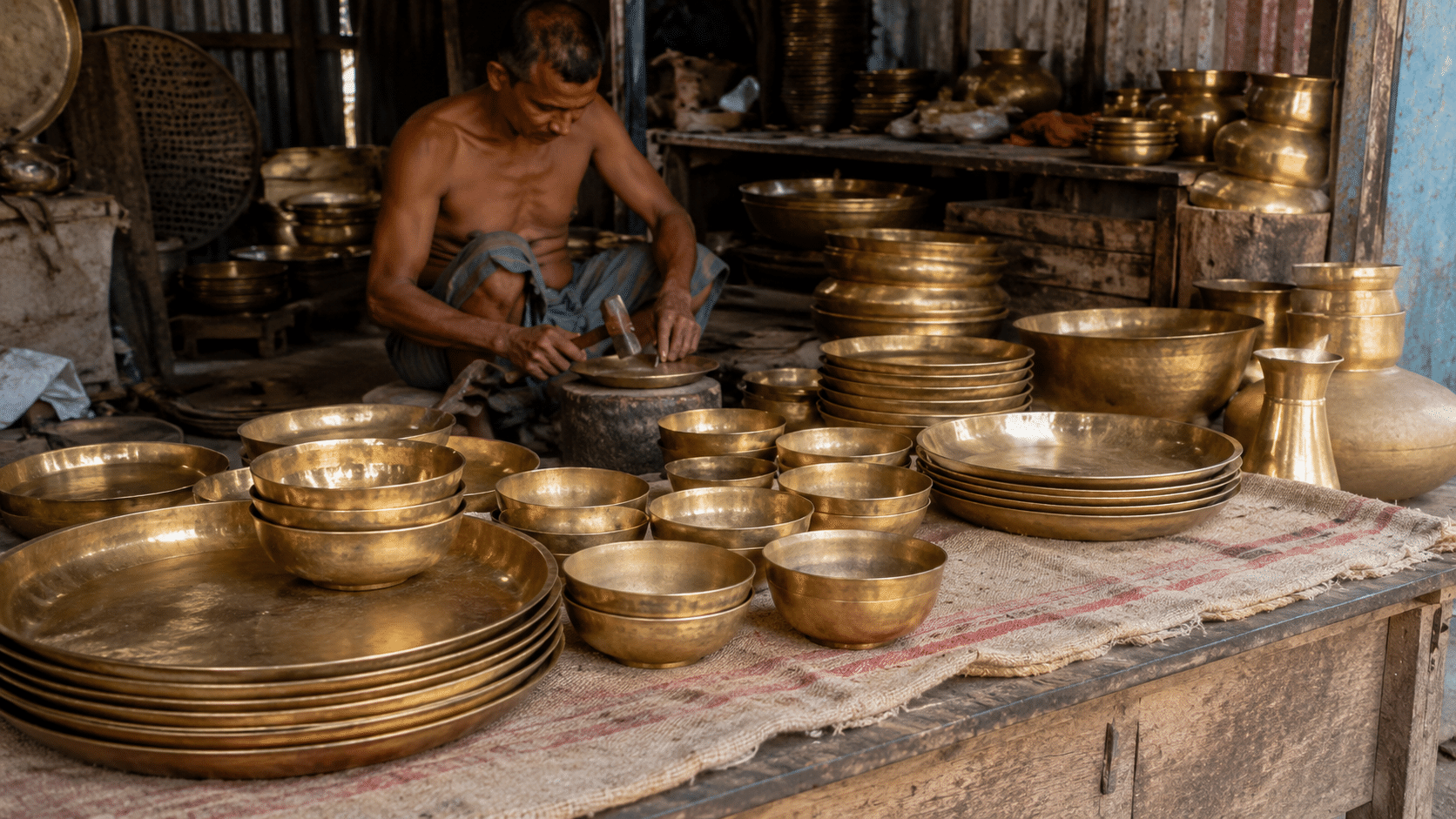
Munshiganj bell metal craft is the ringing, golden-toned side of the district’s heritage. In Louhajang, the upazila beside the Padma, Banglapedia records copper and bell metal work among the local cottage industries, and lists copper and bell metal products among the area’s main exports. If you like old-style metal utensils, shining bowls and the sound of a struck plate, Munshiganj bell metal craft is a tradition worth knowing.
What Is Munshiganj Bell Metal Craft?
Bell metal, called kansa in Bengali, is a bronze alloy made mainly of copper and tin. It gets its name from the clear ringing sound it makes when struck. According to Banglapedia, Louhajang has both copper and bell metal work and brass-and-metal work is also listed for Sirajdikhan. Munshiganj bell metal craft therefore sits in the western part of the district, close to the Padma.
The Story of Bell Metal in Bengal
Metalwork is one of the oldest crafts of the delta. Wikipedia notes that the best metal craftsmen in Bangladesh traditionally belonged to the Kansari community, who worked in brass and silver, and that the work is done entirely by hand. Dhamrai, near Dhaka, is the best-known centre, and a 2013 Xinhua report cited by Wikipedia said the number of brass-craft families there had fallen from about a thousand to about a hundred.
That national trend is a reminder that Munshiganj bell metal craft is a delicate tradition, so it is worth supporting where you find it.
How Munshiganj Bell Metal Craft Is Made
- Copper and tin are melted together to make the bell metal alloy.
- The molten metal is cast or beaten into rough shapes.
- The craftsman heats, hammers and shapes the piece again and again by hand.
- The surface is smoothed, polished and sometimes lightly engraved.
Brass work in Bangladesh also uses a lost wax process for small solid objects, which makes them heavy and detailed. Every step needs strong arms, good timing and long experience.
What You Can Find in Munshiganj Bell Metal Craft
- Plates, bowls and glasses for serving food
- Pots and ladles for the kitchen
- Small ceremonial and household items
- Decorative pieces that show the golden tone of the metal
Because workshops are small, the range depends on what each craftsman makes. Ask what is available before you visit.
Where to Find Munshiganj Bell Metal Craft
Start in Louhajang. Banglapedia names Gaodia Bazar, Kalma Bazar, Dighali Hat and Kanaksar Hat among its noted markets. Brass and metal work is also recorded for Sirajdikhan. Banglapedia does not list individual metal workshops, so it is best to ask in the local bazaars and travel with a local guide or driver.
Tips for Buying Munshiganj Bell Metal Craft
- Strike the piece gently. A clear, long ring is a good sign.
- Check the weight. Hand-made bell metal pieces feel solid.
- Ask what metals were used, and whether the piece is for food or only for display.
- Look for even hammer marks and clean edges.
- Polish with a soft cloth, and avoid harsh scrubbing.
Why Munshiganj Bell Metal Craft Is Worth Saving
Handmade metalwork carries skills passed from parent to child. When families stop making it, the knowledge disappears. A visit to Louhajang, a respectful conversation with a craftsman and a purchase of a small piece can all help keep the tradition alive.
Frequently Asked Questions
Where is Munshiganj bell metal craft found?
Banglapedia records copper and bell metal work in Louhajang upazila, with brass and metal work in Sirajdikhan.
What is bell metal made of?
It is an alloy of copper and tin, known for the ringing sound it makes when struck.
Is Munshiganj bell metal craft still made by hand?
Traditional metalwork in Bangladesh is made by hand, and small workshops in Munshiganj continue that style.