
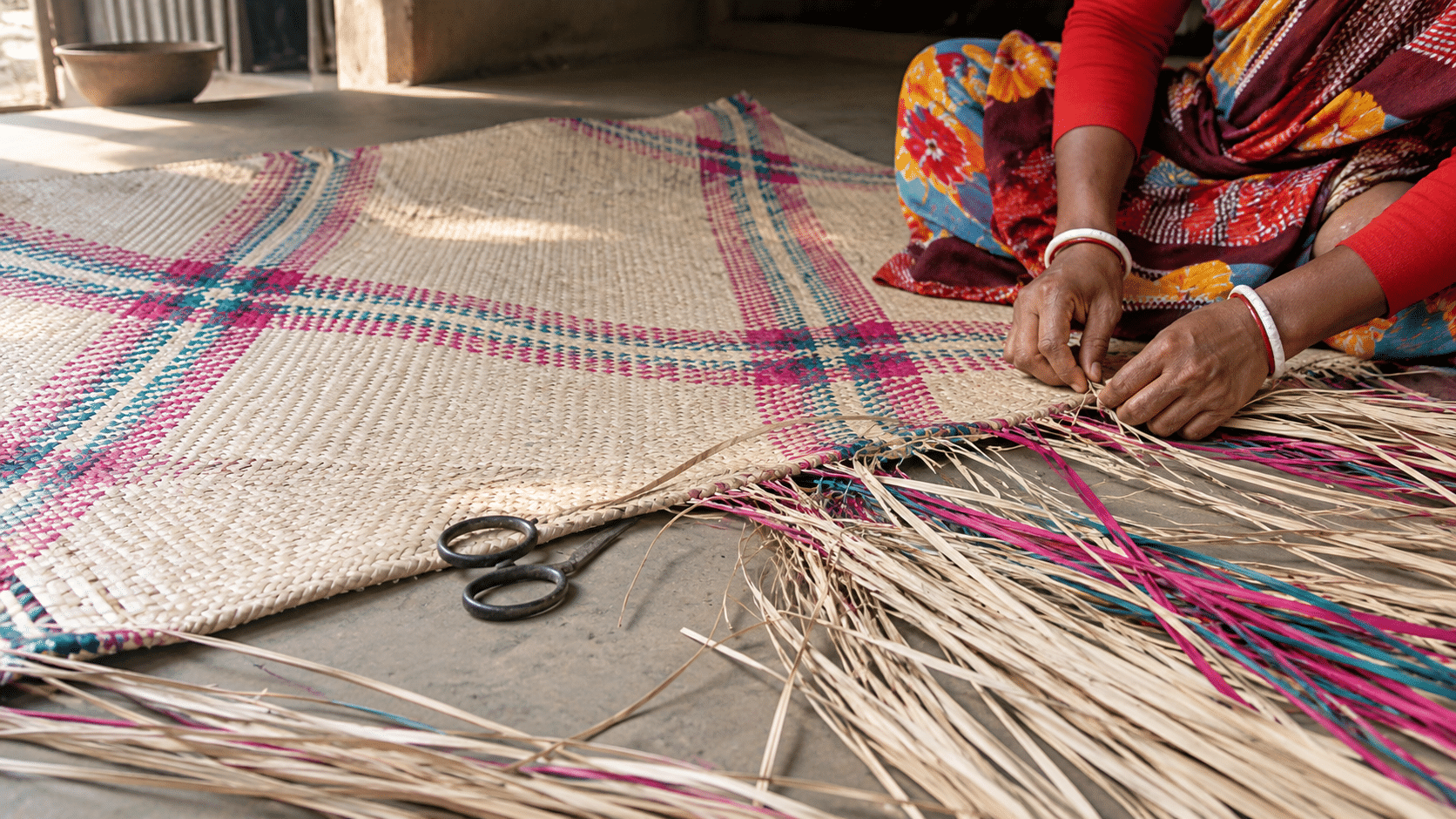
Munshiganj shital pati is the cool, handwoven mat that Bengal has trusted for hot summers for generations. In Tongibari, Banglapedia lists shital pati among the local cottage industries, and Munshiganj Sadar is recorded for pati making. If you want a simple, useful craft that keeps you cool and tells a story of river country, Munshiganj shital pati is a lovely thing to look for.
What Is Munshiganj Shital Pati?
Shital pati means cool mat. It is a handwoven mat made from thin strips of cane or murta, a plant that grows near water. According to Banglapedia, shital pati is among the cottage industries of Tongibari, alongside weaving, pottery and bamboo work. Munshiganj shital pati is therefore a local branch of a wider Bengal tradition.
The Story of Shital Pati
Shital pati is a very old Bengali craft. UNESCO included the traditional art of shital pati weaving of Sylhet in its list of Intangible Cultural Heritage in 2017, describing it as a handcrafted mat used as a sitting mat, bedspread or prayer mat all over Bangladesh. That recognition belongs to Sylhet, where the craft is strongest, but it shows how much the mat means to Bengali life.
Munshiganj does not carry that listing. Its shital pati is a smaller, local tradition that sits beside other mat and cane work in the district.
How Munshiganj Shital Pati Is Made
Banglapedia’s national description gives a good picture of the process. Murta strands are dried in the sun and then boiled, and some are dyed. Shital pati can also be made from cane. The green cane is washed in soda water, dried, boiled and dried again, and some strips are dyed in colour.
- Strips of cane or murta are prepared and dried.
- Some strips are dyed to make patterns.
- The weaver interlaces the strips by hand, without a loom.
- The edges are bound, and the mat is trimmed and finished.
A sitting mat is usually about three feet by four feet or four and a half feet by six feet.
Why Munshiganj Shital Pati Feels Cool
Wikipedia describes shital pati as a mat that feels cold by nature, and that is the idea behind its name. Many families use it as a floor mat, a bedspread or a prayer mat, and Munshiganj shital pati is no different.
Choosing Between Cane and Murta in Munshiganj Shital Pati
Banglapedia notes that the murta plant grows around water bodies in districts such as Sylhet, Sunamganj, Barisal, Tangail, Comilla, Noakhali, Feni and Chittagong, while shital pati is also made from cane. Munshiganj is not on that murta list, so a mat from the district may well be made from cane. Ask the maker which material was used, because the feel and price can differ.
Where to Find Munshiganj Shital Pati
Begin in Tongibari, where Banglapedia records shital pati, and in Munshiganj Sadar, where pati making is listed. Mat work is also recorded for Sirajdikhan. Noted markets in Tongibari include Tongibari Hat, Betka Hat, Subochoni Hat, Dighir Para Hat, Abdullahpur Bazar, Panchgaon Bazar and Dighli Bazar. Banglapedia does not name specific weavers, so ask local shopkeepers whether anyone nearby makes mats by hand.
Tips for Buying Munshiganj Shital Pati
- Choose a Munshiganj shital pati with tight, even weaving and smooth edges.
- Feel the surface. A good shital pati should be smooth and slightly cool.
- Check that colours are even if the mat is dyed.
- Roll the mat loosely instead of folding it, which can crack the strips.
- Wipe it gently with a dry cloth and keep it away from damp.
Why Munshiganj Shital Pati Needs Support
Mat weaving is slow work, and many weavers across Bangladesh have left it for other jobs. In Sylhet, reports note that the number of people involved has fallen over time. Paying a fair price for a handwoven mat helps weavers keep the craft going.
Frequently Asked Questions
What is shital pati?
It is a cool mat woven by hand from thin strips of cane or murta.
Is Munshiganj shital pati the same as the Sylhet mat?
Not exactly. The UNESCO listing is for Sylhet. Munshiganj has a smaller local tradition of mat work.
Where can you buy Munshiganj shital pati?
Look in Tongibari and Munshiganj Sadar, and ask local shopkeepers and hats.