
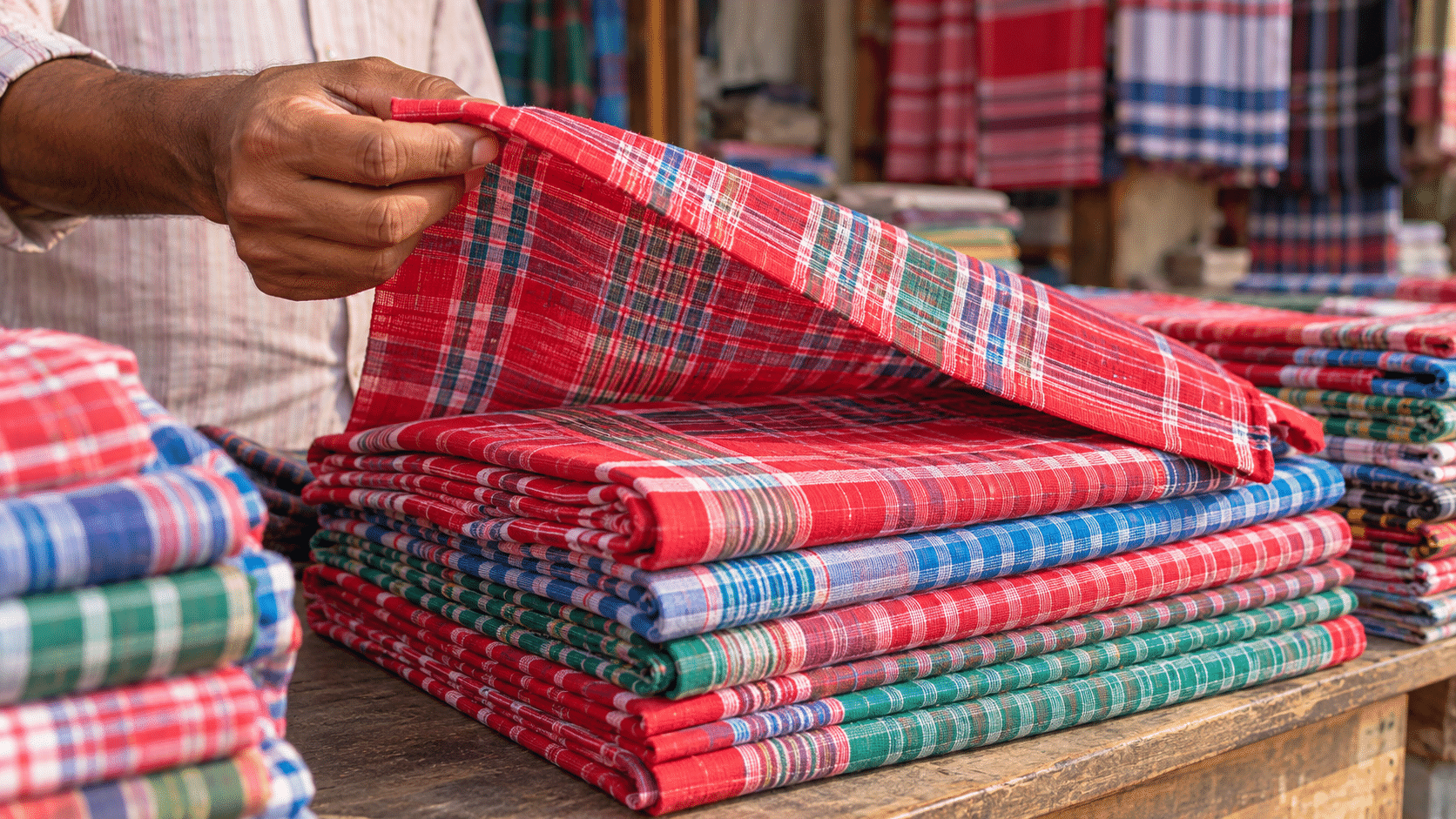
Narsingdi gamcha is the kind of humble craft that you only notice when you hold it in your hands. The gamcha is the thin, quick-drying cotton towel that most Bangladeshi households use every day, for bathing, wiping sweat, covering the head in the sun or carrying small loads. Narsingdi is widely known for gamcha along with lungi and saree, and the Baburhat market at Shekherchar is one of the main places where it is traded. This guide covers what Narsingdi gamcha is, how it is made and where to find good pieces.
What Is a Gamcha?
A gamcha is a thin cotton cloth, usually woven with checks or stripes, that works as a towel and a general-purpose wrap. It is lighter than a Western bath towel and dries fast in the humid climate. Because it is simple and practical, it is used by almost everyone, from farmers and rickshaw pullers to office workers.
Why Narsingdi Gamcha Matters
Narsingdi’s local identity is built around textiles, and gamcha is part of that story. Bangladesh’s loom industry has long produced items such as sarees, lungi, towels and mosquito nets, and Narsingdi’s weaving units supply many of these to the national market. Narsingdi gamcha is therefore best seen as a daily-life craft with an everyday audience.
Reports over the years have also noted that handloom units in Narsingdi face challenges such as access to credit, and that some have closed. Buying a gamcha from a local weaver or shop helps keep a small part of that economy alive.
How Narsingdi Gamcha Is Made
- Cotton yarn: the thread is prepared and, for coloured patterns, dyed in advance.
- Setting the pattern: the order of coloured threads in the warp decides the checks or stripes.
- Weaving: a loom interlaces the weft with the warp to form a thin, even cloth.
- Cutting and finishing: the cloth is cut into lengths and finished with simple fringe or hemmed ends.
A weaving unit in Narsingdi is often a small workshop, and many weavers learn the skill through years of practice instead of formal training, according to an older Daily Star feature on the district’s handloom factories.
How to Choose a Good Narsingdi Gamcha
- Check that the weave is tight and even, and not thin or patchy.
- Look at the checks to see that the lines are straight and the colours clean.
- Try it on your wrist and feel the softness. A good gamcha softens with washing.
- Ask whether it is pure cotton, since this affects how well it absorbs water.
- Buy two or three, as prices are often better for small bundles.
Where to Find Narsingdi Gamcha
Baburhat at Shekherchar is the best-known place, with shops selling gamcha next to lungi, saree and bed sheets. Madhabdi Hat and Karimpur Bazar are also noted markets in Narsingdi Sadar. Wholesale activity peaks from Thursday night to Sunday afternoon, so a Friday or Saturday morning visit works well for choosing gamcha.
Everyday Uses for Narsingdi Gamcha
- As a bath towel, drying quickly after use.
- As a head cover against sun and dust.
- As a light shawl, picnic cloth or small carrying bundle.
- As a simple, useful gift from a trip to Narsingdi.
Caring for Narsingdi Gamcha
Wash a new gamcha separately for the first few washes, since dyed cotton can bleed. Dry it in shade or sun, and avoid harsh bleach so the threads stay strong and soft.
Visit the Home of Narsingdi Gamcha
If you want to see where Narsingdi gamcha is woven and sold, plan a day around Madhabdi and Baburhat. Our Narsingdi textile tour and Narsingdi handloom guide explain how to visit weavers politely and shop with confidence.
Narsingdi Gamcha FAQs
What is Narsingdi gamcha?
It is the thin cotton towel woven in and around Narsingdi, usually in checks or stripes, and sold in markets like Baburhat.
Where can I buy Narsingdi gamcha?
Baburhat at Shekherchar, Madhabdi Hat and other Narsingdi Sadar markets are good places to start.
Is Narsingdi gamcha good as a souvenir?
Yes. It is light, useful, affordable and easy to pack, which makes it a practical keepsake from a Narsingdi trip.