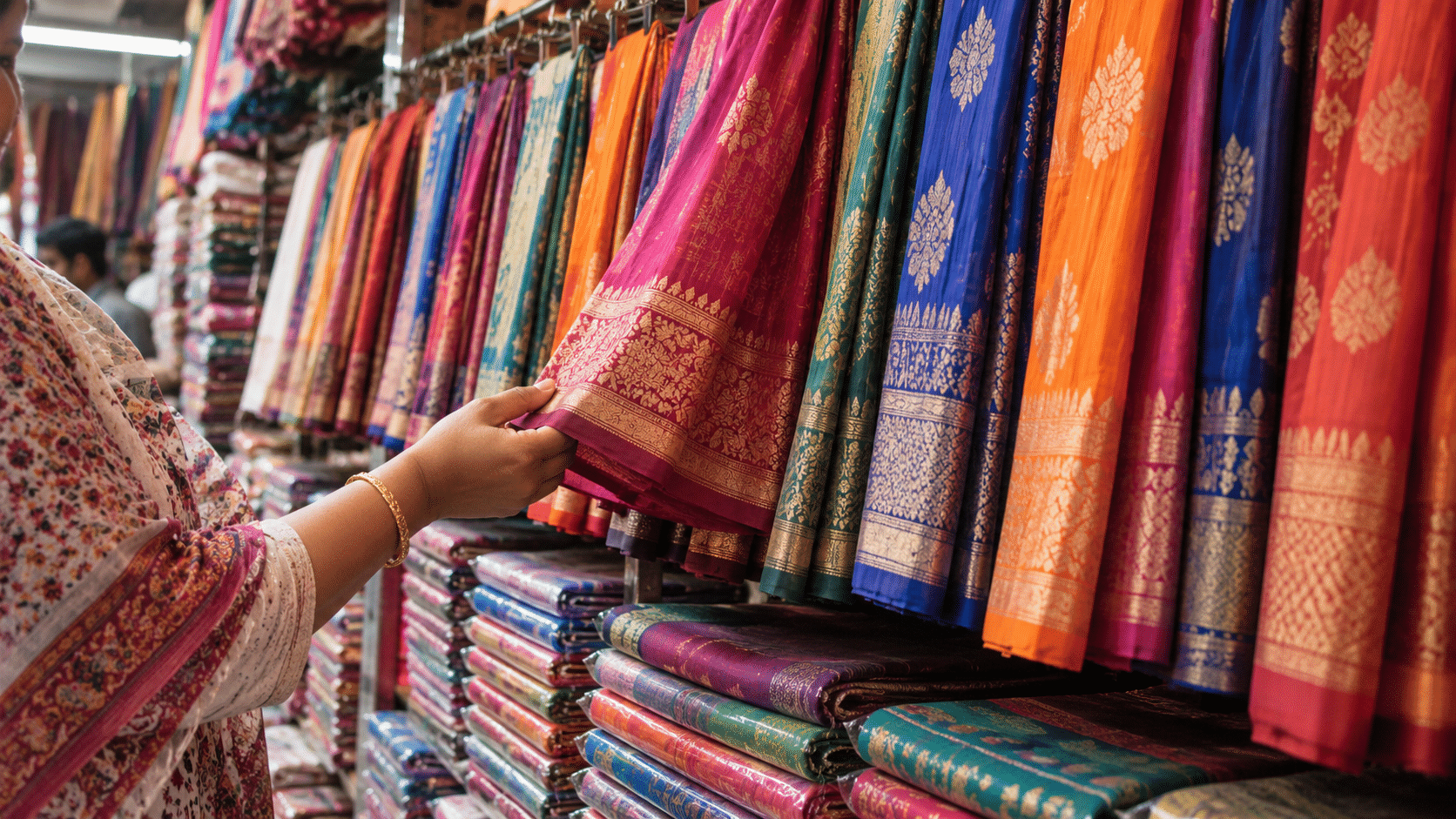
The Narsingdi saree is one of the products that has made the district a household name in Bangladesh’s textile story. Narsingdi is widely described as famous for saree, lungi and gamcha, and the Baburhat market at Shekherchar is known for quality sarees among its wares. This guide to the Narsingdi saree explains how it fits into the world of Bengal’s handloom tradition, how it is made and where to buy it.
What Is the Narsingdi Saree?
The Narsingdi saree is a cotton saree woven in the district’s handloom and powerloom units. In Bangladesh, the word tant means handloom, and tant sarees are known for their lightness and comfort in the humid climate. Narsingdi’s sarees sit within this wider Bengal tradition, though the district is better known for the volume and variety of its cloth than for one signature design.
The Story Behind the Narsingdi Saree
Bengal’s handloom tradition is old, and the saree is its most recognisable product. Tant sarees are described as light, airy and suited to hot weather, with a thick border and a decorative end piece called the pallu as their usual features. Narsingdi’s contribution is scale. The district portal says Narsingdi’s loom industry meets a large share of the country’s loom cloth demand, and Baburhat, the huge wholesale market at Shekherchar, is where sarees and other cloth are traded in bulk.
That makes the Narsingdi saree a craft of everyday economies: weavers, dyers, traders and shopkeepers connected through one big market.
How the Narsingdi Saree Is Made
- Yarn preparation: cotton thread is prepared and dyed to match the design.
- Warping: long threads are set on the loom in the colour order the saree needs.
- Weaving the body and border: the weaver works the weft across the warp, creating the body, border and pallu.
- Finishing: the saree is cut, folded and prepared for the shop.
Handloom weaving takes time and skill, and elaborate borders and pallus take longer than plain bodies. Powerloom weaving is faster, which affects both price and finish.
How to Choose a Good Narsingdi Saree
- Hold the saree up to the light to check that the weave is even.
- Look closely at the border and pallu, where flaws usually show first.
- Feel the cloth. Good cotton should feel soft and breathable.
- Ask whether it is handloom or powerloom, and how long it took to weave.
- Compare prices at several shops before you decide.
Where to Find the Narsingdi Saree
Baburhat at Shekherchar is the main destination, with sarees stocked in many shops. Madhabdi Hat and the bazaar area of Narsingdi town are also good places to look. Wholesale activity runs from Thursday night to Sunday afternoon, and Eid season brings the biggest crowds and the widest choice.
Buying the Narsingdi Saree as a Gift
A saree is a thoughtful gift, especially when you can tell the person where it came from. Ask the shopkeeper where the piece was woven, keep the receipt, and wrap it simply. Many visitors also pair a saree with a lungi or a few gamchas to make a small Narsingdi gift set.
Caring for a Narsingdi Saree
- Wash gently and separately the first time, since dyed cotton can bleed.
- Use cool water and mild soap, and avoid wringing hard.
- Dry in shade to protect the colours.
- Iron on medium heat while the cloth is slightly damp.
Visit the Home of the Narsingdi Saree
To see where the Narsingdi saree comes from, join our Narsingdi textile tour for a day that links Madhabdi’s weaving lanes with Baburhat’s wholesale lanes. You can also read our Baburhat shopping guide before you go.
Narsingdi Saree FAQs
Is the Narsingdi saree handloom?
Narsingdi has both handloom and powerloom units, so ask the seller how a particular saree was woven.
Where can I buy a Narsingdi saree?
Baburhat at Shekherchar is the best-known place, and Madhabdi and Narsingdi town have many shops.
What does tant mean in a saree?
Tant means handloom in Bengali, and tant sarees are known for being light and comfortable.