
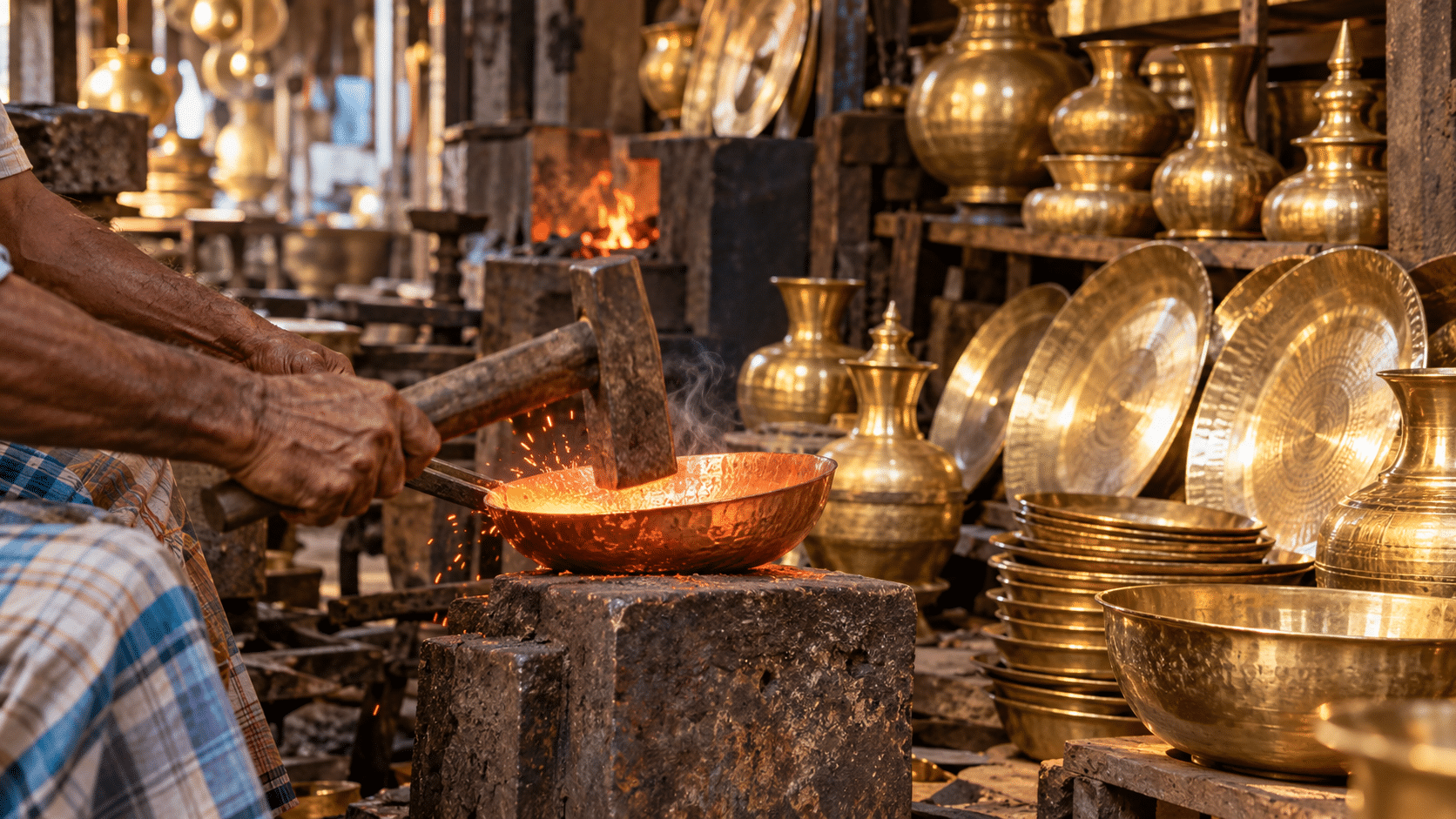
The Shariatpur brass craft is one of the district’s oldest and most underrated traditions. For generations, workshops in Palong, Baghiya, Bilaskhan and nearby villages turned copper alloys into plates, pitchers, bowls and decorative pieces, and the steady sound of hammers was part of daily life. Today, only a few workshops continue, which makes the Shariatpur brass craft both a living heritage and a fragile one.
What Is the Shariatpur Brass Craft?
In Bengali, the craft is known as kansa and pital work. Kansa is bell metal, a kind of bronze made from copper and tin. One reference describes good kansa as about 78 percent copper and 22 percent tin, melted together at roughly 700 degrees Celsius. Pital is brass, also a copper alloy, and it is easier to shape into things like vases and figures. The two sound different when tapped, and artisans can often tell them apart by ear. The Shariatpur brass craft covers both metals.
A Short History of the Shariatpur Brass Craft
According to a Bengali reference, brass and bell metal work grew along the Padma and Kirtinasha banks from the time of the Chandra dynasty. Communities known as Kansaru or Kangsabanik lived in villages such as Palong, Baghiya, Bilaskhan, Kashabhog, Madhyapara, Angaria and Kotapara, and each place had small workshops. The same account says that traders from India, Nepal and Burma came to buy these goods. Treat the earliest dates as community history, not confirmed records, but the pattern is clear: the Shariatpur brass craft was once famous across the region.
A January 2026 news report says that around 15,000 artisans once worked in the district, and that products were sold in India, Pakistan and Nepal. The same report says only six or seven workshops remain, with about fifty artisans.
What the Workshops Made
- Kitchen and table items: Kansa plates, bowls and glasses.
- Water and household items: Brass pitchers, mugs, jugs and the traditional bodna.
- Home items: Betel boxes (pandani), vases and showpieces.
- Toys and small figures: Dolls and small decorative pieces.
How the Work Is Done
In general, the metals are melted, cast into a rough shape, then heated and hammered again and again until the form is right. Finally, the surface is polished. Details differ from one workshop to another, so ask the artisan to show you each stage. The rhythm of the hammer is the soundtrack of the Shariatpur brass craft, and many visitors say hearing it is the best part of the visit.
Why the Shariatpur Brass Craft Is Fading
Local reports give three reasons: cheap plastic goods, rising raw material prices and a lack of support. One workshop in the Palong area, founded more than 110 years ago, once had thirty artisans. Reporters found only four working there recently. Artisans also argue that metal utensils are more health-friendly than plastic, but that is their view, not a medical claim.
A New Chance for the Shariatpur Brass Craft
Today, many brass and kansa items are bought as decor and gifts, such as kettles, jugs, mugs, dinner sets, vases and figures. Some young entrepreneurs sell them online. This shift gives the Shariatpur brass craft a real chance: if buyers see it as a premium handmade product, workshops can earn more per piece.
Where to Find It
Look for workshops in the villages around Palong, Baghiya, Bilaskhan, Dasartta, Kashabhog and Rajnagar in Shariatpur Sadar. Because few workshops remain, ask in Shariatpur town for the latest locations, and call ahead if you can. Brass and kansa shops also operate in Dhaka, for example around Shankhari Bazar.
How to Visit and Buy Respectfully
- Ask permission before entering a workshop or taking photos.
- Stay clear of furnaces and hot metal, and keep children close.
- Ask what each piece is made of and how it was finished.
- Pay a fair price, and avoid hard bargaining on handmade work.
- Buy directly from artisans when possible.
Simple Care Tips
Wash brass and kansa gently, dry them well and avoid harsh scrubbing. Tarnish is normal and can be cleaned with a soft cloth and a mild natural cleaner such as lemon and salt. Ask the artisan for care advice for your specific piece.
Add It to Your Shariatpur Trip
Palong is the old name of Shariatpur Sadar, so you can add a workshop stop to a day with Rudrokor Math and Dhanuka Mansha Bari. It fits neatly into a Shariatpur 2 day trip focused on heritage.
Quick Answers About the Shariatpur Brass Craft
What is the Shariatpur brass craft?
It is the traditional making of kansa (bell metal) and pital (brass) utensils and decor in villages such as Palong, Baghiya and Bilaskhan.
Is the Shariatpur brass craft still alive?
Yes, but it is small. A 2026 report says only a handful of workshops remain.
Can tourists visit the workshops?
Often yes, with permission. Ask locally and call ahead, since operating workshops change over time.