
The Bakshiganj Garo Hills are the green edge of Jamalpur, where the district meets the Indian state of Meghalaya. Banglapedia places the Garo Hills in the north-east of Bakshiganj upazila. The area is known for its Garo community, its harvest-time dances and, according to published accounts, a rare chance of wild elephants near the border hills.
This guide to the Bakshiganj Garo Hills also takes you south through Dewanganj and Islampur, where Jamuna sandbars (chars), saints’ tombs and an old kuthibari make the long journey worth it.
Why the Bakshiganj Garo Hills Feel Different
Most of Jamalpur is flat, riverine farmland. The north is different. Hills and forest patches remain along the Meghalaya border, and the district is home to Garo, Hajong and Koch communities. Bakshiganj has a small Garo Christian community, and the Garo people of the district perform dances at the Bigan Gala festival. If you travel in the cooler months, ask locally whether a harvest celebration is on.
That mix of landscape and living culture makes the Bakshiganj Garo Hills a cultural trip as much as a scenic one.
Border Etiquette and Safety in the Bakshiganj Garo Hills
This is a border region, so plan with care. Carry your national ID, follow local guidance, and never walk toward the border line without a local guide. Wild elephants have been reported in the northern forest patches, so avoid forest walks near dusk and never go alone. Respect the privacy of village homes and ask before photographing people.
These simple habits keep the Bakshiganj Garo Hills a welcoming place for visitors and for the communities who live there.
Kamalpur and the Memory of 1971
Kamalpur in Bakshiganj has a place in Liberation War history. Banglapedia records that freedom fighters repeatedly attacked the Pakistan army camp at Kamalpur, crossing from the Indian side. The upazila has mass-grave sites in seven places and one memorial monument. Kamalpur is also the venue of the Shah Kamal (R) fair. A quiet moment at the memorial adds real depth to any trip to the Bakshiganj Garo Hills.
Dewanganj and the Jamuna Chars
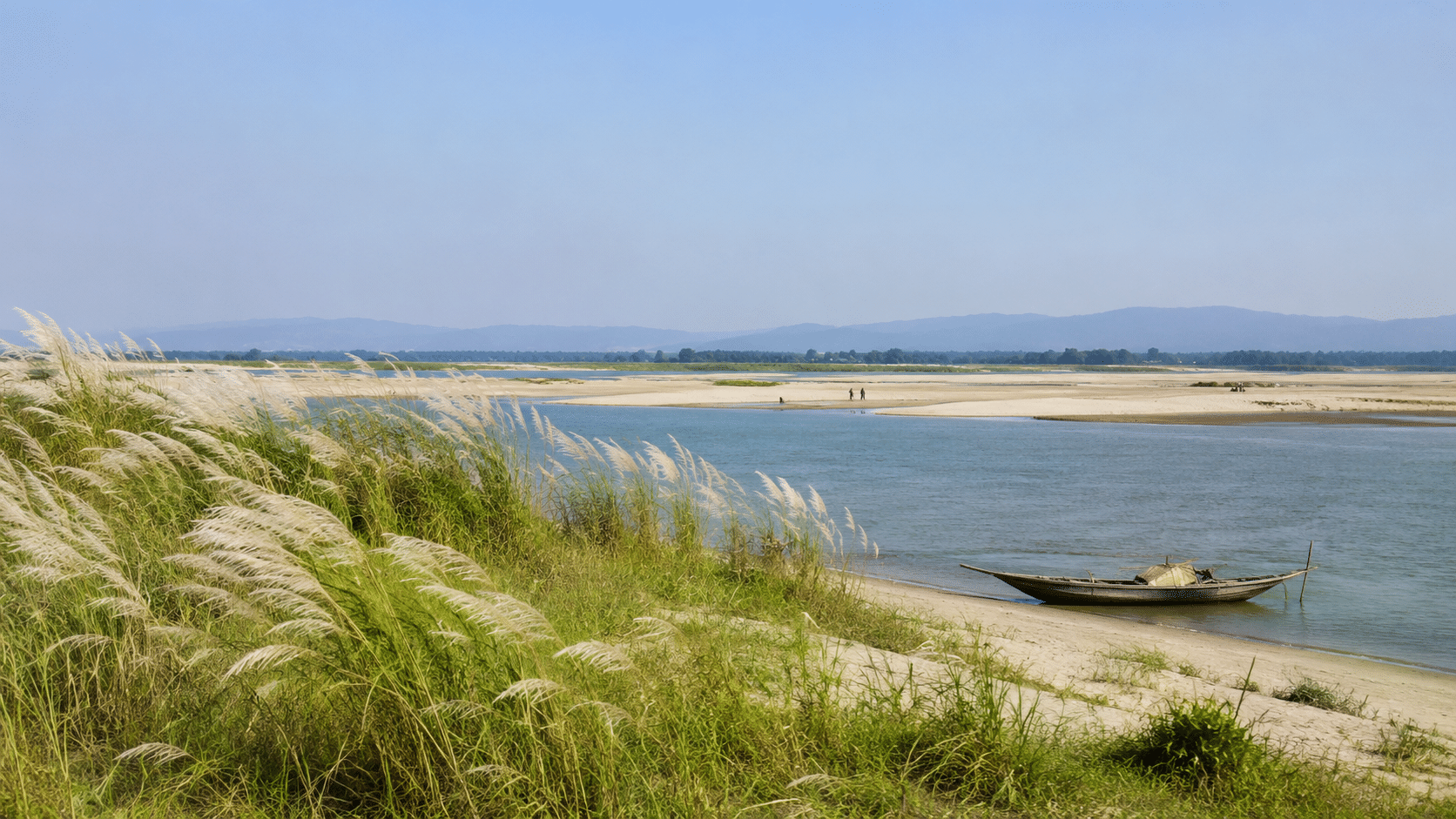
South-west of the hills, Dewanganj sits on the Jamuna, the lower stream of the Brahmaputra. Zeal Bangla Sugar Mills stands near Dewanganj railway station, and Bahadurabad was once a famous ferry ghat where trains crossed the river by ferry toward Tistamukh in Gaibandha. Sand chars rise along the river in the dry season.
Take care here. Prothom Alo reports that the Jamuna and Brahmaputra cause flooding and erosion every year in five Jamalpur upazilas, including Dewanganj, Bakshiganj and Islampur. Treat the chars as a winter-only visit and go with a local boatman. Pairing the river with the Bakshiganj Garo Hills gives you two very different landscapes in one trip.
Islampur: Saints, Temples and an Old Kuthibari
Islampur lies between Jamalpur town and Dewanganj and has a quieter heritage list. Banglapedia records the tomb of Hazrat Shah Kamal at Durmuth, the Kuthibari of Pradyut Thakur, Jeu Mandir, Kali Mandir, Durgabari and the tomb of Itapir. Dewanganj is said to be named after the saints Shah Kamal and Shah Jamal, so the two towns share a story. Stop here on your way north before continuing to the Bakshiganj Garo Hills.
Planning Your Bakshiganj Garo Hills Trip
From Jamalpur town, Islampur is roughly 24 km and Dewanganj roughly 33 km. Bakshiganj lies further north, so give the Bakshiganj Garo Hills a full day, or stay overnight in Jamalpur town. The Tista Express serves Islampur and Dewanganj Bazar stations, and the Brahmaputra Express also runs to Dewanganj Bazar, though schedules change. Carry water, cash and phone data, because facilities thin out north of Islampur. For more ideas, browse our guide to places to visit in Bangladesh.
Bakshiganj Garo Hills at a Glance
- Bakshiganj Garo Hills: border hills and Garo culture in the north-east of Bakshiganj
- Kamalpur: 1971 memory sites and the Shah Kamal (R) fair
- Dewanganj: Jamuna chars, sugar mill town and the old Bahadurabad ghat
- Islampur: Shah Kamal’s tomb at Durmuth, Kuthibari, Jeu Mandir and Kali Mandir
- Best months: November to February
FAQ: Bakshiganj Garo Hills
Where Are the Bakshiganj Garo Hills?
The Bakshiganj Garo Hills lie in the north-east of Bakshiganj upazila, close to the Meghalaya border, in Jamalpur district of Mymensingh Division.
Is It Safe to Visit the Bakshiganj Garo Hills?
Visiting the Bakshiganj Garo Hills is generally fine with local guidance, but it is a border area. Carry your national ID, avoid the border line and forest paths near dusk, and check local conditions before you go.
When Is the Best Time to Visit the Bakshiganj Garo Hills?
November to February is best, when the weather is cool and dry and the roads and chars are easiest to travel. Avoid the monsoon months, because flooding and erosion are common in this part of Jamalpur.