
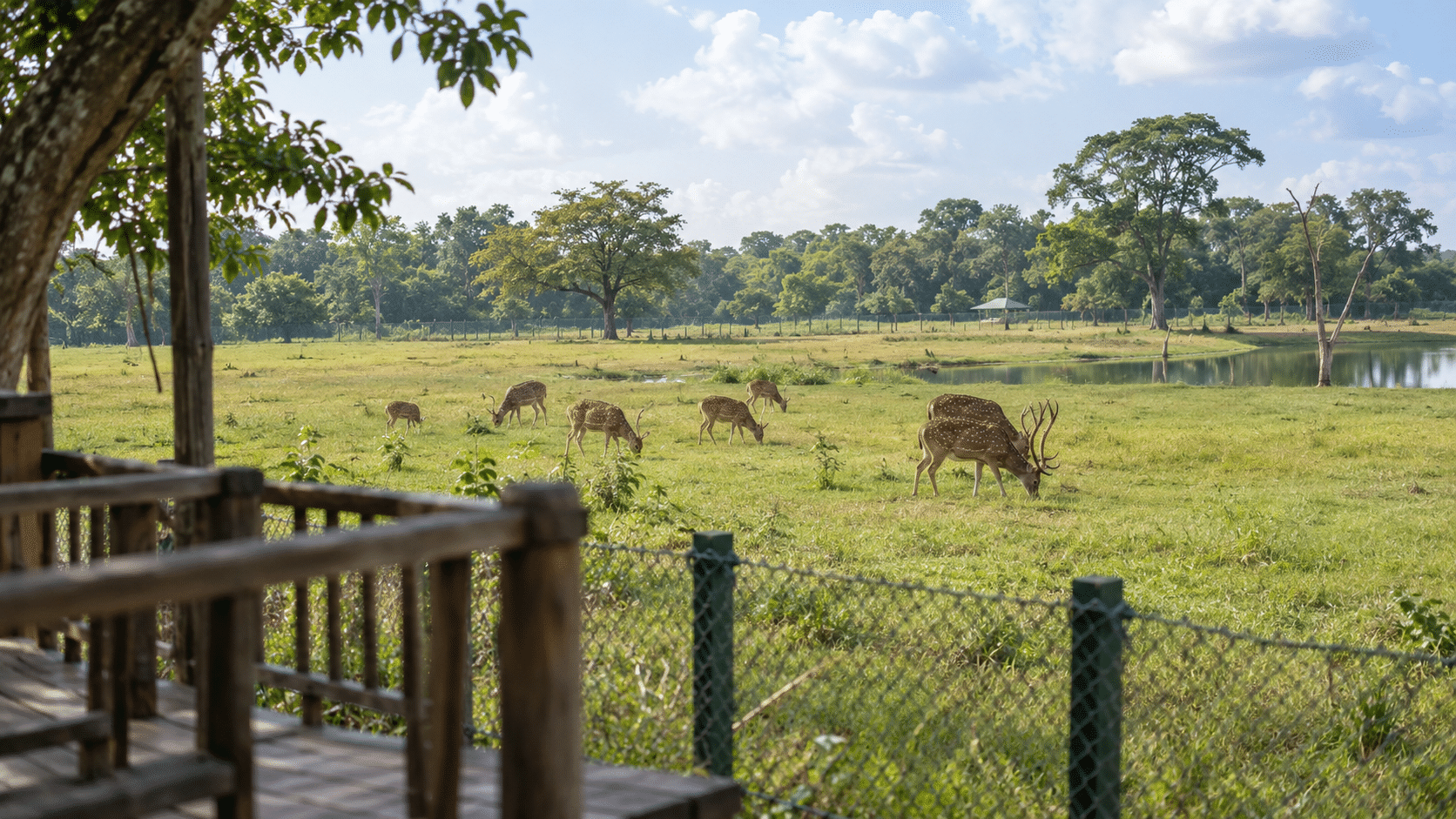
Most of what people call “the Gazipur Safari Park” is officially the Bangabandhu Sheikh Mujib Safari Park, and it’s a different kind of destination from Bhawal’s forest trails a short drive away. This is wildlife viewing by design, a purpose-built safari and conservation park where animals move through large enclosures rather than a forest visitors walk into on foot.
The park splits into zones. A core safari section lets visitors drive through areas holding deer, and larger animals kept at a safe viewing distance, closer to the drive-through safari model than a traditional zoo. Around that core sit walk-through sections for smaller animals, birds, and reptiles, plus a growing conservation and breeding program that the park uses as part of its educational mandate. For Bangladeshi families, especially those without easy access to East Africa’s game parks, this is often a first real encounter with animals most people only see in books or on screens.
Weekends bring heavy crowds, school groups especially, so a weekday visit gets you shorter queues and calmer animals. The scale is genuinely large by Bangladeshi standards, plan for at least half a day if you want to see the full site properly rather than rushing the drive-through loop.
What sets this destination apart from Bhawal isn’t just the animals, it’s the purpose. Bhawal is about experiencing an intact ecosystem on its own terms; the Safari Park is a structured, curated wildlife experience aimed squarely at families and school trips. Both belong in a Gazipur itinerary, but they answer different questions about what visitors actually want from a day near the forest belt.