
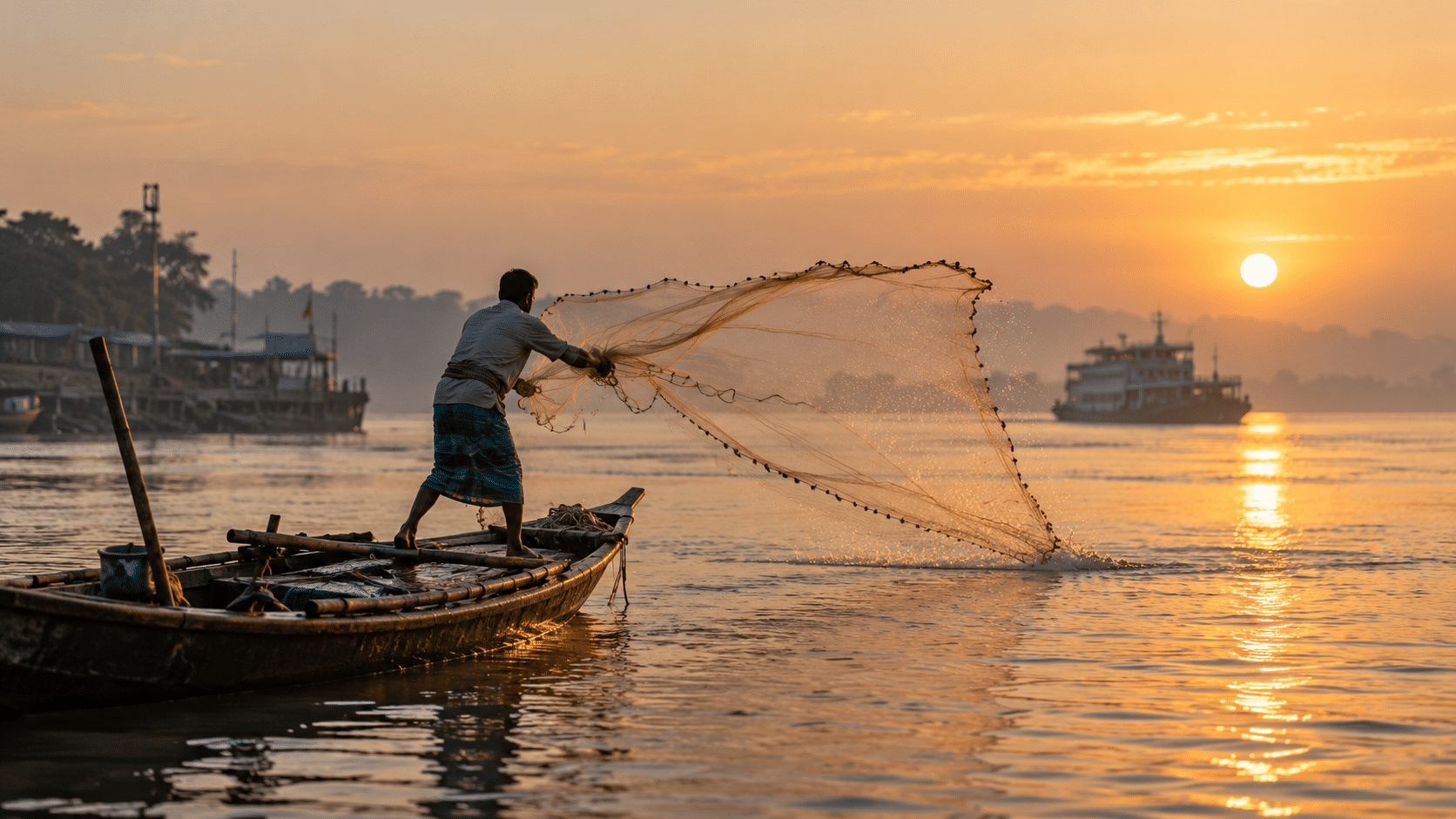
Goalanda Ghat is the place where Rajbari meets the river at its widest. Stand on the bank here and you are looking at two giants, the Padma and the Jamuna, flowing together toward the sea. For travellers who love big skies, moving water and old river-port stories, Goalanda Ghat is the strongest reason to put Rajbari on your travel map.
Why Goalanda Ghat Matters
Goalanda Ghat sits in Goalandaghat Upazila, close to the point where the Padma (the Ganges in Bangladesh) and the Jamuna (the Brahmaputra) join. Long before big bridges existed, this was one of the busiest river crossings in eastern Bengal. A railway line from Kolkata reached Goalundo in 1871, and for decades travellers ended their train journey here, stepped onto a steamer and carried on toward Narayanganj and Dhaka.
Think of it as a railway junction made of water. Steamers linked the port with Chandpur, Barisal, Sylhet and beyond, while rice, jute, oilseeds, sugarcane and fish moved through its markets. That is why the town grew around the ghat, not the other way round. The trains and steamers have thinned out, but the river habit never left Goalanda Ghat.
What You Will See at Goalanda Ghat
The meeting of two rivers
The first thing that hits you is scale. The water stretches so far that the opposite bank can fade into haze, especially on a winter morning. Locally, the point where the Ganges and the Jamuna merge into the Padma is often linked with Daulatdia, just beside the ghat area. Even if you only sit on the bank with a cup of tea, the view is worth the trip.
Ferry and boat life
The Daulatdia ferry terminal connects this side of the river with Paturia across the water. Watching trucks, buses and passenger boats queue, load and cross is a real-life lesson in how Bangladesh moves. Small country boats and fishing boats work the same stretch, so there is always something happening on the water.
Sandbars and fishing scenes
In the drier months, sandy chars often rise from the riverbed. Ask local boatmen which chars are reachable that season. Even if you stay on land, you will likely see nets being cast, small catches being sorted and traders bargaining on the bank.
A Little History Behind Goalanda Ghat
Goalanda Ghat has carried a lot of Bengal’s story. Under colonial rule it was a gateway for people heading east to Assam and Burma, and the zamindars of Amirabad controlled much of the farmland around the port. The area also holds sadder memories. Banglapedia records mass graves in Goalanda from the Liberation War of 1971, a reminder that this busy river town has solemn corners too. Visit with respect, and keep your voice low near any memorial site.
Food and Small Pleasures
The Padma is famous for hilsa, and river fish is the natural order of the day near Goalanda Ghat. Ask at local eateries what came out of the water that morning. Tea stalls near the ghat are another small joy: sweet, strong tea, a plastic stool and the sound of boat engines is a hard combination to beat.
Practical Tips for Visiting Goalanda Ghat
- Carry cash. Digital payments are unreliable at small ghat stalls.
- Ferry terminals get crowded. Keep your bags close and agree on rickshaw or van fares before you ride.
- Wear a cap and carry water. There is very little shade on the bank.
- Check current ferry and launch schedules locally, as timings can change with water level and season.
- Avoid walking close to the edge of loose, wet riverbank soil.
Frequently Asked Questions
Where is Goalanda Ghat?
Goalanda Ghat is in Goalandaghat Upazila of Rajbari District, in Dhaka Division, on the bank of the Padma near its meeting point with the Jamuna.
What is Goalanda Ghat famous for?
It is famous as a historic river port and rail-steamer junction, and for its wide view of the Padma and Jamuna coming together.
When is the best time to see Goalanda Ghat?
From November to February, when the weather is cooler and the sky is clearer. Sunrise and late afternoon give the softest light on the water.