
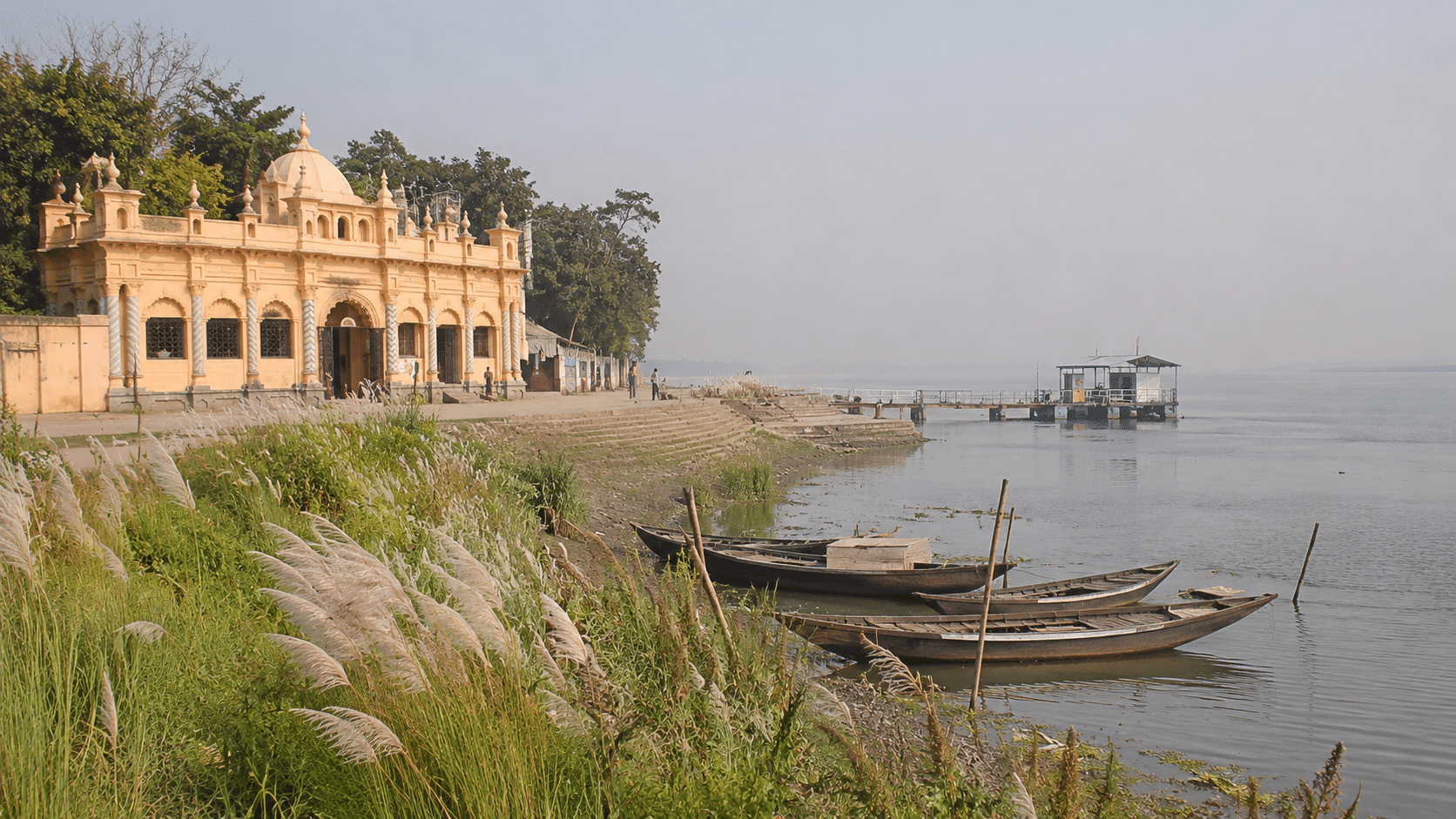
Narapara Fort is the kind of place that rewards curious travellers. Banglapedia lists it as a sixteenth-century relic in Sarishabari, the Jamalpur upazila where the district meets the Jamuna. Not far away stands a five-domed mosque from the nineteenth century, and a short ride beyond lies a working river landscape of ghats, chars and jute.
This guide to Narapara Fort and the Jamuna riverside belt shows you what is actually there, what to expect, and how to plan a respectful, low-key visit.
What You Will Find at Narapara Fort
Narapara Fort is recorded in Banglapedia among the archaeological heritage of Sarishabari and is dated to the sixteenth century. Detailed public records about who built it and why are thin, so go with open eyes rather than big expectations.
Think of Narapara Fort as a quiet, atmospheric relic and an older chapter of Sarishabari’s story that few visitors ever read about. Please check its present condition locally before you travel, because small heritage sites can change from season to season.
The Five-Domed Raspal Jami Mosque Next to Narapara Fort
A short walk from Narapara Fort, the Five-Domed Raspal Jami Mosque dates to the nineteenth century. Tourist listings place it only about a hundred metres from the fort, so the two sites pair easily. Notice the five domes and the balanced, compact layout. If prayer is in progress, wait outside respectfully and visit between prayers.
Pingna and the Learning Tradition of Sarishabari
Sarishabari has an education story too. Local records mention Pingna Madrasa, linked to the period of Emperor Shah Jahan, and Pingna English High School, founded in 1896. Neither is a formal visitor attraction. Together with Narapara Fort, they show that Sarishabari has long been more than a river crossing.
After Narapara Fort, the Jamuna Riverside at Tarakandi
Sarishabari touches the Jamuna, the lower stream of the Brahmaputra, and the riverfront at Tarakandi is where the upazila feels most alive. Tarakandi has a floating landing station, the last stop for several Dhaka trains, and the large Jamuna Fertilizer Company complex. That plant is an industrial site, not an attraction, so enjoy it only as a landmark.
Come to the riverbank for open skies, passing country boats and village life. Boat races on the Jamuna during the rainy season are part of local tradition, though dates vary. After Narapara Fort, the riverside is the best place to slow down.
Know the River Before You Go
The Jamuna gives and takes. Prothom Alo reports that Sarishabari is among five Jamalpur upazilas facing flooding and river erosion every year, and Nalsandhya char lies in this upazila. Winter is the safest season for riverside walks. Stay back from crumbling banks, never enter fast water, and ask locals which paths are safe.
Visiting Narapara Fort is simple in any dry month, but roads and ghats are easiest from November to February.
Planning Your Narapara Fort Visit
Sarishabari is roughly 25 km from Jamalpur town, so you can combine it with the town trail or make it a half day of its own. Start at Narapara Fort, walk to the mosque, then continue to Tarakandi for the river. Carry water, a hat and small cash, and keep your phone data on for navigation, since signposting is limited. For more ideas, browse our guide to places to visit in Bangladesh.
Narapara Fort at a Glance
- Narapara Fort: sixteenth-century relic in Sarishabari
- Five-Domed Raspal Jami Mosque: nineteenth-century mosque, about 100 metres away
- Pingna Madrasa and Pingna English High School: Sarishabari’s learning history
- Tarakandi riverfront: Jamuna views, floating landing station and village life
- Best months: November to February
FAQ: Narapara Fort
Where Is Narapara Fort?
Narapara Fort is in Sarishabari upazila of Jamalpur district, in Mymensingh Division, close to the Raspal Jami Mosque.
Is Narapara Fort Open to Visitors?
We could not find an official notice about tickets or opening hours for Narapara Fort, so ask locally and treat it as an open heritage site without formal visitor facilities.
How Do I Reach Sarishabari from Dhaka?
The Jamuna Express and Aghnibina Express run from Dhaka to Tarakandi in Sarishabari, though timetables change, so check the Bangladesh Railway e-ticket portal. You can also travel by road via Jamalpur town or via Tangail.