
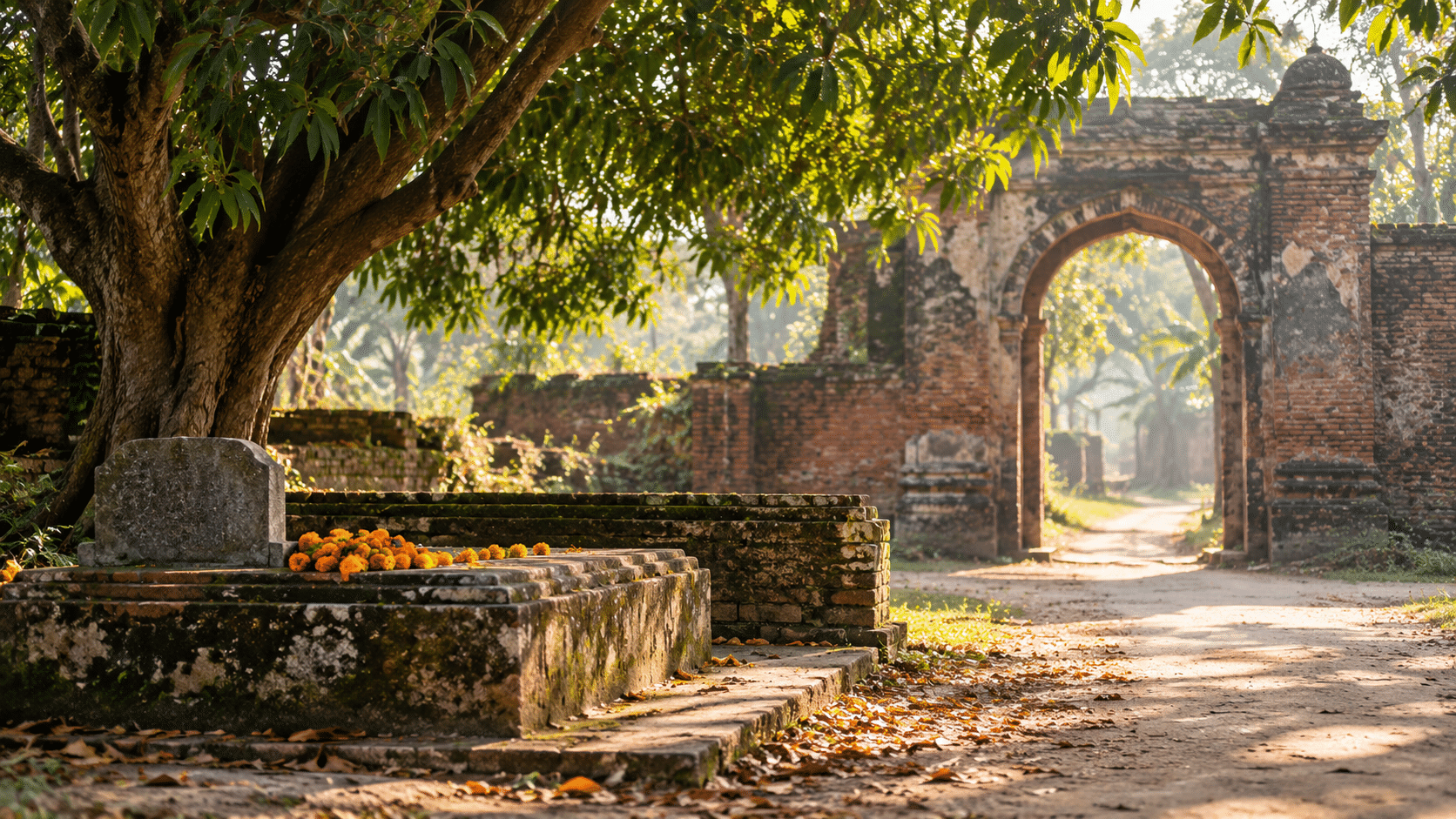
The Padamdi Nawab Estate is one of those quiet places in Bangladesh where literature and landed history sit side by side. In Baliakandi Upazila of Rajbari, beside the Padma, this old aristocratic estate is tied to Mir Mosharraf Hossain, the writer who gave Bengali prose some of its most loved pages. If you enjoy stories behind places, the Padamdi Nawab Estate is a rewarding stop.
The Story of the Padamdi Nawab Estate
The Padamdi Nawab Estate (also spelled Padmadi) was home to the Nawabs of Padamdi, a family with Mughal-era roots. According to Wikipedia, the title “Mir” came to the family through service commanding Mughal artillery. The estate stood on the bank of the Padma and drew in landholders, writers and scholars over generations.
Picture a river-edge estate in the nineteenth century: grain stores, courtyards, tenants coming to pay dues, and one thoughtful young manager watching all of it. That observer was Mir Mosharraf Hossain, and what he saw eventually became literature.
Mir Mosharraf Hossain and the Padamdi Nawab Estate
Mir Mosharraf Hossain was born on 13 November 1847 in Lahinipara, Kushtia, and is remembered as a pioneer among nineteenth-century Bengali Muslim writers. He wrote about 35 books, including novels, plays, poetry and an autobiography. His best-known work, Bishad Sindhu, retells the story of Karbala, while his play Jamidar Darpan holds up a mirror to the landlord class. According to Wikipedia, the play drew on his brother Mir Mohammad Ali, who was the zamindar of Padamdi, and Mosharraf Hossain later succeeded him.
He died in 1912 and was buried at Padmadi. Today the Padamdi Nawab Estate area is the heart of his memory in Rajbari.
What to Look For Around the Padamdi Nawab Estate
The tomb and memorial centre
Banglapedia lists the tomb of Mir Mosharraf Hossain in Baliakandi as a tourist spot of Rajbari. A memorial centre in the upazila hosts Bangla Academy programmes each year around his birth anniversary on 13 November. If you can time your visit then, you will see discussions, recitations and cultural events that bring his work alive.
Old estate atmosphere
Do not expect a polished museum. What you get is atmosphere: old walls, shaded village lanes, mango and jackfruit trees, and the sense that history is still part of daily life. Ask elderly residents about the estate. Local memory often adds details that no signboard will.
Village and river rhythm
Baliakandi is farming country, with paddy, jute, sugarcane, onion, garlic and betel leaf among its main crops. A slow walk through nearby fields and ponds shows the countryside that shaped the writer’s world.
More Heritage Nearby in Baliakandi
Baliakandi was one of the centres of the fakir-sannyasi resistance movement, according to Banglapedia. The upazila also has a mass grave at Baharpur from the Liberation War. These sites are not tourist attractions in the usual sense, so approach them quietly and respectfully.
Tips for Visiting the Padamdi Nawab Estate
- Read a short extract of Bishad Sindhu or Jamidar Darpan before you go. It changes how the place feels.
- Ask locally before photographing homes or private grounds near the Padamdi Nawab Estate.
- Carry cash and water, as small shops can be far apart.
- Visit in dry weather. Village lanes can turn muddy and slow after rain.
- Confirm opening times of the memorial centre with locals, as they may vary.
Frequently Asked Questions
Where is the Padamdi Nawab Estate?
The Padamdi Nawab Estate is in Baliakandi Upazila of Rajbari District, Dhaka Division, close to the Padma River.
Who is linked with the Padamdi Nawab Estate?
Mir Mosharraf Hossain, the Bengali novelist and playwright behind Bishad Sindhu, is the most famous name tied to the estate and is buried at Padmadi.
When is the best time to visit the Padamdi Nawab Estate?
From November to February. The weather is pleasant, and 13 November brings his birth anniversary programmes.