
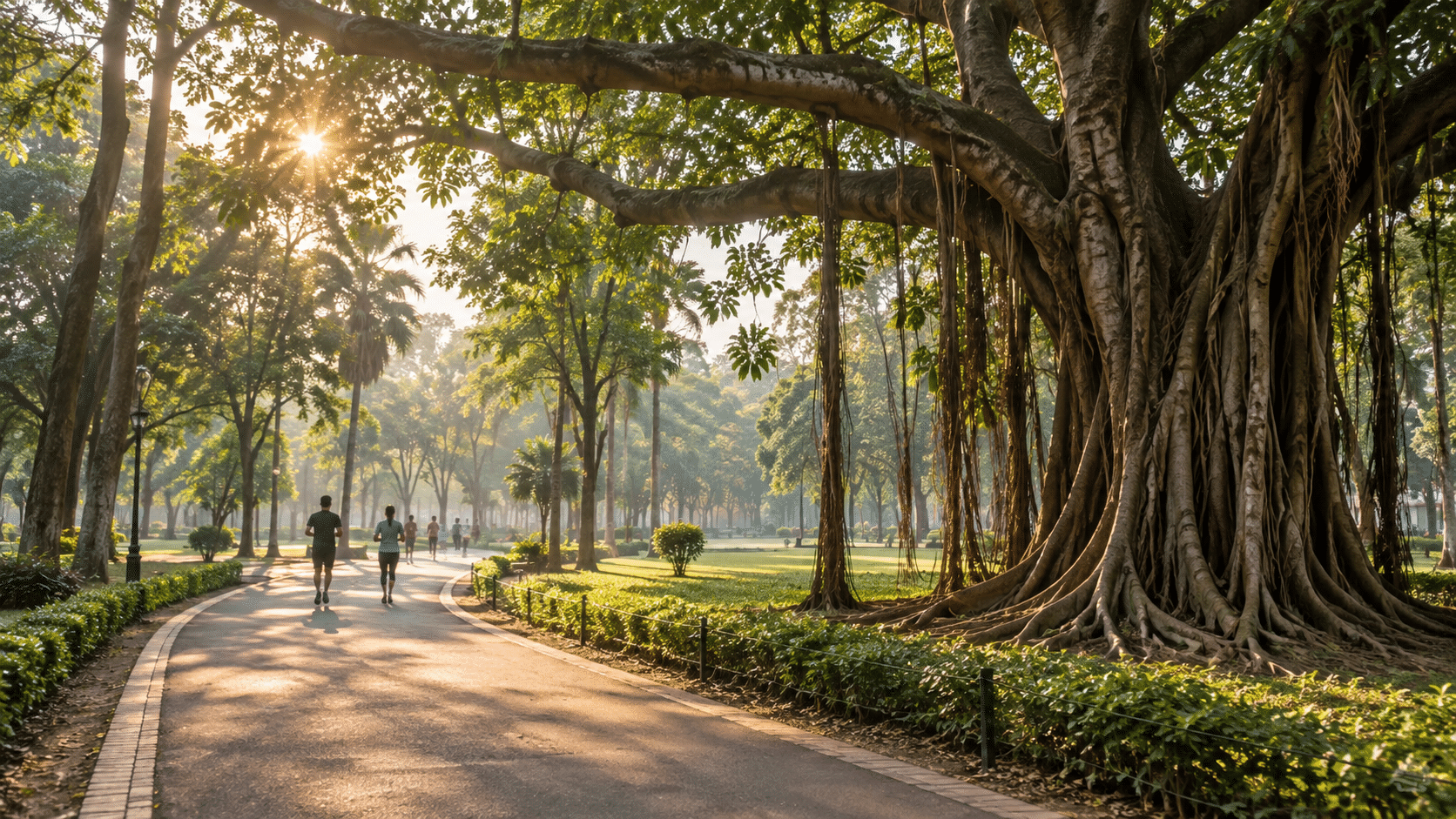
If Old Dhaka is where the city began, Shahbagh and Ramna are where it decided what kind of nation it wanted to be. This is Dhaka’s institutional heart, a compact quarter of museums, university buildings, monuments, and green space that carries more of the country’s political and intellectual history per square kilometer than almost anywhere else in Bangladesh.
Ramna Park itself predates the country by centuries. Laid out during the Mughal era and reshaped repeatedly under British and Pakistani rule, its wide lawns and old banyan trees have hosted everything from royal gardens to political rallies. Today it’s simply Dhaka’s green lung, joggers and families use it daily, but the layers of history underneath rarely leave, this was ground zero for some of the defining moments of the 1971 Liberation War and the language movement that preceded it.
Walk a few minutes from the park and the character shifts to academic and civic. Dhaka University’s old campus sits here, its curzon hall and residential halls carrying the weight of decades of student movements that shaped modern Bangladesh, most visibly the 1952 Language Movement that began nearby and eventually gave the country Ekushey February, now recognized internationally as International Mother Language Day. The Shaheed Minar, the martyrs’ monument built to honor that movement, stands as one of the most visited civic landmarks in the country.
Museums cluster in the same stretch. The Bangladesh National Museum holds the country’s largest collection of art, history, and natural science exhibits under one roof, while smaller institutions nearby cover everything from fine arts to the Liberation War itself. This isn’t a quarter for casual wandering the way Old Dhaka is, it rewards visitors who come with specific stops in mind and time to actually read the exhibits rather than just photograph the buildings.
Shahbagh’s central roundabout has also become shorthand for public assembly in Bangladesh, the site of major protest movements in recent memory. Visiting here means walking through living civic space as much as historical ground, a quarter that’s still actively being written into, not one that’s finished being written about.