
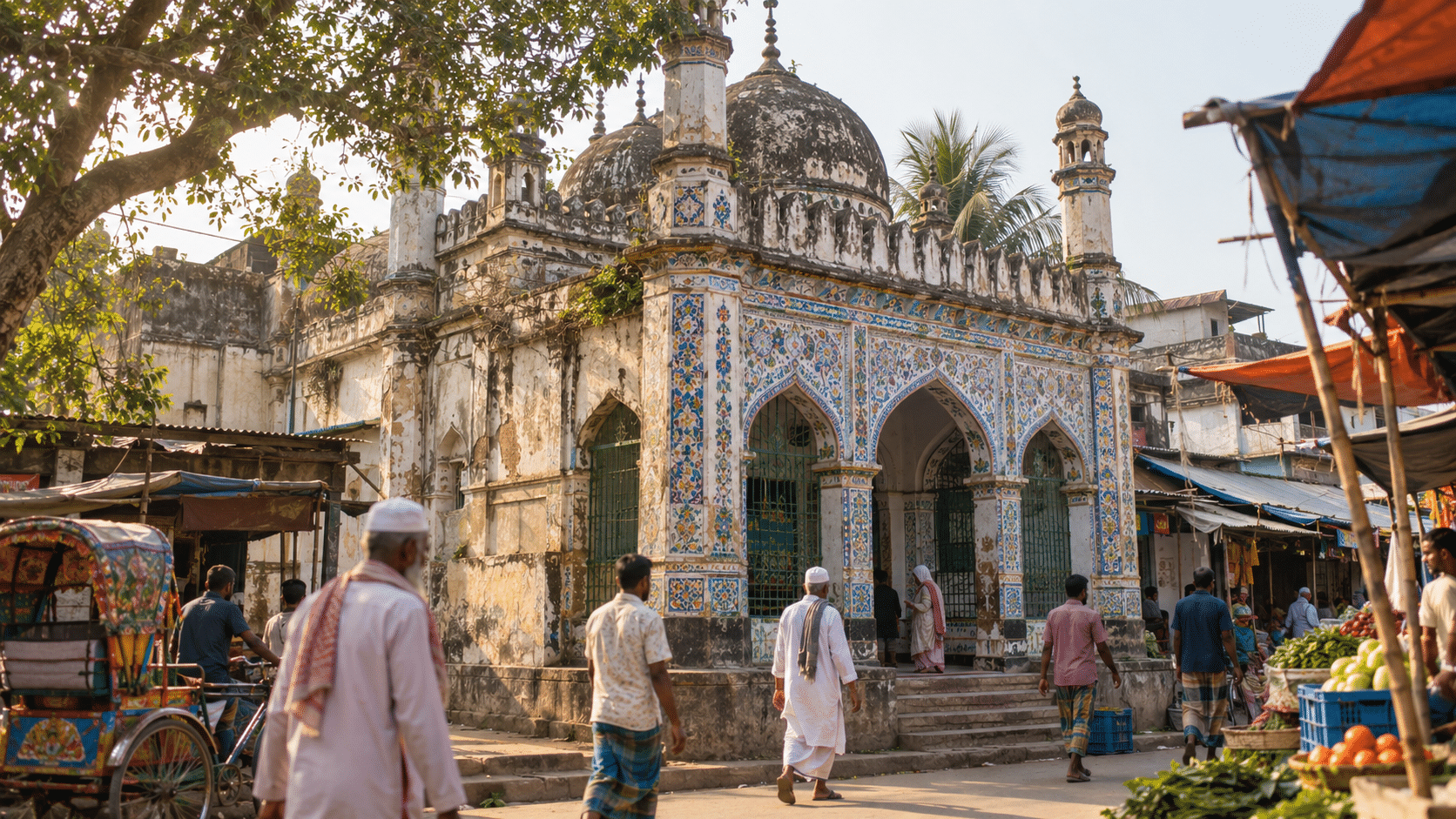
The Shariatpur heritage trail is a quiet journey through temples, ashrams, an old mosque and village ponds that hold more stories than they show. It is not a trail with signboards and ticket counters. It is better than that: a slow, local route where every stop comes with a legend, and every tea stall owner has an opinion about which story is true.
The Name Behind the Shariatpur Heritage Trail
The district is named after Haji Shariatullah (1781 to 1840), the founder of the Faraizi movement and a well-known Islamic reformer of the British period. Shariatpur became a district on 1 March 1984. Before that, it was known as Palong thana under Faridpur. This short history gives the Shariatpur heritage trail its backbone: an area shaped by reform, faith, river trade and old landowning families.
Rudrokor Math: A Quiet Monastery Stop
Rudrokor Math stands in Rudrokor union of Shariatpur Sadar. Travel writers describe it as a historic monastery about 150 years old, and it also appears on local lists of heritage sites. It is a good first stop on the Shariatpur heritage trail because it is close to the town, calm in the morning, and easy to reach by CNG.
Dhanuka Mansha Bari: Where Legend Meets Brick
In Dhanuka village, locals speak about the Mansha Bari as a very old house of worship, with some saying it is around 600 years old. That number is a story passed through generations, not a proven fact, so enjoy it as folklore. Ask the caretakers and neighbours what they remember. Their answers are part of the experience on the Shariatpur heritage trail.
Mahisar and the Digambari Ashram
Mahisar is one of the most storied villages in the district. It is home to the Digambari Dighi, a large pond, and the ashram linked with Digambari Ma and the saint Ram Sadhu, whose ashram is dated to 1887. The village is also connected to the family roots of poet and composer Atul Prasad Sen, and Shariatpur is also remembered as the home district of novelist Abu Ishaq and the revolutionary Pulin Bihari Das. For a reader or a writer, this stop on the Shariatpur heritage trail feels like walking through a living library.
Burir Hat Mosque in Bhedarganj
Burir Hat Mosque is one of the best-known old mosques of the district, praised for its delicate mosaic work. Some sources date it to 1907. The mosque sits close to a busy market, so you will hear trade and prayer side by side, which is a very Bengali kind of beauty. Wear modest clothing and avoid prayer times if you only wish to take photographs.
Other Stops Worth Adding
- Chikondi Civil Court: A British-era building that shows how administration worked in old Faridpur and Shariatpur.
- Haturia Zamindar Bari: One of the old landlord houses mentioned in local heritage lists.
- Circuit House and the river ghat area in town: A simple, relaxed stop for tea and a river view.
A Two-Day Plan for the Shariatpur Heritage Trail
- Day 1: Shariatpur Sadar. Start with Rudrokor Math, then visit Dhanuka Mansha Bari, and end at the river ghat.
- Day 2: Bhedarganj side. Visit Burir Hat Mosque, then Mahisar and the Digambari Dighi.
Best Time and Tips for the Shariatpur Heritage Trail
- November to February is best because village paths are dry and the weather is gentle.
- Hire a CNG or auto for the full day, since the stops are not close together.
- Ask locals for current road conditions, especially after heavy rain.
- Respect all temples, ashrams and mosques. Ask before taking photos of people.
- Many dates and ages on this trail come from local tradition, so treat them as stories unless a record is shown.
Nearby Places in Shariatpur
Add the Sureswar shrine and the fantasy park in Naria, or finish the trip with a sunset at the Padma Bridge landing in Jajira.
Quick Answers About the Shariatpur Heritage Trail
What is on the Shariatpur heritage trail?
The main stops are Rudrokor Math, Dhanuka Mansha Bari, the Digambari ashram and pond at Mahisar, and Burir Hat Mosque.
How many days do I need?
Two days is comfortable. A fast traveller can cover the main Sadar stops in one long day.
Is the Shariatpur heritage trail suitable for families?
Yes, for older children and adults who enjoy history and village walks. Young children may find the long local rides tiring.