
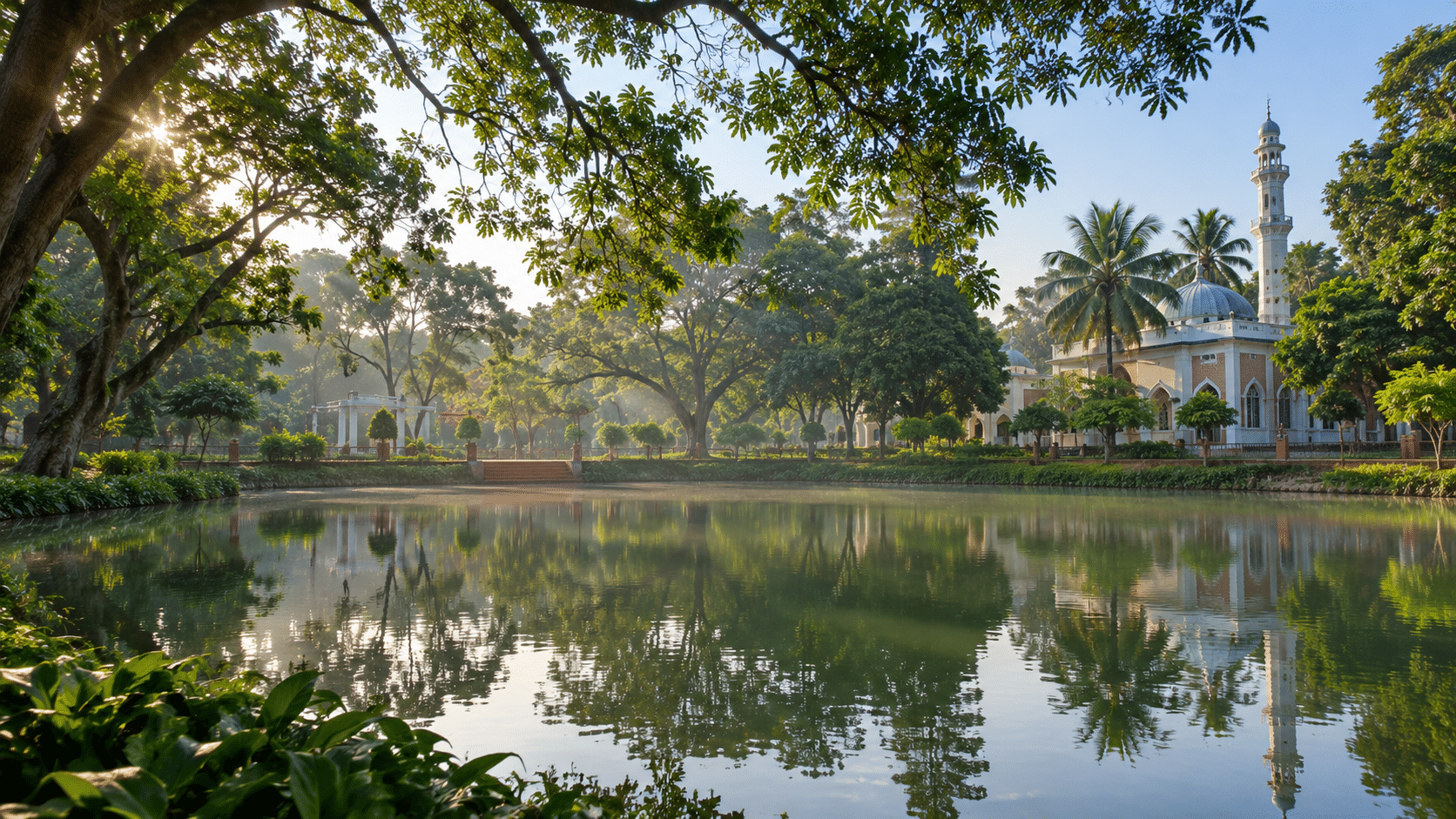
Tungipara is a quiet riverside town in Gopalganj district, and it is one of the most meaningful heritage stops in Dhaka Division. Most people come for one reason: Tungipara is the birthplace of Sheikh Mujibur Rahman, Bangladesh’s founding president, and the place where he rests today. But if you slow down, this town offers more than a memorial. You also get green village roads, open paddy fields, still ponds and the gentle flow of the Madhumati River.
Why Tungipara Matters
Tungipara sits at the southern end of Gopalganj, and the Madhumati River separates it from Bagerhat district. The land is flat delta country, the soft green landscape many Bangladeshis picture when they hear the words “Sonar Bangla”. One local explanation links the name Tungipara to raised village houses called tong, which shows how closely life here has always followed the water.
For many families, a day here is part history lesson and part quiet outing. It is a place where grandparents explain old stories to children, and where a short walk under big shade trees feels calmer than any city park.
The Bangabandhu Mausoleum Complex in Tungipara
The mausoleum complex is the heart of Tungipara. It was designed by architects Ehsan Khan, Ishtiaque Jahir and Iqbal Habib, and the team took care to keep the site green and open instead of crowding it with concrete. You walk through gardens on both sides before reaching the tomb building at the front. Sheikh Mujibur Rahman is buried here beside his parents.
What You Will See Inside the Grounds
- The tomb pavilion, where visitors enter in an orderly way and follow the posted rules
- A museum and a library, with photographs from different stages of his life
- An open-air stage, a public plaza and Bakultala Square
- A mosque and a calm pond with shade trees around it
- A small souvenir shop and a canteen for tea and snacks
Take your time here. This is not a place to rush through for photos. Sit by the pond for ten minutes and you will notice how peaceful the grounds become once the morning groups move on.
The Family Home Nearby
Close to the mausoleum stands the Sheikh family’s old village home. Seeing it gives the visit a human side. It reminds you that a national story began in an ordinary village, much like the village your own grandparents may have come from.
Madhumati Riverside: The Slow Side of Tungipara
After the memorial, most visitors head to the water. The Madhumati is the river that shaped Tungipara, and a short walk toward the bank shows you fishing nets, small country boats and farmers crossing with bundles of crops. Local boatmen sometimes offer short rides, so ask politely and agree on the price before you step in. In winter, the late afternoon light turns the river bank golden, which makes it the best hour for quiet photography.
A Simple Way to Picture Your Visit
Imagine a Dhaka family leaving early on a winter Friday. They reach Tungipara by late morning, spend an hour in the mausoleum grounds, eat a simple lunch, then walk to the river for tea as the sun softens. They are back on the road before dark with something rare for a day trip: the feeling of having touched history without feeling tired by it. That is the rhythm this town suits best.
Practical Tips for Your Tungipara Trip
- Dress modestly and keep your voice low inside the mausoleum grounds.
- Follow staff instructions about entry, photography and floral tributes.
- Carry some cash, because digital payments may not work at small shops nearby.
- Bring water and a hat in summer, as the open approach has limited shade.
- Opening hours and security arrangements can change, so confirm locally before you travel.
- Stay in Gopalganj town for a longer trip, since lodging in Tungipara itself is limited.
How Tungipara Fits Into a Gopalganj Trip
It works well as the first stop on a Gopalganj circuit. From here you can continue to Orakandi in Kashiani, the spiritual home of the Matua community, or to Balakoir Beel, which turns into a sea of lotus flowers in the rainy months. Together they show three very different faces of one district: national heritage, living faith and quiet wetland beauty.
Tungipara FAQs
Why is Tungipara famous?
Tungipara is famous as the birthplace and burial place of Sheikh Mujibur Rahman, and for the mausoleum complex built there.
Which district is Tungipara in?
Tungipara is an upazila of Gopalganj district in Dhaka Division, on the bank of the Madhumati River.
What is the best time to visit Tungipara?
November to February is the most comfortable, with cooler and drier weather that suits walking around the grounds and the riverside.
How do I reach Tungipara from Dhaka?
Take a bus to Gopalganj town via the Padma Bridge, then a local bus or auto toward Tungipara and the Patgati area. Ask locals for the mausoleum complex as you get close.