
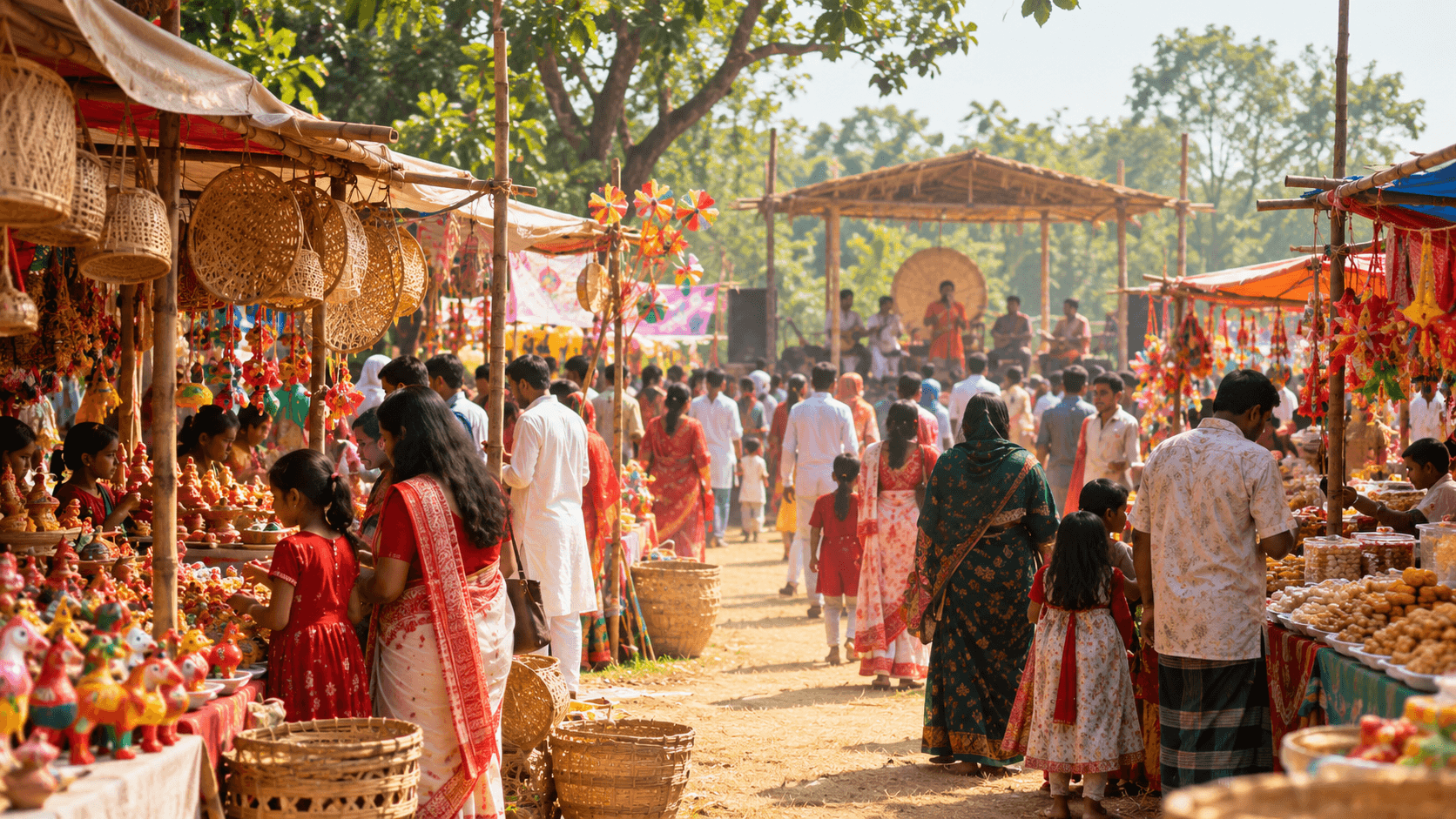
The Baishakhi Mela Rajbari is the district’s warm, noisy welcome to the Bengali New Year. Every 14 April, towns and villages across Bangladesh celebrate Pohela Boishakh, and Banglapedia notes that Rajbari Sadar holds annual fairs on Baishakhi occasions. If you want to feel everyday Rajbari at its liveliest, the Baishakhi Mela Rajbari is a colourful way to do it.
About the Baishakhi Mela Rajbari
Pohela Boishakh falls on 14 April under the Bangla Academy calendar, and it is marked with fairs, traditional food and cultural programmes across the country. Banglapedia lists Rajbari Sadar among the upazilas where annual fairs are organised on Baishakhi festivals, along with fairs on Durga Puja and Dolmancha occasions. That makes the Baishakhi Mela Rajbari a long-standing local tradition rather than a modern tourist event.
What a Baishakhi Mela Usually Feels Like
A Baishakhi mela is a sensory festival. Banglapedia describes Baishakhi fairs as having a commercial side and a cultural side. In general, visitors can expect:
- Stalls selling toys, utensils, handicrafts and sweets.
- Traditional food such as muri, batasha and local snacks.
- Folk music, songs and sometimes simple rides for children.
- Families, neighbours and friends meeting in festive clothes.
Details at the Baishakhi Mela Rajbari vary by venue and year, so confirm the exact location and programme locally before you go.
Why the Baishakhi Mela Rajbari Is Worth Seeing
Fairs like this are disappearing in many places. Researchers have noted that the scope of rural fairs is shrinking in parts of Bangladesh, which is one more reason to value the ones that continue. The Baishakhi Mela Rajbari lets you see local crafts, local food and local community life in one open-air place, without a ticket booth in sight.
Things to Try at the Baishakhi Mela Rajbari
Traditional treats
Look for simple sweets, puffed rice and festival snacks sold by local vendors. Ask what each item is called. Vendors are usually happy to explain.
Handmade goods
Fairs are one of the few places where small potters, toy makers and basket weavers sell directly. A few small purchases support local livelihoods and make good souvenirs.
Folk performances
If there is a music stage, stay a while. Even a few songs give you a feel for local culture that museums cannot match.
Respect and Safety
Fairs get crowded. Keep your bag close, hold on to children, and keep valuables out of sight. Ask before photographing people, especially women and children. Dress comfortably, as the April weather can be hot and humid.
Pairing the Baishakhi Mela Rajbari With Other Stops
If you stay longer, add Godar Bazar for a calm Padma riverside stroll, Goalanda Ghat for wide river views or Baliakandi for literary heritage. The Baishakhi Mela Rajbari works best as a lively start or finish to a slower Rajbari trip.
A Small Story From the Fairground
Picture a child clutching a clay toy, a grandmother haggling gently over a pot and a folk singer warming up under a bamboo canopy. These small, ordinary scenes are the real attraction of the Baishakhi Mela Rajbari. Come with curiosity and an empty bag, and you will leave with both stories and souvenirs.
Tips for the Baishakhi Mela Rajbari
- Confirm the fair location and dates locally, as some fairs run for more than one day.
- Go early in the day to avoid the worst heat and crowds.
- Carry cash in small notes, water and a hat.
- Expect busy roads and buses on the national holiday.
Frequently Asked Questions
When is the Baishakhi Mela Rajbari?
The Baishakhi Mela Rajbari is held around Pohela Boishakh, which falls on 14 April.
Where is the Baishakhi Mela Rajbari held?
Banglapedia notes annual Baishakhi fairs in Rajbari Sadar Upazila. The exact venue can vary, so confirm locally.
Is the Baishakhi Mela Rajbari free to enter?
Village fairs are generally open to everyone, though stalls and rides charge for their own goods and services.