
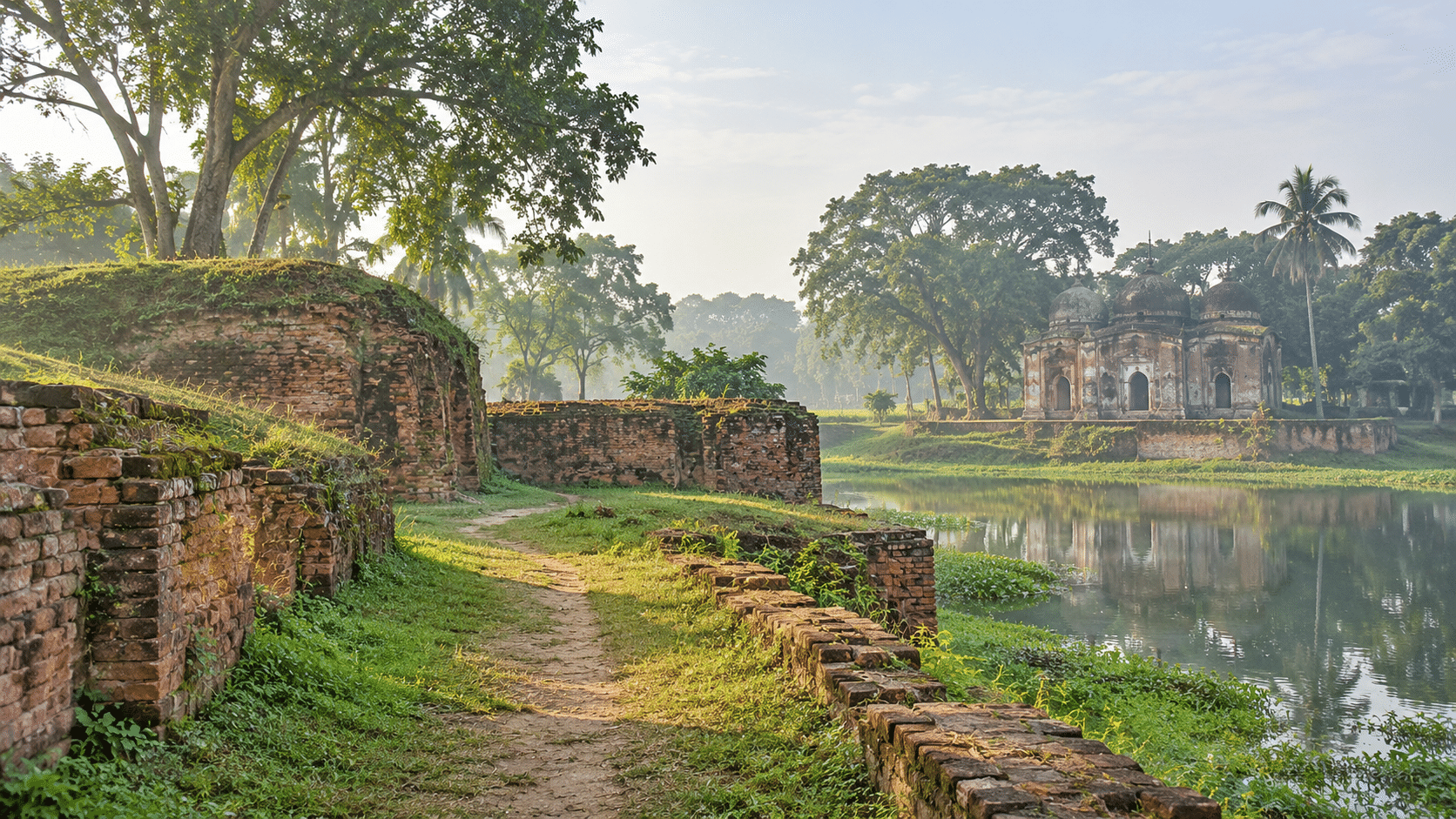
The Baro-Bhuyan story of Bengal is often told in school books, but in Kishoreganj you can actually walk through it. Two places, Egarasindur in Pakundia and Jangalbari in Karimganj, carry the memory of Isha Khan, the great leader of the Baro-Bhuyans. A day following the Baro-Bhuyan story turns dates and names into real ground under your feet.
Who Were the Baro-Bhuyans?
The Baro-Bhuyans were a group of powerful local chiefs in Bengal, and Isha Khan was their best-known leader. He refused to pay tax to the Mughal emperor and declared himself an independent ruler. His main base was Sonargaon, but his power spread across the river land of this region. Walking where he walked helps you feel why people still tell his story with pride.
Chapter One: The Fort at Egarasindur
Start in Egarasindur, about 8 km from Pakundia upazila headquarters. According to the district administration, Isha Khan took Egarasindur, then the capital of the Bebud king, in a fierce fight and built a strong fort to guard against the Mughals. Do not expect a tall castle. You will find raised ground, old brick traces, ponds and green fields, and the shape of a landscape that once mattered a great deal.
Chapter Two: Two Mughal-Era Mosques
Inside the fort area stands the Shah Mahmud Mosque, built in 1664 by a local businessman during the time of Subedar Shaista Khan. About 250 metres away is the Sheikh Sadi Mosque, another Mughal-era mosque. Together they show that Egarasindur was not only a military post but a living settlement with traders and worshippers. Look for the terracotta designs and the small brick gatehouse called the balakhana.
Chapter Three: Jangalbari, the Second Capital
Next, head to Jangalbari in Kadirjangal Union, Karimganj, known as Isha Khan’s second capital and around 6 km from Kishoreganj town. Here you can see old walls, a pond, a three-domed mosque and the Isha Khan Memorial Museum in the renovated darbar house. Descendants of Isha Khan still live in the village, which makes this chapter feel personal. Accounts differ on the exact dates of how the fort changed hands, so enjoy the story as it is told locally.
How to Plan the Day
The two sites are on different sides of Kishoreganj, so plan the route through Kishoreganj town. Start early at Egarasindur, spend about two hours there, then return to town for lunch and continue to Jangalbari in the afternoon. CNG auto-rickshaws are the easiest option, and drivers around Kishoreganj town know both places. If you are short on time, choose one chapter of the Baro-Bhuyan story and do it slowly, since the story is better when you are not rushing.
Tips to Enjoy the Story
- Read a short note on the Baro-Bhuyan story the night before
- Talk to local elders, who often share stories handed down in families
- Carry water, a hat and a notebook or camera
- Visit November to February, when paths are dry and the air is cool
- Be ready to ask locally about access, since conditions can change
Visit With Respect
These sites are heritage places and also village homes and places of worship. Dress modestly, avoid climbing old walls, keep the ground clean and ask before photographing people.
Quick Answers About the Baro-Bhuyan Story
Where can I see the Baro-Bhuyan story in Kishoreganj?
Egarasindur in Pakundia and Jangalbari in Karimganj are the two main places linked to Isha Khan.
How long does it take?
Plan a full day to see both, or a half day if you choose one.
Is it good for students?
Yes. It is a simple, low-cost way to bring history lessons to life.