
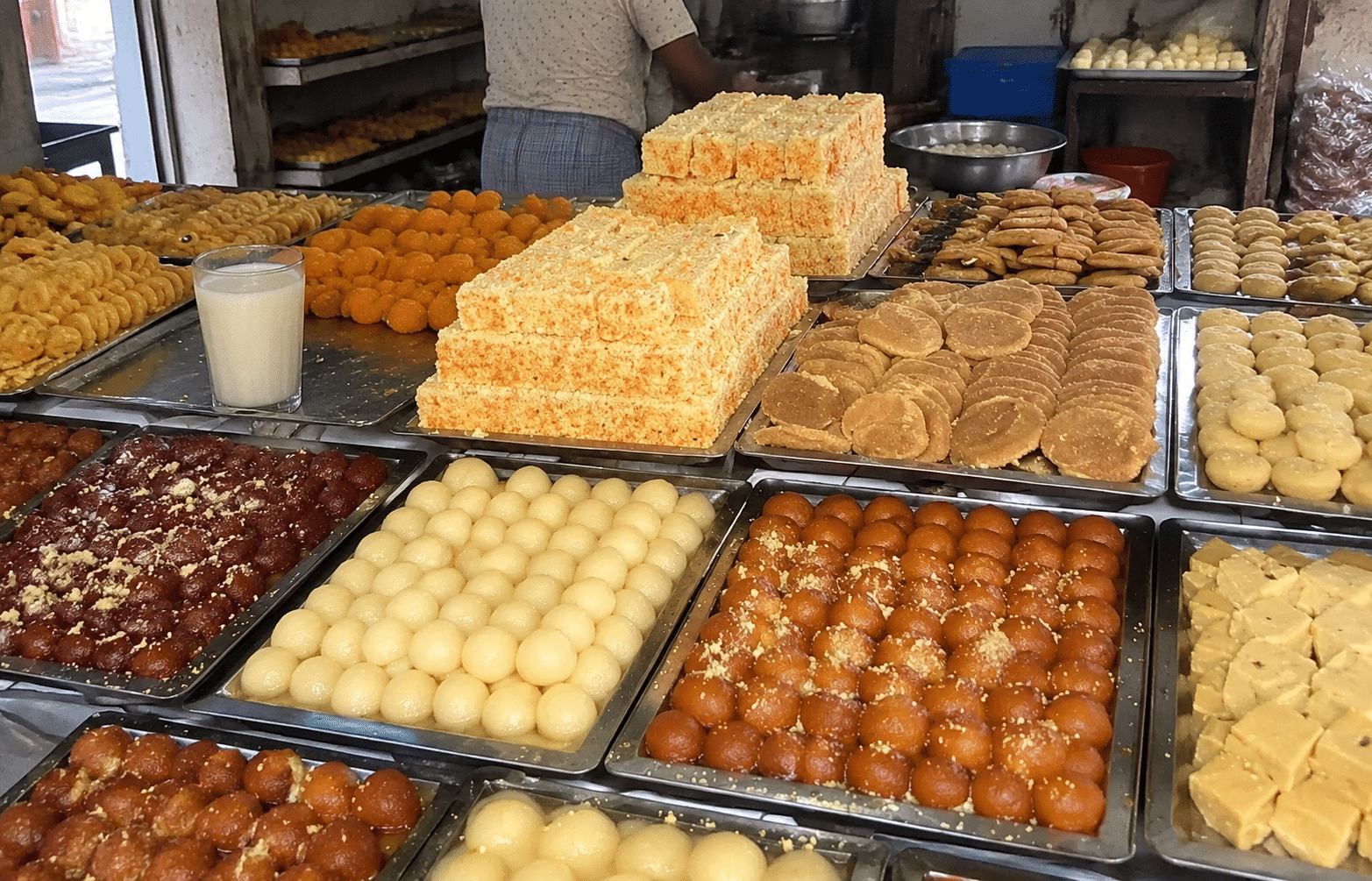
Bhagyakul sweets are one of the sweetest reasons to visit Munshiganj. The small market town of Bhagyakul in Sreenagar has long been known for its mishti, its whey and its family-run sweet shops, and food lovers travel from Dhaka just to taste them. This guide shows you how to enjoy Bhagyakul sweets properly, what to look for and how to pair the tasting with a walk through the old zamindar estate nearby.
Why Bhagyakul Sweets Are Famous
A regional guide to Bangladeshi sweets lists Munshiganj’s Bhagyakul mishti as a classic example of rustic Bengali confectionery, often made with great care by small family-run shops. It also names sweet shops in Bhagyakul among those that carry the regional tradition forward. Bengali sweets are usually made from fresh curdled milk called chhana, which is why freshness matters so much.
What to Try with Bhagyakul Sweets
- Fresh mishti made from chhana
- Whey, often called ghol in Bengali, a cool and light drink that suits a hot day
- Sweets flavoured with nolen gur, the date palm molasses that appears in winter
- Any special sweet the shopkeeper recommends that day
The Dhaka Tribune writer who visited Bhagyakul in 2026 stopped at Govind Sweetmeat in Bhagyakul Bazaar for a glass of the region’s famous whey. It is a simple pleasure, and it tastes best after a walk in the heat.
How to Taste Bhagyakul Sweets Like a Local
- Start with something light, such as a glass of whey.
- Ask the shopkeeper what was made fresh that morning, and try one or two pieces.
- Compare a plain sweet with one made with nolen gur, if available.
- Finish with a sweet you would like to take home.
Buying Bhagyakul Sweets to Take Home
A 2020 guide reported that a pound of sweets at Bhagyakul shops cost about BDT 250 to 350, and that party orders should be placed about a day in advance. Prices change, so ask at the counter. Because chhana sweets spoil quickly in heat, pack them in a cool bag, eat them the same day if possible and keep them out of the sun on the bus home.
Make Bhagyakul Sweets Part of a Day Out
Bhagyakul Rajbari, the estate built around 1900 by Raja Jadunath Roy, is a short walk from the market, and its Bikrampur Museum makes a fine cultural pairing with a sweet tasting. From here you can also reach the Jagadish Chandra Bose Complex and Arial Beel in the same upazila. A well-planned day can mix a boat ride, a museum and a sweet stop.
How to Reach Bhagyakul for Bhagyakul Sweets
Take a bus from Gulistan in Dhaka to Balasur, then an auto-rickshaw to Bhagyakul Bazaar. A day route by Eating Dhaka ends at Bhagyakul Bazaar and returns to Dhaka from the Balasur bus stand.
Best Time to Enjoy Bhagyakul Sweets
Winter, from November to February, is the best time. The weather is cool, the sweets stay fresher and nolen gur flavours are in season. In summer, go early and keep your sweets cool.
Tips for Enjoying Bhagyakul Sweets
- Choose busy shops, since fast turnover usually means fresher sweets.
- Ask prices before you order, especially for boxes.
- Carry hand sanitiser or water, because market stalls can be dusty.
- Try a small piece before buying a large box.
- Support small family shops by buying from more than one place.
Frequently Asked Questions
Where are Bhagyakul sweets from?
They come from Bhagyakul in Sreenagar upazila, Munshiganj District.
What is Bhagyakul famous for?
It is known for its sweets and whey, and for the old Bhagyakul Rajbari estate with the Bikrampur Museum.
When is the best time to buy Bhagyakul sweets?
Winter is best, when the weather is cool and nolen gur sweets are in season.