
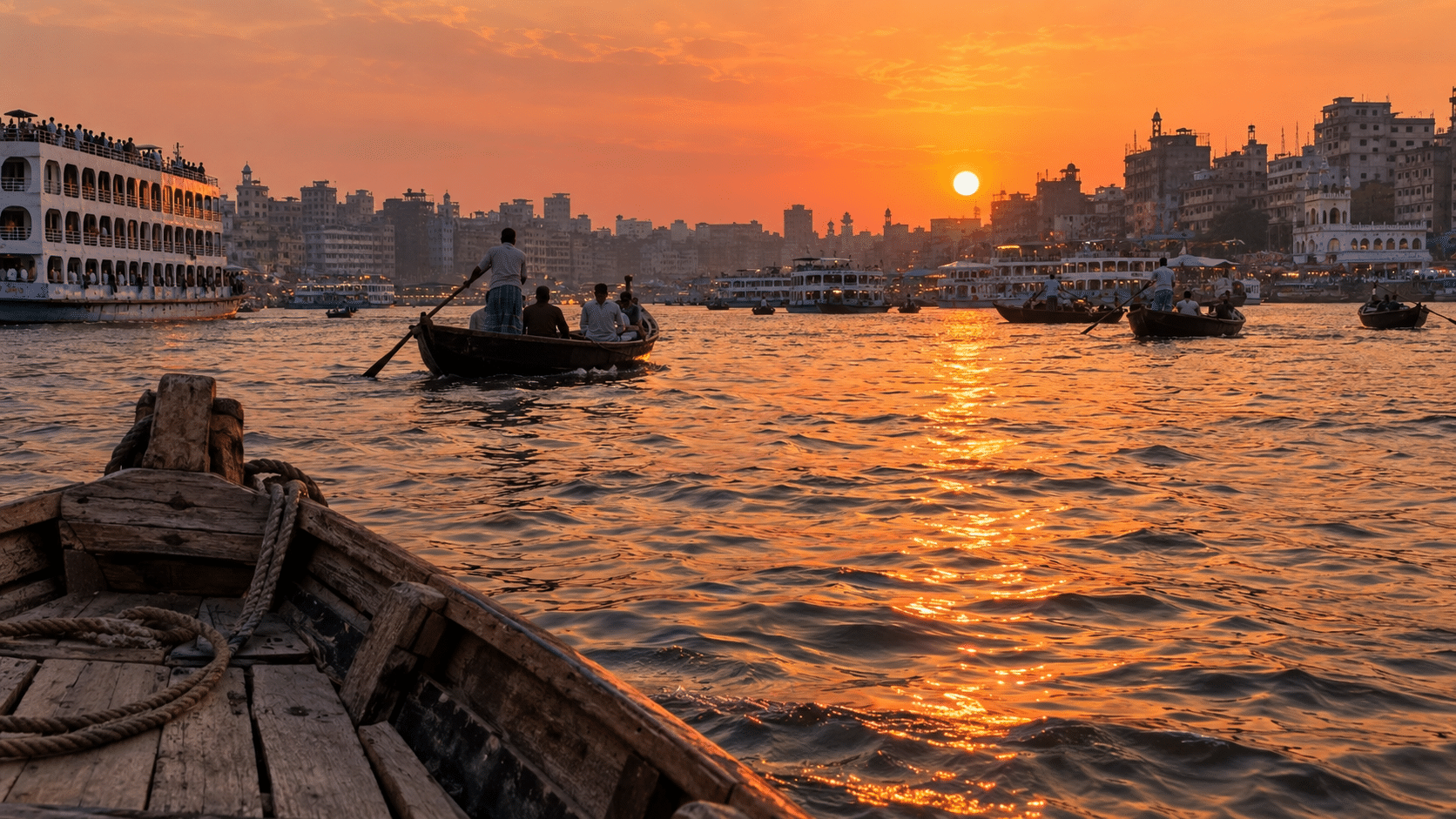
Seeing Old Dhaka from the water changes how the whole district reads. The dense, chaotic skyline that feels overwhelming on foot resolves into something almost graceful from a small wooden boat on the Buriganga, and the river traffic itself, multi-story launches, cargo boats, and dozens of smaller craft crossing in every direction, becomes the main event rather than background noise.
This experience is informal by design. There’s no ticket counter or fixed schedule, visitors walk down to Sadarghat’s ghats and negotiate directly with one of the small boat operators for a short crossing or a longer loop along the riverbank, typically costing just a few taka per person for a basic crossing. A longer, more leisurely ride can be arranged for a negotiated price, and late afternoon into sunset is when the light and river traffic both peak, boats silhouetted against the water, the call to prayer drifting across from riverside mosques.
It suits visitors who want an active, slightly improvised experience over a packaged tour, comfort with negotiating informally in a busy, sometimes chaotic environment helps. It’s not a polished tourist boat with safety briefings and life jackets, closer to how millions of Dhaka residents actually use the river every day. Life jackets aren’t standard practice on these small boats, so cautious visitors should factor that in, and swimmers uncomfortable with informal river conditions may prefer to watch from the ghats instead.
Pair it naturally with Ahsan Manzil, which sits directly on the same riverbank, visiting the palace and then stepping onto the water it made its fortune from adds a layer the museum visit alone doesn’t give you.