
Close Menu
Bangladesh Branding
  • Destinations
    • By Region
      • Dhaka
      • Chattogram
      • Sylhet
      • Rajshahi
      • Khulna
      • Barishal
      • Rangpur
      • Mymensingh
    • By Landscape
      • Beachs
      • Hills
      • Forests
      • Wetlands
      • Rivers
      • Historical Sites
      • Archaeological Sites
      • Religious Places
    • Popular Now
      • Cox’s Bazar
      • Sundarbans
      • Sajek
      • Bandarban
      • Sylhet
      • Srimangal
  • Experiences
  • Places to Visit
  • Festivals and Events
  • Plan Your Trip
  • Travel Stories
    • Travel Guide
      • Travel Tips
      • Hotels
      • Flights
      • Local Transport
      • Currency
    • News and Updates
      • News
      • Business and Brands
      • Buy Bangladeshi
    • Culture and Heritage
      • People
      • Culture
      • Food
      • Heritage Moshque
      • Arts and Crafts
  • Map
Facebook X (Twitter) Instagram YouTube
Facebook X (Twitter) Instagram
Bangladesh Branding
Subscribe
  • Destinations
    • By Division
      • Dhaka
      • Chattogram
      • Sylhet
      • Rajshahi
      • Khulna
      • Barishal
      • Rangpur
      • Mymensingh
    • By Landscape
      • Beachs
      • Hills
      • Forests
      • Wetlands
      • Rivers
      • Historical Sites
      • Archaeological Sites
      • Religious Places
    • Popular Now
      • Cox’s Bazar
      • Sundarbans
      • Sajek
      • Bandarban
      • Sylhet
      • Srimangal
    • Featured Destinations
  • Experiences
  • Places to Visit
  • Festivals and Events
  • Plan Your Trip
  • Travel Stories
    • Travel Guide
      • Travel Tips
      • Hotels
      • Flights
      • Local Transport
      • Currency
    • News and Updates
      • News
      • Business and Brands
      • Buy Bangladeshi
    • Culture and Heritage
      • People
      • Culture
      • Food
      • Heritage Moshque
      • Arts and Crafts
  • Map
Bangladesh Branding
Home » Experiences » Faraizi History Trail in Shibchar

Faraizi History Trail in Shibchar

October 14, 2026No Comments4 Mins Read
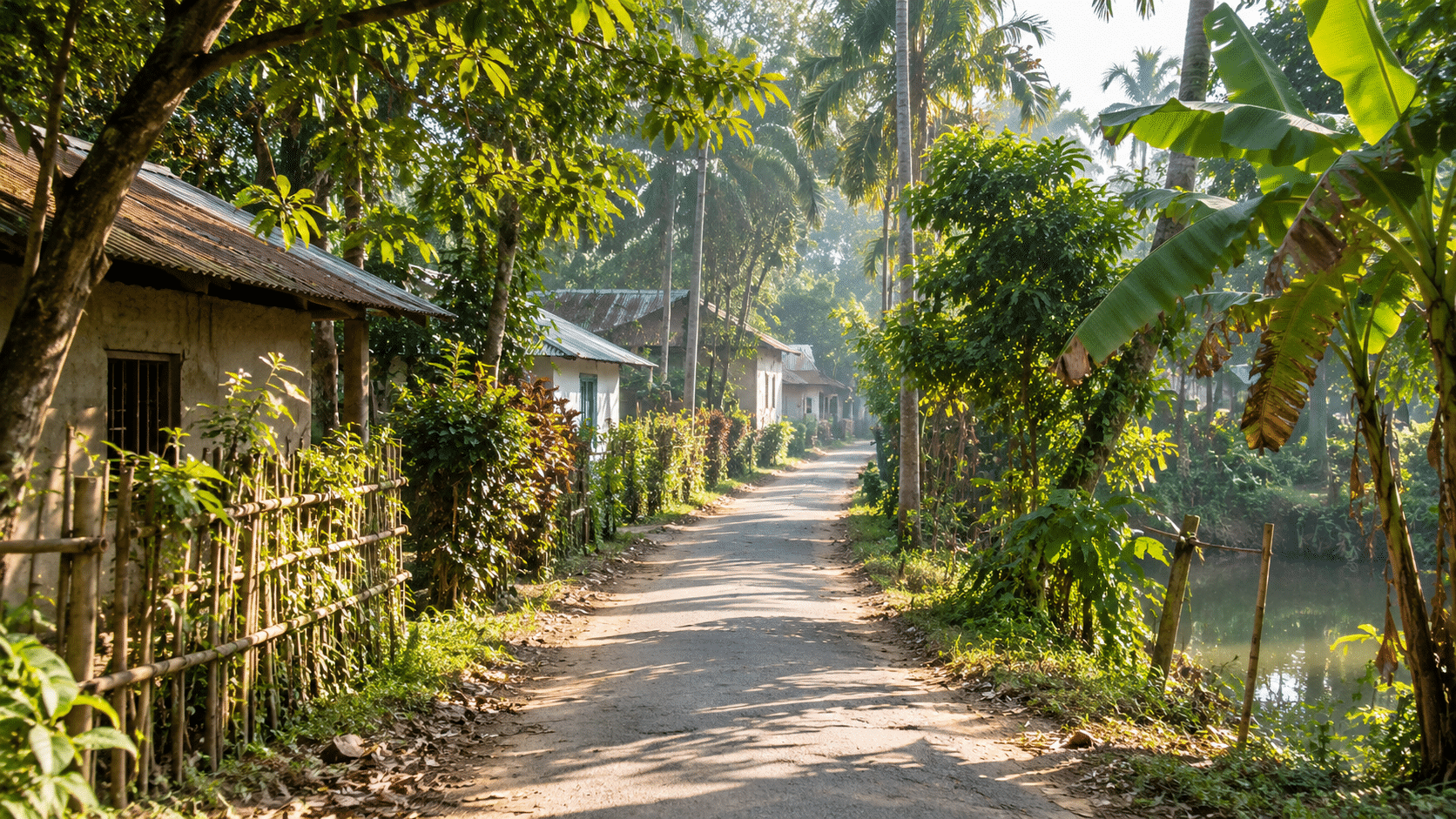
Faraizi history trail
Share
Facebook Twitter LinkedIn WhatsApp Copy Link

Faraizi History Trail in Shibchar

The Faraizi history trail follows one of the most important reform movements in 19th century Bengal, and much of its early story belongs to Madaripur. It begins in Shamail village in Shibchar, where Haji Shariatullah was born in 1781, and continues toward Bahadurpur, which later became the headquarters of the movement. This experience helps you walk that story with context and respect.

Why Follow the Faraizi History Trail?

The Faraizi movement shaped religion, society and rural life across much of eastern Bengal. According to Banglapedia, Haji Shariatullah went to Makkah in 1799 and returned to Bangladesh in 1818, after nearly twenty years abroad. He then started the movement, whose name comes from “farz”, meaning duties required in Islam. The neighbouring district of Shariatpur is named after him. Walking the Faraizi history trail lets you see where all of that began.

The Stops on the Faraizi History Trail

Stop 1: Shamail Village

Start where the story starts. Shamail village is the birthplace of Haji Shariatullah. We could not confirm a formal museum or memorial here, so treat this stop as a quiet walk, and listen to what local people choose to share.

Stop 2: Bahadurpur

After his death in 1840, his son Muhsinuddin Ahmad, known as Dudu Miyan, became the leader of the movement. Under him it took on a stronger peasant and agrarian character, and Bahadurpur served as its headquarters. Haji Shariatullah himself is recorded as having died at Bahadurpur. Standing here, you are in the place where the movement was organised.

Stop 3: Alagi Kazi Bari Mosque

Alagi Kazi Bari Mosque in Bahadurpur union is listed among the district’s heritage sights. Details about its age and builder are limited, so visit with curiosity and ask politely. It adds a physical landmark to a trail that is otherwise mostly about memory.

Stop 4: Liberation War Memory in Bahadurpur

Madaripur district records mass graves at Kalagachhia, Bahadurpur and Mithapur from the Liberation War. A quiet moment here connects two chapters of local struggle, one from the 19th century and one from 1971.

How to Prepare for the Faraizi History Trail

This trail rewards people who read first. Before you go, read the Banglapedia entries on Haji Shariatullah and the Faraizi movement. They give you the names, dates and ideas that make each stop meaningful. Without that background, the villages can look quiet and unremarkable.

Tips for the Faraizi History Trail

  • Remember that these are living villages, so respect privacy and ask before taking photographs.
  • Dress modestly, especially near the mosque.
  • Do not expect shops, guides or signs, and carry water and cash.
  • Ask local people for directions and confirm each stop on a map before you travel.
  • Allow a full day, since village roads are slow, especially in the rainy season.

Combine the Faraizi History Trail with Other Shibchar Stops

Arrive by train at Shibchar, spend the morning on the Faraizi history trail, and end the day at the Padma bank in Kanthalbari. That gives you reform, river and rail in one day.

Who Will Enjoy the Faraizi History Trail

History students, researchers, teachers and slow travellers will value this experience most. If you want entertainment, look elsewhere. If you want to stand where an important chapter of Bengal began, the Faraizi history trail is worth the effort.

Faraizi History Trail: Quick Answers

Where does the Faraizi history trail begin?

The Faraizi history trail begins in Shamail village in Shibchar Upazila of Madaripur, the birthplace of Haji Shariatullah.

What is Bahadurpur known for?

Bahadurpur served as the headquarters of the Faraizi movement under Dudu Miyan, and Haji Shariatullah is recorded as having died there in 1840.

Is the Faraizi history trail guided?

We could not confirm any official guided route, so plan your own with a map and local help.

Search
Recent Post
  • Shahriar Zaman Joins the Board of Directors of Global Creative Foundation! November 16, 2026
  • Chandpur District: Where the Great Rivers Meet September 13, 2026
  • Noakhali District: Islands, Estuary, and Gandhian Heritage September 13, 2026
  • Feni District: Migratory Birds, Ancient Tanks, and the Hill-Plains Edge September 13, 2026
  • Khagrachari District: Cave Country, Tribal Heartland, and Hill Panoramas September 9, 2026
  • Cumilla District: Ancient Buddhism and the Highway City September 9, 2026
  • Rangamati District: The Lake District of Bangladesh September 8, 2026
  • Cox’s Bazar District: The World’s Longest Beach September 8, 2026
  • Chattogram District: Bangladesh’s Port City and Hill Country Gateway September 8, 2026
  • Jhenaidah District: Ancient Mosques and Riverine Landscapes September 7, 2026
  • Magura District: Quiet Rivers and Zamindari Remnants September 7, 2026
  • Narail District: Where Art Lives on the River September 5, 2026
  • Kushtia District: The Soul of Bangladesh’s Folk Tradition September 3, 2026
  • Jashore District: The Flower Capital of Bangladesh September 2, 2026
  • Khulna District: Gateway to the World’s Largest Mangrove Forest September 2, 2026
Who We Are

Bangladesh Branding, your premier source for uncovering the treasures of Bangladesh, a land where vibrant culture meets breathtaking landscapes and warm hospitality.

Facebook X (Twitter) Instagram YouTube LinkedIn
Explore
  • Destinations
  • Places to Visit
  • Experiences
  • Travel Stories
  • Events
  • Crafts
Plan your trip
  • Trip Planner
  • Travel Guide
  • Best Time to Visit
  • How to Reach
  • Travel Tips
About
  • About Us
  • Contact Us
  • Partner With Us
  • Media / Press
  • Submit a Place
Search
Copyright © 2026 Bangladesh Branding | Developed by Business Brillianz.

Type above and press Enter to search. Press Esc to cancel.

imunify-bot-check