
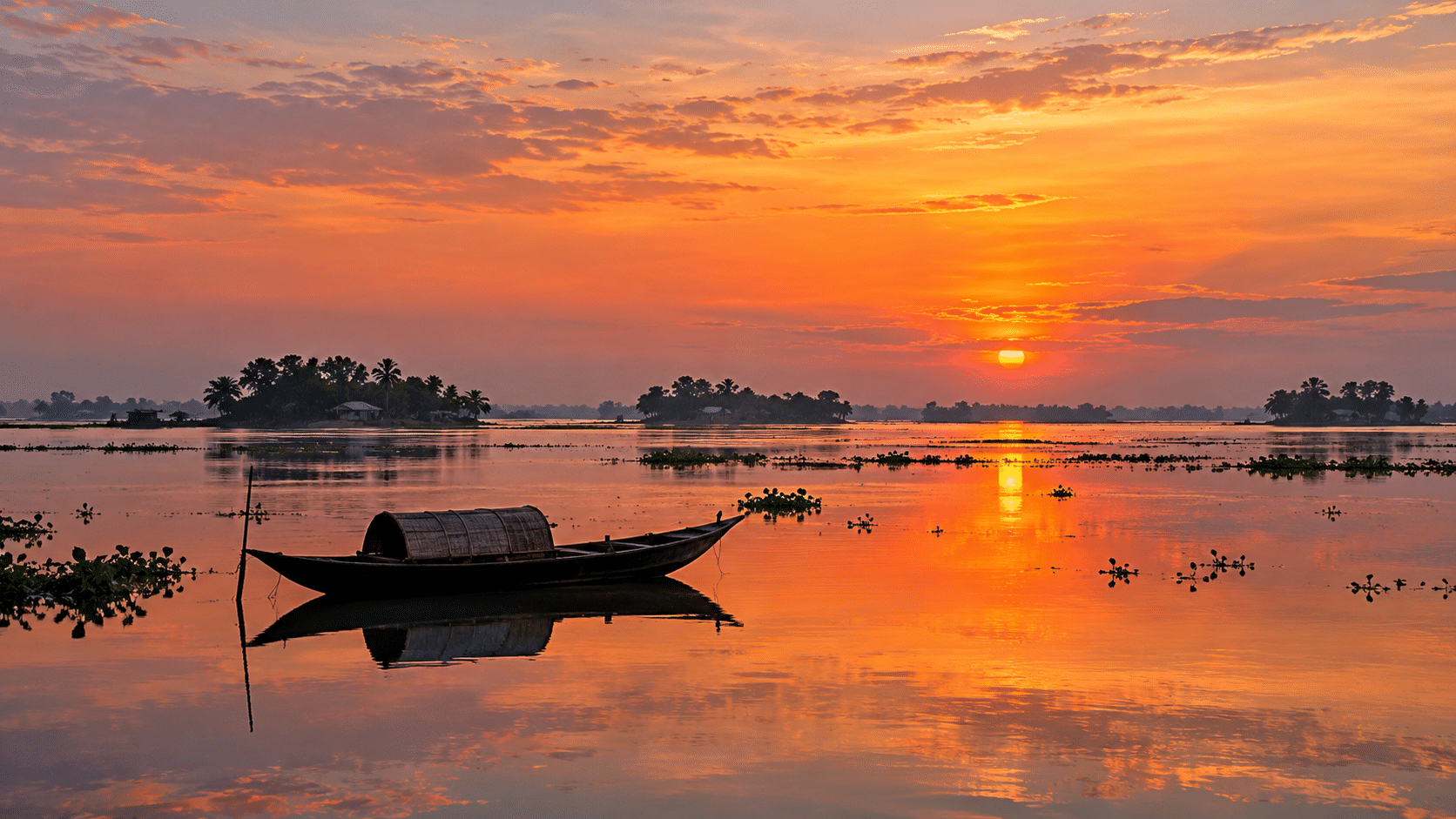
Haor photography in Kishoreganj rewards patience more than gear. The wetlands around Nikli, Mithamain and Austagram change colour with every hour and every season, so even a basic phone camera can come home with pictures you will want to print. Here is how to plan your frames, your timing and your safety for a day of haor photography.
Why the Haor Is So Good for Photos
The haor is a huge, open stage. In the monsoon, it is a sheet of calm water with green chars floating on it and a sky that fills most of your frame. In winter, the same land turns into golden paddy fields, with farmers at work and long straight lines of road. Fishing boats, nets, birds and village life give you endless small stories inside the big landscape.
Golden Hour: Sunset on the Water
Many travellers say the haor is most beautiful when the sun goes down. The sky changes colour minute by minute, and the water below answers with its own colours. Plan to be on the water or on the road about an hour before sunset. Keep your horizon level, include a boat or a tree for scale, and take many frames, because the light changes quickly.
Moonlight on Still Water
On clear nights, the reflection of the moon on small waves can feel like the moon is floating beside your boat. This is a special kind of haor photography, but it needs extra care. Night boat rides carry more risk, so only go with a trusted boatman, a life jacket for everyone and good weather. Hold your phone or camera steady, rest your elbows on your knees, and try short exposures rather than long ones, since the boat moves.
The Road as a Photography Spot
The Mithamain to Austagram road lets you shoot the haor without a boat. In the monsoon, it works as a long causeway across open water, and in winter, it runs through paddy fields. Look for leading lines, small villages at the horizon and fishing boats near the edge. Park safely off the road and never block local traffic for a photo.
Heritage Frames Nearby
Haor photography does not have to end at the water. The five-domed Kutub Shah Mosque in Austagram and the terracotta details of the Shah Mahmud Mosque in Egarasindur are lovely subjects in soft morning light. Weathered brick, curved cornices and carved panels give you a very different mood from open water, and the contrast makes a stronger story.
Simple Haor Photography Tips
- Shoot early and late, when the light is soft and the water glows
- Keep gear in a dry bag and carry a rain cover in the monsoon
- Use a wide view for landscapes and a zoom for details like nets and birds
- Clean your lens often, because mist and splashes build up fast
- Take a short video clip of the water and the sounds for your story
Photography Ethics
Many haor communities are fishing families going about their work. Ask before photographing people, especially children and women, and offer to show them the picture. Do not pay people to pose in ways that feel staged, and respect it if someone says no.
Quick Answers About Haor Photography
When is the best season for haor photography?
July to September gives the water-filled views, while November to February gives paddy fields and clear skies.
Do I need a professional camera?
No. A good phone camera works well, as long as you protect it from water and use the golden hour.
Where should I start?
Start at Nikli for boat views, then add the Mithamain to Austagram road for wide landscapes.