
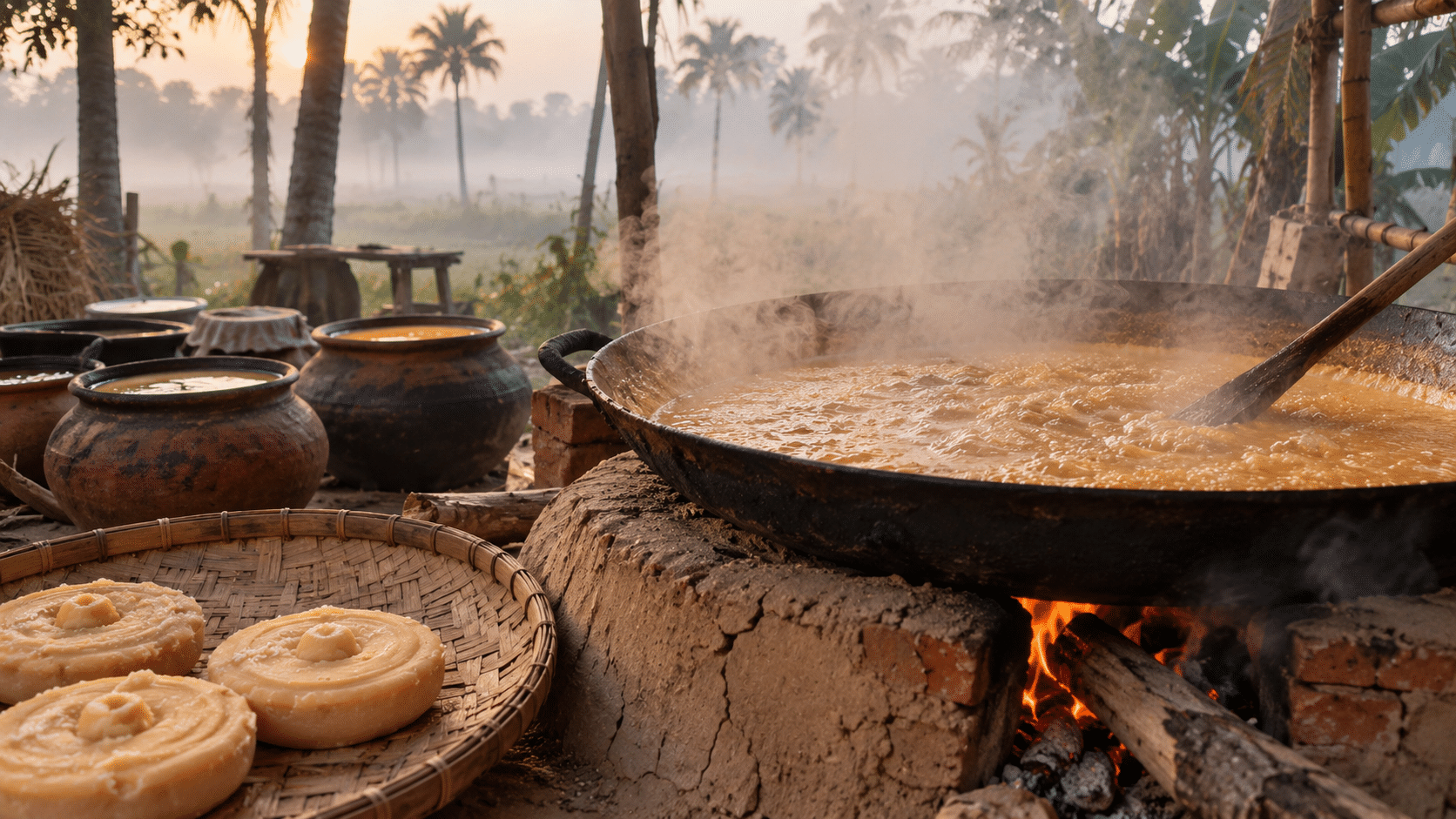
Hazari Gur is the kind of food story that makes a trip worth taking. Made from date palm sap in Jhitka and nearby villages of Harirampur, Manikganj, this prized jaggery has a heritage of nearly 200 years and has recently earned geographical indication status. If you love food, craft and village culture, a winter visit to the home of Hazari Gur is a sweet and memorable day out from Dhaka.
What Is Hazari Gur?
Hazari Gur is a traditional date palm jaggery known for its taste and aroma. It is produced mainly in the Jhitka, Gopinathpur and Uttarpara areas of Harirampur upazila. According to reports, a special process using the first sap collected from date palms gives Hazari Gur its character, and about 10 to 13 litres of sap are needed to make one kilogram. Manikganj even promotes itself with a district brand built around folk music and Hazari Gur.
The Story Behind the Name Hazari Gur
Local stories differ. One version says a man named Mohammad Hazari began making the jaggery around two centuries ago. Another credits a gachhi, or date sap collector, named Hazari Pramanik, and tells of a dervish who blessed the family’s work. A third explanation links the name to the Bangla word for thousand. There is also a popular claim that Queen Elizabeth II praised Hazari Gur during a visit to Dhaka. Since sources do not agree, enjoy these as living folklore.
What is clear is the family tradition. One producer in Jhitka says he is the fifth generation to make the white version of this jaggery, collecting sap for three days in a row for each batch.
Hazari Gur Gets GI Recognition
In 2026, news reports said Hazari Gur received geographical indication status, officially linking the name to Manikganj. Reports also differ on the registration number, so check the official Department of Patents, Designs and Trademarks record if you need an exact figure. For travellers, the key point is simple: the GI tag recognises that real Hazari Gur belongs to this region and to its sap collectors.
Your Hazari Gur Experience in Jhitka
Watch the process
Winter is the season when date sap is collected and boiled into gur. Early mornings can be foggy and cold, and villagers start work early. If you visit, ask permission before watching or taking photos, and be patient. It is a family craft, not a staged show.
Learn how to spot real Hazari Gur
Producers complain that fake gur is sold under the same name. Reports say the genuine product carries a brass seal, but fakers can copy it, so the safest approach is to buy directly from known producer families. Ask about the sap, the process and the family behind the brand.
Buy and taste
An older report quoted around Tk 800 per kilogram for pure gur. Prices now may differ, so ask before buying. Taste a small piece first if the seller offers it.
How to Reach the Home of Hazari Gur
Jhitka is in Harirampur upazila, Manikganj. Travel to Manikganj town first, then continue toward Harirampur and ask locally for Jhitka Bazar. Allow a full day from Dhaka, because roads and local transport can be slow. There are no formal tours that we could confirm, so go with respect and a flexible plan.
Best Time for a Hazari Gur Visit
Go between November and February, when the date sap season is active. The air is cool, and the days are suitable for rural travel.
Tips for Buying and Enjoying Hazari Gur
- Buy from named producer families, not from random roadside sellers.
- Carry cash in small notes.
- Store the gur in a clean, dry, airtight container.
- Use it in tea, pitha or milk sweets for the best flavour.
Quick Answers About Hazari Gur
Where is Hazari Gur made?
Mainly in Jhitka, Gopinathpur and nearby areas of Harirampur upazila, Manikganj.
Why is Hazari Gur special?
It is made from the first date palm sap by a nearly 200 year old family tradition and now has GI recognition.
Is Hazari Gur available all year?
Fresh production follows the winter date sap season, so supply is best in the cool months.
Pair It With More of Manikganj
Combine a Hazari Gur visit with the heritage stops in our Manikganj day trip guide.