
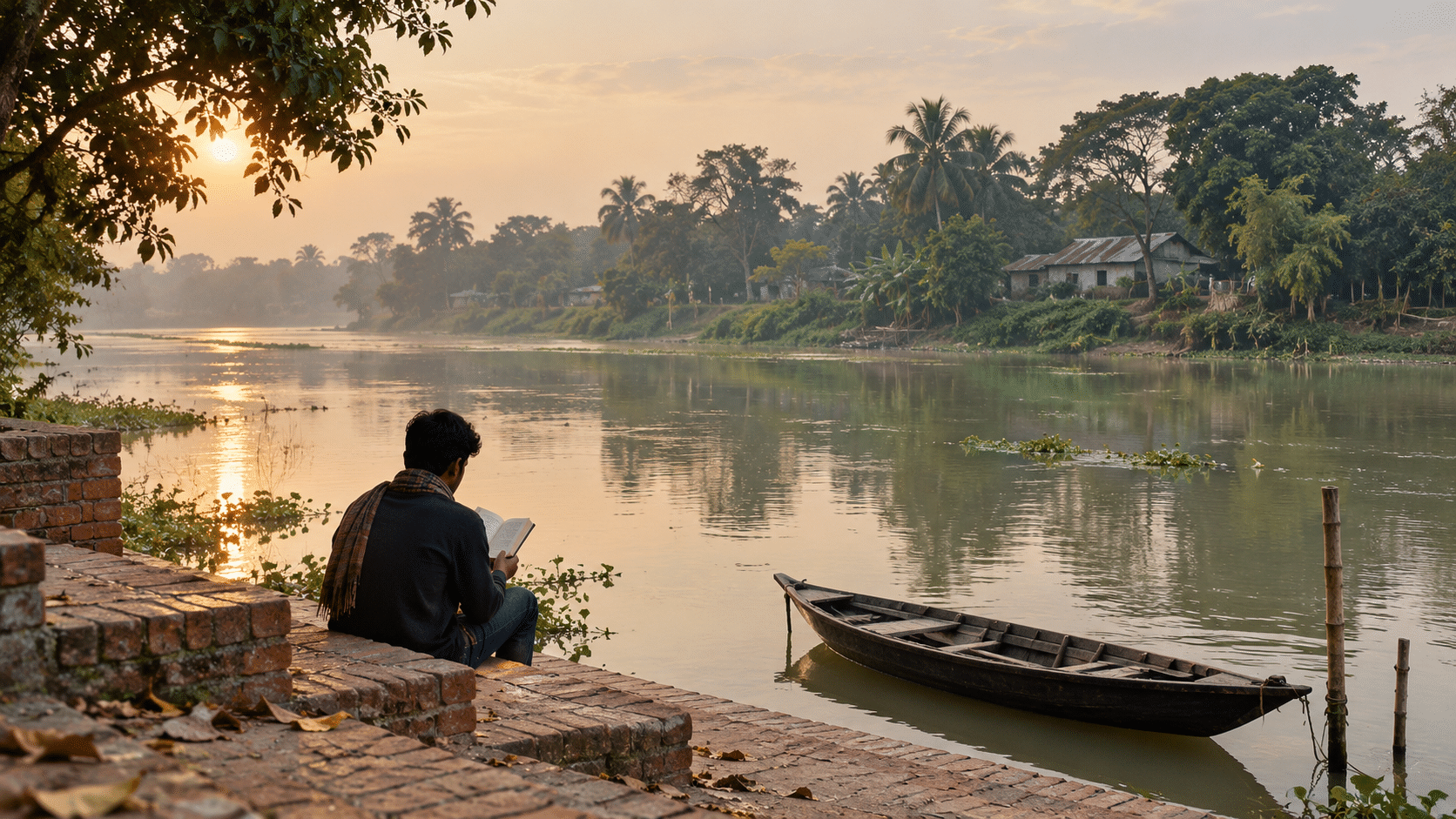
Most visitors tour the Jasimuddin house in forty minutes and leave. A Jasimuddin poetry walk takes the same ground and slows it down. You carry a few of the poet’s verses, stop where the setting matches the lines, and read them aloud in the place that inspired them. For anyone who learned his poems in school, it is the closest thing to stepping inside a book, and it turns an ordinary stop in Ambikapur, Faridpur into something personal.
What Is a Jasimuddin Poetry Walk?
It is a self-guided route through the family compound, grave, riverside and fair grounds at Gobindapur village, where Pallikabi Jasimuddin lived and is buried. The Kumar River runs in front, four old tin houses stand in the compound and a pomegranate tree shades his grave. Everything he wrote about, the village, the water and the fields, is still within sight, which is what makes the walk work.
Your Route, Stop by Stop
1. The Museum and Memorial Complex
Begin inside the museum next door. Photographs, books and manuscripts help you see the poet’s life before you walk the ground. Take ten minutes to read the displays on his early years.
2. The Four Tin Houses
Walk slowly through the old home. The rooms still hold things he used. Stand in the courtyard and read a few lines from Nakshi Kanthar Math, the long ballad of rural love and loss that made him famous. It is often translated into English as The Field of the Embroidered Quilt.
3. The Grave Under the Pomegranate Tree
Beside the road on the north side lies his grave. Pause here quietly, and if you like, read Kobor, one of his best-loved poems. Many local visitors come to pray, so keep your voice low.
4. The Kumar River and Sojan Badiyar Ghat
Walk to the river. You can look across both banks from the bridge, and one ghat here carries the name of his famous work Sojan Badiyar Ghat. Sit on the bank, read the poem and watch the village boats drift past.
5. Jasim Udyan
Finish at the open grounds beside the river, where the annual Jasim Palli Mela is held. Even outside fair time, it is a pleasant place for tea and quiet thought.
How to Prepare for Your Jasimuddin Poetry Walk
- Choose three or four poems in advance and save them on your phone or print them.
- If you do not read Bangla, look for English translations and read a short summary of each.
- Bring water, a hat and comfortable shoes for walking on earthen paths.
- Download the museum’s opening days. It may close on its weekly holiday.
Best Time for the Walk
November to February is the most comfortable, with cool mornings and soft afternoon light on the water. January is special, because the fortnight-long Jasim Palli Mela brings stalls, folk songs and recitation to the riverbank around the poet’s birthday. It is lively but crowded, so choose a weekday for a quieter Jasimuddin poetry walk.
Respectful Behaviour
- Treat the grave as a place of prayer, and keep conversation soft.
- Ask before photographing local families around the compound.
- Take your rubbish with you when you leave.
How Long It Takes
Allow about three hours. That gives you time for the museum, the houses, the grave, the river and an unhurried sit on the bank. Pair it with a sunset at Dholar Mor on the Padma to make a full cultural day.
Why Do It This Way?
Many visitors can name Jasimuddin, but few have heard his lines in the place they were written. A Jasimuddin poetry walk is a way to honour that bond between a poet and his village, and it is simple, cheap and open to everyone, whether you are a student, a teacher or just curious.
Quick FAQ
Where does the Jasimuddin poetry walk start?
At the museum and memorial complex in Gobindapur village, Ambikapur, Faridpur Sadar, a short ride from Faridpur town.
Do I need a guide?
No. The route is short and easy, and you can follow it on your own.
Can I join if I do not read Bangla?
Yes. Bring translations or summaries and focus on the setting and atmosphere.