
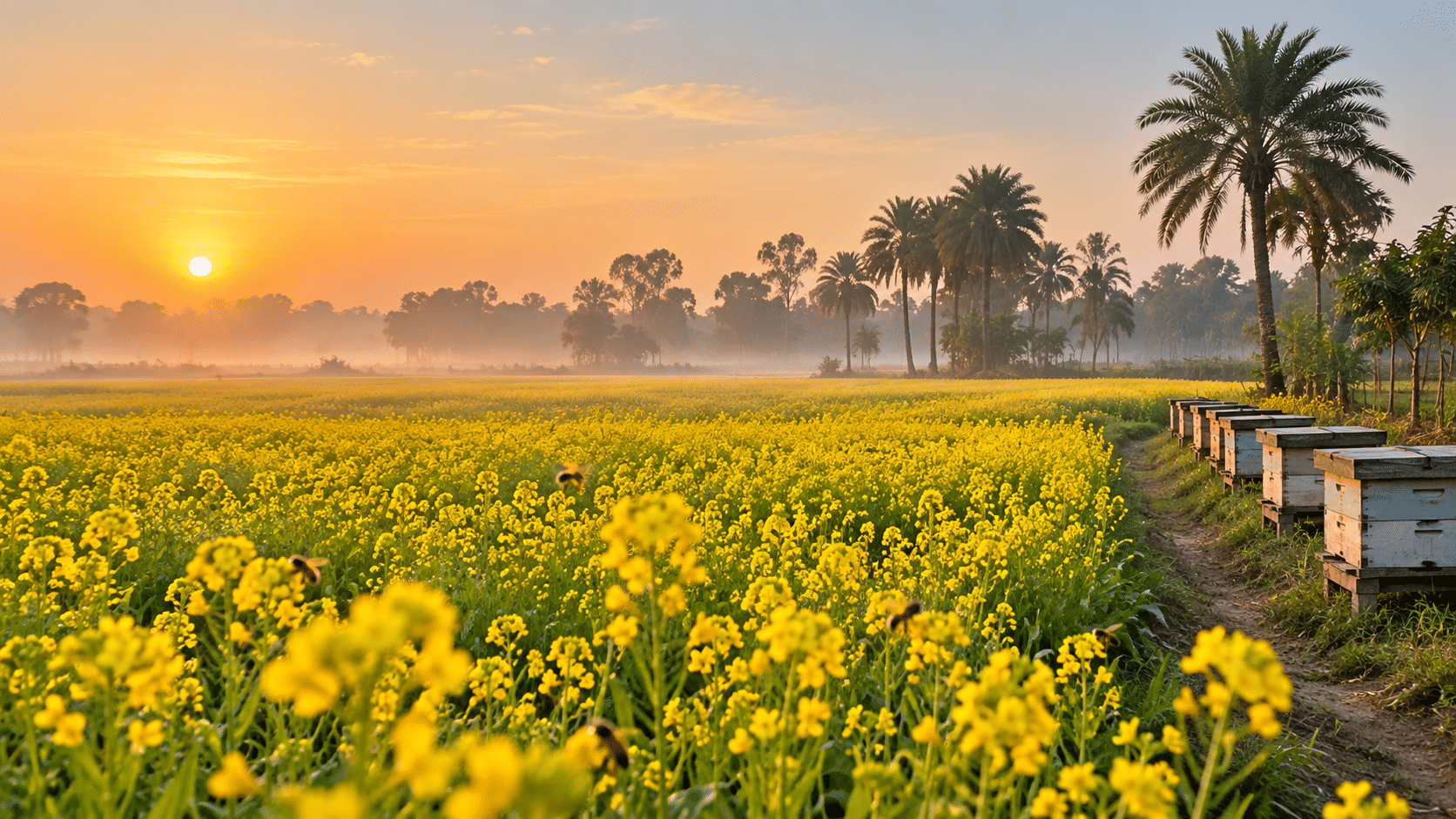
Manikganj mustard fields turn the countryside into a sea of yellow every winter, and the hum of bees makes the scene feel alive. If you enjoy photography, quiet village roads and local food, a trip to the Manikganj mustard fields is one of the simplest and most beautiful experiences near Dhaka. This guide explains when to go, what you will see and how to behave so the experience stays pleasant for everyone.
When the Manikganj Mustard Fields Bloom
Mustard flowers appear in the cool months. Reports say honey collectors begin arriving at the Manikganj mustard fields in the last week of November and continue to work until about the second week of January. A newspaper report from mid January also describes a vast area of the district in full bloom, with bee boxes placed beside the crops. So the best window to visit is roughly December to January, though exact timing changes with weather and planting.
Honey Season in the Manikganj Mustard Fields
The fields are not only pretty, they are productive. Commercial honey collectors from outside the district bring bee boxes to the Manikganj mustard fields each winter. In one season reported in 2023, around 100 collectors set up about 10,000 bee boxes across roughly 3,500 hectares, and the district collected about 165,000 kg of honey. Agriculture officials say bees also help raise mustard production by around 15 percent, so farmers and honey hunters benefit each other.
What You Will See at the Manikganj Mustard Fields
Yellow fields and bee boxes
Expect rows of wooden boxes set at the edge of the crop, with bees moving steadily between flowers. The sight is peaceful, but give the boxes plenty of space.
Honey collectors at work
Seasonal collectors travel from other districts and many return year after year. If you are polite, some may explain how honey is collected. Please do not disturb them during active work.
Village life
Between the fields you will find tea stalls, narrow roads and farmers going about their day. Morning mist often adds a soft glow.
Where to Look for Mustard Fields in Manikganj
Reports say collectors work in all seven upazilas of the district, and one visit described bee boxes along fields in Singair. Because fields shift each year, the best method is to ask local people, drivers or agriculture office staff where mustard is blooming. Combine your search with a drive toward Saturia and Baliati for easy access.
Photography Tips for the Manikganj Mustard Fields
- Shoot in the first hour after sunrise or the last hour before sunset.
- Use a long lens to capture bees without getting close.
- Walk on field edges and paths, never through the crop.
- Ask before photographing farmers or collectors.
Safety and Etiquette at the Manikganj Mustard Fields
- Stay calm and move slowly near bee boxes.
- Wear long sleeves and avoid strong perfume.
- Do not pick flowers or damage crops.
- Buy honey only from sellers you trust, and ask how it was collected.
How to Plan Your Manikganj Mustard Fields Trip
Travel to Manikganj by bus from Gabtoli, then use local CNG or rickshaw to reach rural roads. A private car gives you more freedom to stop wherever you see yellow. Start early, carry water and finish before dark.
Quick Answers About the Manikganj Mustard Fields
When is the best time to see the Manikganj mustard fields?
Roughly December to January, depending on the year.
Can I buy honey at the Manikganj mustard fields?
Often yes, from seasonal collectors, but ask carefully and buy only from trusted sellers.
Are the Manikganj mustard fields open to the public?
They are private farmland, so stay on paths and ask permission before entering.
Make It a Bigger Trip
Pair the fields with a Manikganj day trip to Baliati Palace for history and scenery in one outing.