
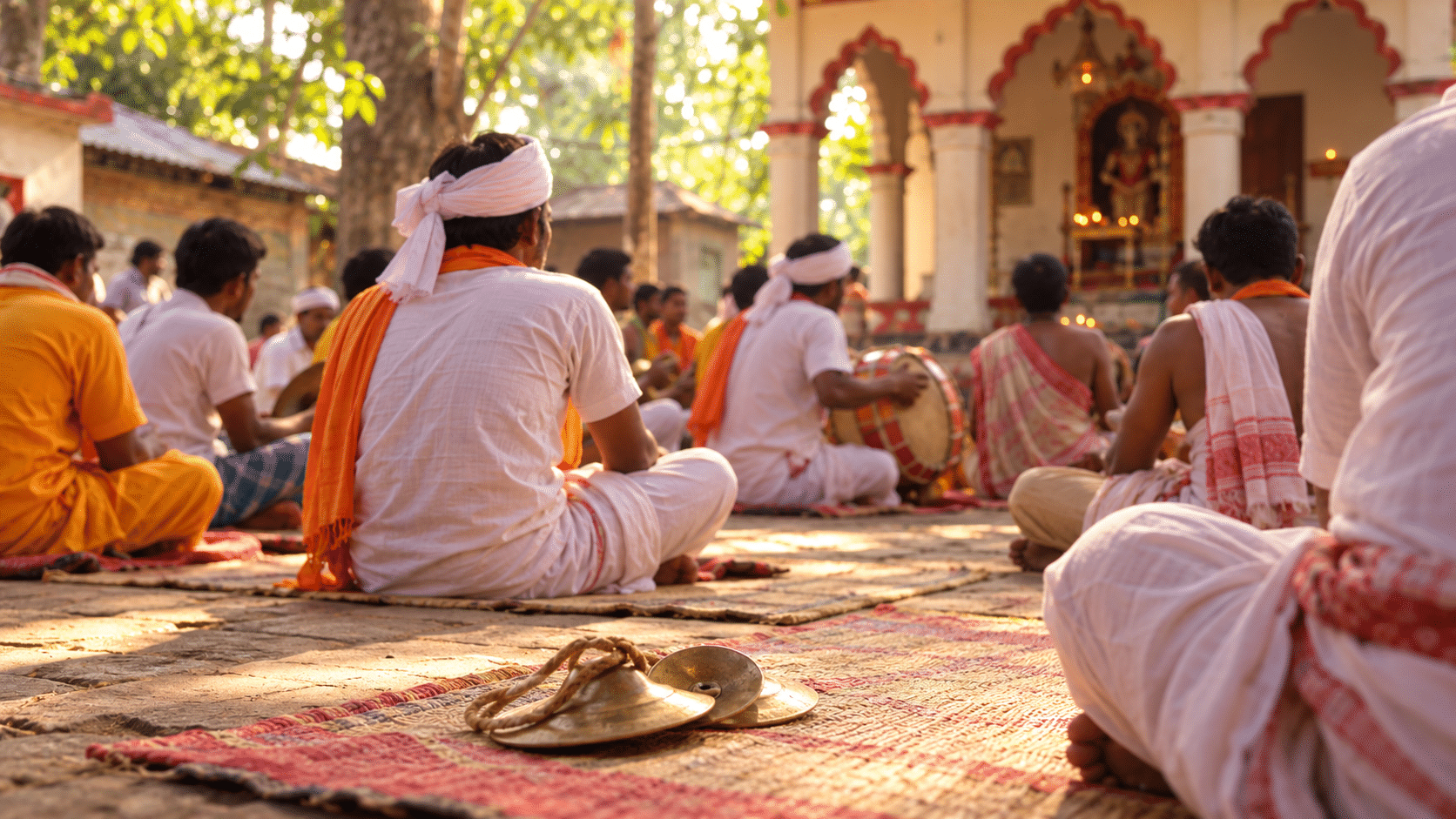
Matua kirtan is the heart of worship at Orakandi, and sitting quietly through a gathering is one of the most moving things you can do in Gopalganj. Matua kirtan is not a performance staged for visitors. It is prayer in the form of song, shared by ordinary families who have gathered in the Thakurbari for generations. This page describes what it feels like to listen, and how to be a respectful guest.
What Matua Kirtan Actually Is
The Matua faith, founded by Sri Sri Harichand Thakur, is built on devotion, equality and honest living. Followers do not rely on complicated rituals. Singing the praise of Hari is their way of prayer and meditation, and Matua kirtan is where that devotion becomes sound. The word “Matua” itself points to being absorbed in meditation of the divine.
The Feeling of a Hari Sabha
A gathering for Matua kirtan is often called a Hari Sabha, an assembly of Hari. Wednesday is the day of communal worship, so the Orakandi Thakurbari tends to feel livelier then. People sit close together on the ground, men and women side by side, and the singing begins softly. As the verses repeat, the voices grow stronger and the rhythm builds. Kirtan is often carried by simple percussion and small cymbals, and the beat settles into your chest even if you do not understand every word.
What You Hear at Matua Kirtan
You hear repeated verses, call and response, and the steady pulse of the rhythm. Some singers close their eyes. Others clap in time, and the older voices often lead. Banglapedia notes that Matua devotees sing kirtan in praise of Hari with such absorption that they almost lose themselves in it, and you can sense that intensity in the room.
What You See
You see plain clothes, folded hands and children sitting patiently beside their grandparents. You may see small offerings near the temple steps. Nothing is decorated for effect, and that honesty is exactly what makes the scene powerful.
What You Feel
- A slow calm, as the rhythm repeats and your breathing follows it
- A sense of equality, because everyone sits at the same level
- Warmth, when a stranger offers you a little space on the mat
- Quiet gratitude for being allowed to witness something sincere
What You Learn From Matua Kirtan Without Asking
Matua teachings place everyone on equal footing, whatever their caste or background. Both men and women can be spiritual teachers, known as gonsai. Sitting through Matua kirtan, you do not need a lecture to understand this. You see it in how people sit, who sings and who is listened to. It is a living lesson in social reform, taught through music instead of speeches.
A Listener’s Story
Picture a college student from Dhaka who arrives in Orakandi out of curiosity and sits at the back of a Hari Sabha. At first the student checks the phone. Ten minutes later the phone is in the bag. By the end, an elderly woman beside them offers a spoonful of prasad and says nothing at all. The student leaves unable to explain the feeling, only sure that it was real. That is what Matua kirtan does to many first-time listeners.
How to Be a Good Guest at Matua Kirtan
- Dress modestly and remove your shoes where asked.
- Sit quietly at the back and keep your phone silent.
- Ask before recording or photographing singers, especially women and elders.
- Accept prasad gratefully if it is offered, and say thank you.
- Leave a small, respectful donation if you wish, and never treat the gathering as entertainment.
Why This Experience Belongs on a Gopalganj Journey
Gopalganj is known for national heritage and green wetlands, but Matua kirtan shows you its living culture. It is calmer than the great Baruni Mela, more personal than a temple tour and easy to carry in memory long after the trip ends. If you only have room for one spiritual experience in the district, this is a strong choice.
Matua Kirtan FAQs
What is Matua kirtan?
It is devotional singing in praise of Hari, central to Matua worship, usually performed at gatherings called Hari Sabha.
Can visitors listen to Matua kirtan at Orakandi?
Respectful visitors are generally welcomed. Sit quietly, follow local customs and ask the caretakers if you are unsure.
Which day is Matua kirtan most active?
Wednesday is the day of communal worship for the Matua, so gatherings are usually livelier then.