
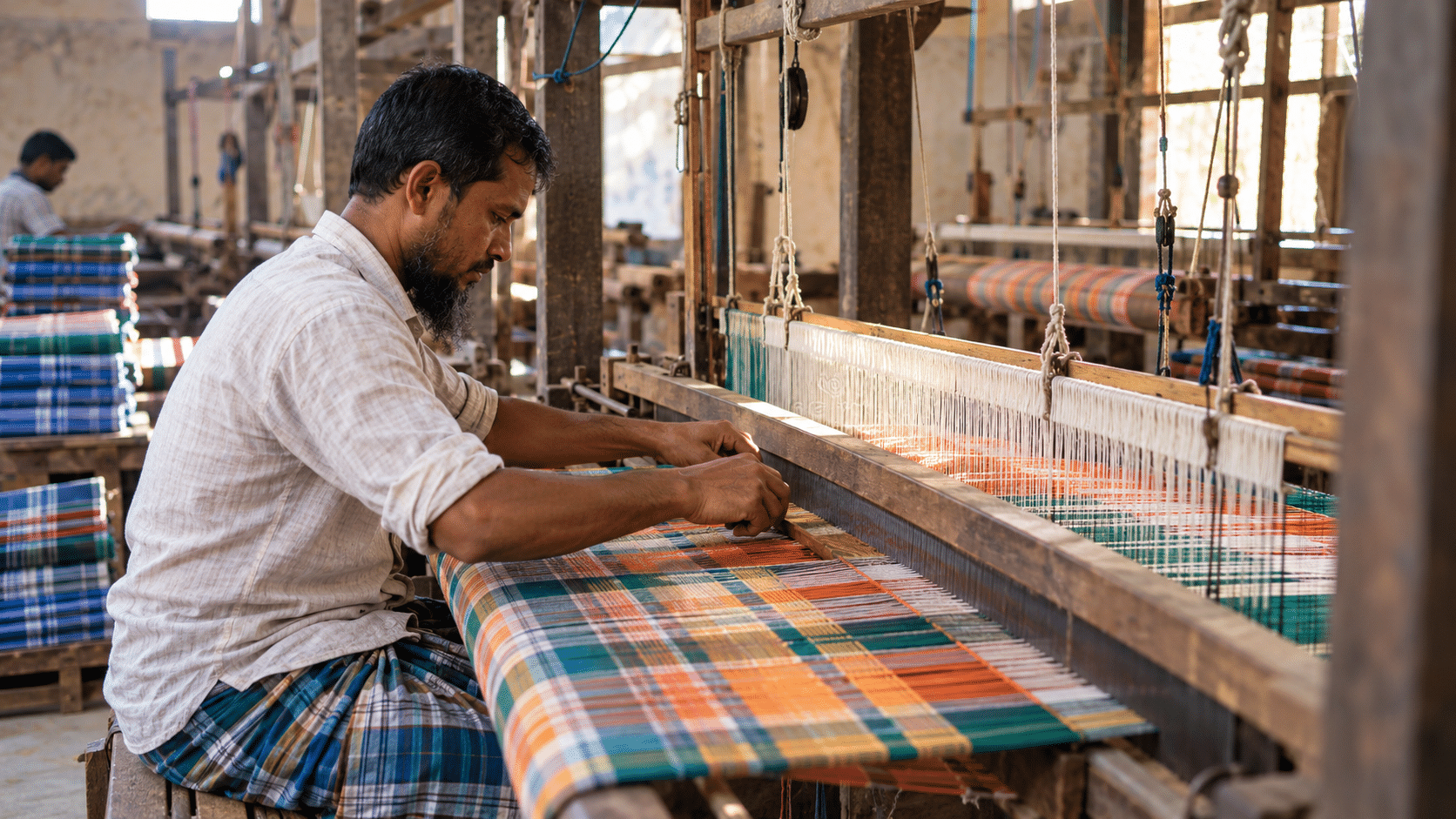
Narsingdi handloom weaving is a living craft that you can still watch at work. In the weaving neighbourhoods of Madhabdi, the steady clack of shuttles comes from inside homes and small sheds, and cloth for lungi, saree, gamcha and bed sheets takes shape thread by thread. A visit to see Narsingdi handloom weavers is less like a museum trip and more like walking into someone’s workplace, so a little preparation makes it better for everyone.
Why Narsingdi Handloom Matters
Narsingdi has long been famous for textiles. Banglapedia notes that the region once produced fine muslin and thread, and that weaving continued even after cheap imported yarn changed the trade. Today, Narsingdi handloom and powerloom units supply markets across Bangladesh, and the nearby Baburhat wholesale market moves much of the cloth. Seeing the weavers makes you value every piece you buy, and it adds meaning to Narsingdi handloom as a living tradition.
What Happens in a Narsingdi Handloom Workshop
Weaving follows a simple logic, even if the skill takes years to learn. Long threads called the warp are stretched across the loom. The weaver then passes a shuttle carrying the weft thread back and forth, pressing each line tight. Pedals or hand movements lift different warp threads to build the pattern, and checks and stripes come from changing colours.
- Yarn preparation: thread is sorted, dyed and wound before weaving.
- Warping and setup: the loom is prepared with the right number of threads and colours.
- Weaving: the shuttle moves, the pattern grows and the cloth slowly lengthens.
- Finishing: the fabric is cut, folded and sent to shops and wholesale markets.
How to Experience Narsingdi Handloom Respectfully
Ask Before You Enter
Many weaving units are inside homes. Always greet the owner, introduce yourself and ask whether you may watch. Do not walk in uninvited, and do not assume anyone has time to explain.
Photograph With Permission
Ask before taking photos of people at work, and show them the picture if they are curious. A friendly attitude often leads to an invitation to see more of the process.
Buy to Support the Weavers
If a weaver or small shop spends time with you, consider buying a piece. Fair payment is the best thank-you for a Narsingdi handloom visit. Avoid hard bargaining where a weaver is selling directly.
A Day-Out Story to Imagine
Picture a small shed in Madhabdi in the morning. A weaver adjusts the threads, checks the tension and starts the rhythm of the shuttle. Within minutes, a stripe of colour appears. A child sits nearby watching, and a neighbour drops in to talk about cloth rates. That ordinary scene is the heart of the Narsingdi handloom experience, and it is why visitors often remember the people more than the product.
Questions to Ask a Weaver
- How long does one lungi or saree take to weave?
- What is the difference between your handloom and powerloom work?
- Where does your yarn come from?
- Which season or festival is your busiest?
- Who teaches new weavers in the family?
Plan Your Narsingdi Handloom Visit
- Where: Madhabdi and the weaving areas around Narsingdi Sadar.
- Best time: mornings, between October and March, when it is cooler and workshops are active.
- Time needed: one to two hours.
- Getting there: bus toward Narsingdi or Bhairab on the Dhaka-Sylhet highway, then a short CNG or rickshaw ride.
- Tip: go with a local contact or driver who can introduce you.
Combine Narsingdi Handloom With Other Stops
After meeting the weavers, walk through the Madhabdi cloth market, then continue to the Baburhat wholesale market to see where the cloth travels next. For heritage lovers, our Narsingdi historical places trail is a natural next step.
Narsingdi Handloom FAQs
Where can I see Narsingdi handloom weaving?
The weaving neighbourhoods of Madhabdi and the surrounding Narsingdi Sadar area are the best places to start.
Can tourists visit a weaving workshop?
Often yes, if you ask politely, though access depends on the owner and the day’s workload.
Is Narsingdi handloom the same as powerloom?
No. Handloom cloth is woven by a person working the loom, while powerloom uses machine power, so the two differ in speed, price and feel.
What can I buy from Narsingdi handloom weavers?
Lungi, saree, gamcha and bed sheets are the most common items.