
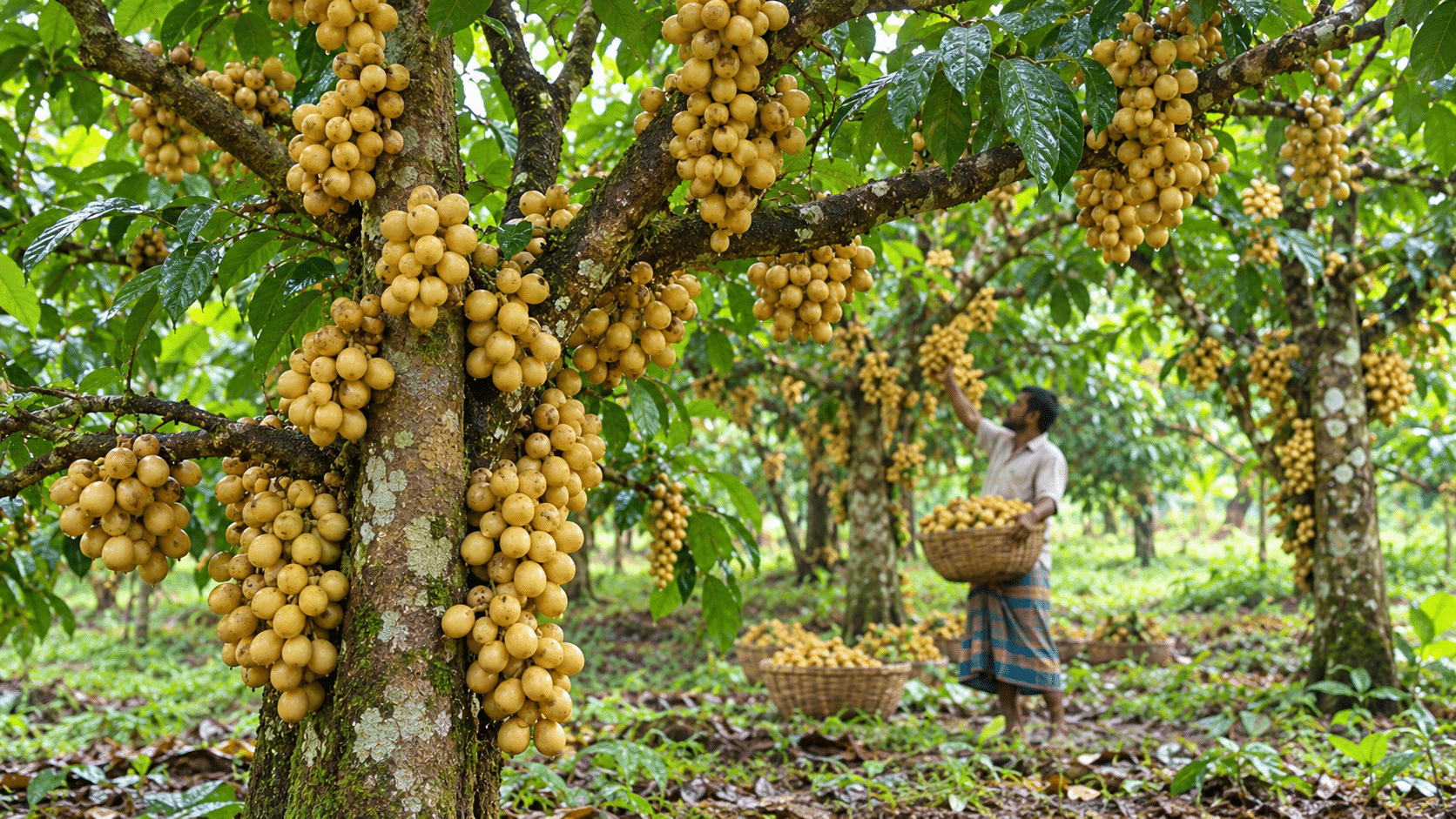
Narsingdi lotkon season is one of the sweetest times to visit the district. Lotkon, also called Burmese grape, is a tangy-sweet fruit that grows in clusters, and Narsingdi is widely known as the land of lotkon. When the harvest arrives, orchards turn into colourful stops for visitors, and markets fill with baskets of fruit. This guide shows you how to enjoy Narsingdi lotkon season in a way that is fun, respectful and useful.
Why Narsingdi Lotkon Is Special
Lotkon grows across Bangladesh, but reports describe Narsingdi’s lotkon as different in yield, taste and size, thanks to the region’s soil and climate. The fruit is also among the products from Narsingdi that appear on Bangladesh’s list of registered geographical indication (GI) goods, along with the Amritsagar banana. That recognition ties the fruit’s name to its place of origin.
When Is Narsingdi Lotkon Season?
The harvest runs between the Bengali months of Joishtho and Shrabon, which is roughly mid-May to mid-July. During this window, tourists visit orchards in large numbers. Because the monsoon begins around then, expect heat, humidity and sudden rain, and plan your Narsingdi lotkon season trip with that in mind.
What to Do in Narsingdi Lotkon Season
- Visit a lotkon orchard with a farmer’s permission and see the fruit growing in clusters.
- Taste fresh lotkon from a local seller and compare sweet and sour fruits.
- Take photographs of orchards, baskets and the people who harvest the fruit.
- Ask farmers how they judge ripeness and when they pick.
- Buy fruit directly from growers or local markets as a gift for home, a nice way to carry Narsingdi lotkon season back with you.
How to Eat Lotkon
Peel the thin skin, pop out the juicy segments and enjoy the sweet and sour flavour. Locals often eat it fresh, and the tangy taste is a good match for hot, humid days. Avoid eating unwashed fruit from unknown sources.
A Taste of the Season
Imagine walking beneath dense green trees with bunches of pale fruit hanging low, while a farmer shows you which clusters are ripe. The first bite is sour, then sweet, and the juice runs down your fingers. That small moment is why many people plan a trip for Narsingdi lotkon season every year.
More Narsingdi Fruit Stops
Amritsagar Banana
The Amritsagar banana is another GI-registered Narsingdi product. Reports describe a sweet smell and taste, and people have grown this banana in the district for centuries.
Colombo Lemon
The scented Colombo lemon is grown commercially in Shibpur, Belabo, Monohardi and Raipura and is available almost all year. It is widely grown in Narsingdi, but it does not appear on the registered GI list reported in recent news.
Tips for a Respectful Orchard Visit
- Orchards are private farms, so always ask before entering or picking fruit.
- Wear closed shoes, as the ground can be wet and muddy.
- Carry a hat, water and an umbrella for sun and rain.
- Buy fruit instead of picking it, and pay a fair price.
- Keep children close to roads, ponds and tree roots.
How to Plan Your Narsingdi Lotkon Season Trip
- Best months: mid-May to mid-July.
- How to find orchards: ask local drivers, shopkeepers or the Upazila Agriculture Office, since orchards are spread across the district.
- Time needed: a few hours for orchards and tasting.
- Getting there: reach Narsingdi by bus or train from Dhaka, then hire a CNG or car.
Combine Narsingdi Lotkon Season With Heritage Stops
Lotkon season pairs naturally with the Parulia Shahi Mosque and the Baburhat cloth market. If you visit in monsoon, choose indoor-friendly stops and keep your schedule flexible.
Narsingdi Lotkon Season FAQs
When is Narsingdi lotkon season?
Roughly mid-May to mid-July, between Joishtho and Shrabon in the Bengali calendar.
Why is Narsingdi lotkon famous?
The district is known as the land of lotkon, and its fruit is noted for yield, taste and size.
Is Narsingdi lotkon season good for families?
Yes, if you plan around heat and rain and keep children close to roads and ponds.
Can tourists visit lotkon orchards?
Yes, with the owner’s permission, and many visitors come during harvest.