
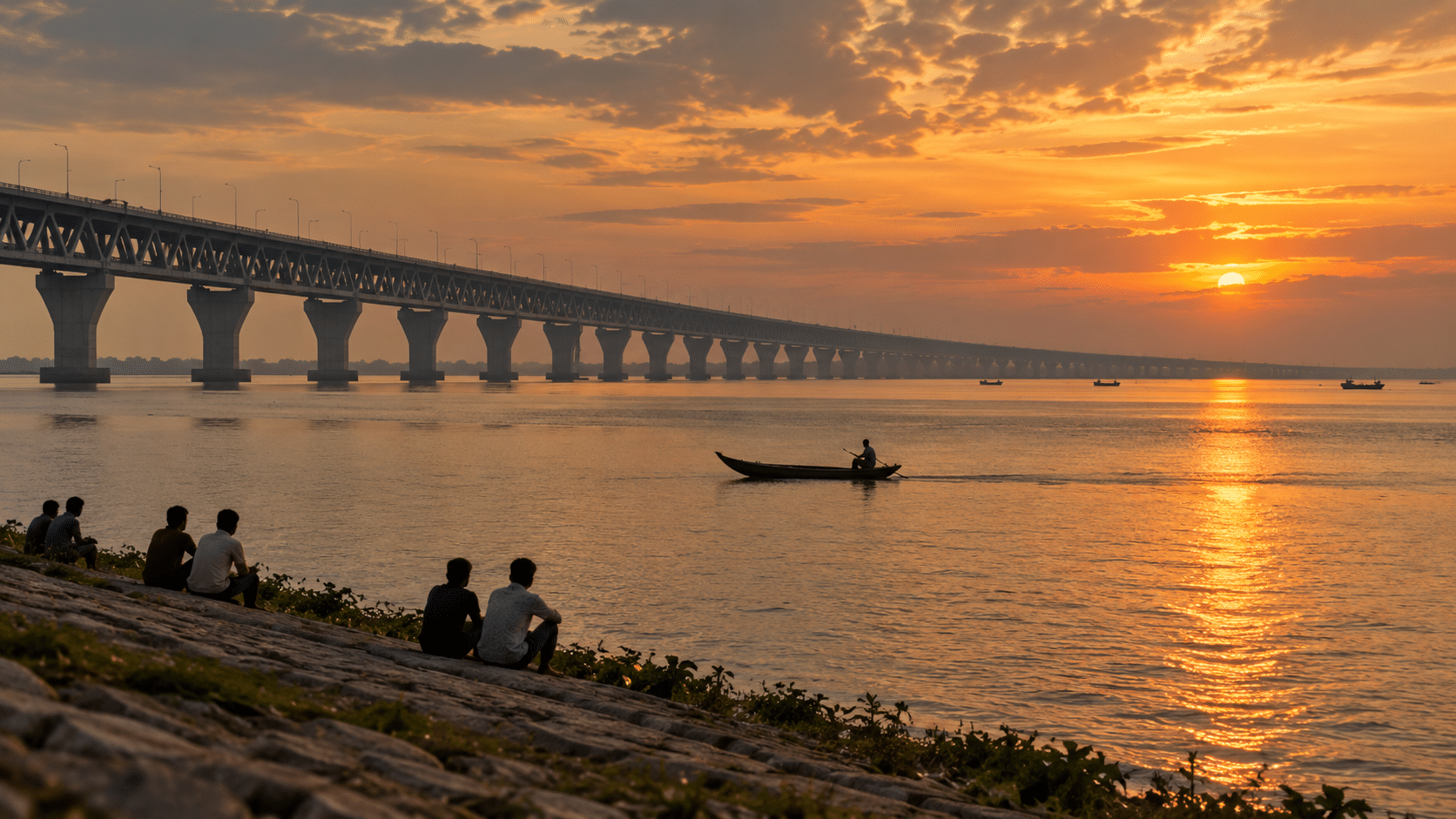
A Padma Bridge sunset is one of the simplest and most beautiful evenings you can plan in Shariatpur. You do not need a ticket, a guide or a big budget. You only need a good spot on the Jajira side, a light jacket and a little patience while the sky changes colour. This guide shows you how to enjoy a Padma Bridge sunset with comfort, good photos and a relaxed mood.
Why a Padma Bridge Sunset Feels Special
The Padma Bridge is about 6.15 kilometres long, and from the Shariatpur side you see its steel spans stretch across one of the widest rivers in the country. When the sun drops low, the water turns from silver to gold, and the bridge becomes a dark, strong line against the sky. A Padma Bridge sunset is not loud or crowded with rides. It is a calm show that anyone can enjoy, from school students to retired grandparents.
When to Arrive
In mid-winter, sunset in Bangladesh usually falls somewhere between 5:10 and 5:40 PM, but please check a weather or sun app for your exact date. Plan to reach the riverside at least an hour early. This gives you time to find a good seat, buy a snack and watch the light slowly change. The best colours often appear in the twenty minutes after the sun touches the horizon, so do not leave too soon.
Where to Stand for the Best View
- Naodoba riverside: The easiest spot, with food stalls and seating areas close by.
- Embankment path: Walk a little along the Padma embankment for a quieter view with fewer people.
- Open river edge: Choose a safe, flat spot away from the water and never stand on slippery banks.
A Simple Evening Plan for a Padma Bridge Sunset
- Reach Naodoba around 3:30 PM and take tea or a snack.
- Walk to your chosen viewing spot by 4:15 PM.
- Take a few early photos while the light is still soft.
- Put the camera down for ten minutes and just watch the sky.
- Wait for the colours after sunset, then head back before it gets too dark.
Photo Tips for a Padma Bridge Sunset
- Shoot a few frames before sunset, during it and after it. Each one looks different.
- Keep the horizon straight and include something in the foreground, such as a boat or a person sitting by the river.
- Lower your phone exposure a little so the sky does not turn white.
- Use the grid lines on your camera to place the bridge on one third of the frame.
- Ask before photographing strangers, and avoid using a flash.
What to Bring
- A light jacket or shawl, because the river wind gets cold quickly.
- Drinking water and some cash for small stalls.
- A power bank, since long photo sessions drain your phone.
- A small bag for your litter.
Safety and Respect
Stay away from the water edge and never swim in the Padma. Keep children close, especially near steps and slopes. Do not stop or park on the roadway near the bridge, and follow local traffic rules. Take your litter with you so the next visitor can enjoy a Padma Bridge sunset as much as you did.
Best Season for a Padma Bridge Sunset
November to February gives the clearest skies and the most comfortable air. In the monsoon, clouds can create dramatic colours, but rain and wind may cut the evening short. Weekdays are calmer than weekends.
Make It a Fuller Trip
Pair your sunset with a visit to the Naodoba riverside and a street food stop. On the next day, you can explore the Sureswar shrine and the fantasy park in Naria.
Quick Answers About a Padma Bridge Sunset
Where can I watch the Padma Bridge sunset in Shariatpur?
The Naodoba riverside in Jajira is the easiest place, and the embankment path offers a quieter option.
Is a Padma Bridge sunset free to watch?
Yes, the riverside is an open public area. You only pay for food, transport or any local services.
How long should I stay?
Plan for about two to three hours, including the arrival, the sunset and a short snack stop.