
Close Menu
Bangladesh Branding
  • Destinations
    • By Region
      • Dhaka
      • Chattogram
      • Sylhet
      • Rajshahi
      • Khulna
      • Barishal
      • Rangpur
      • Mymensingh
    • By Landscape
      • Beachs
      • Hills
      • Forests
      • Wetlands
      • Rivers
      • Historical Sites
      • Archaeological Sites
      • Religious Places
    • Popular Now
      • Cox’s Bazar
      • Sundarbans
      • Sajek
      • Bandarban
      • Sylhet
      • Srimangal
  • Experiences
  • Places to Visit
  • Festivals and Events
  • Plan Your Trip
  • Travel Stories
    • Travel Guide
      • Travel Tips
      • Hotels
      • Flights
      • Local Transport
      • Currency
    • News and Updates
      • News
      • Business and Brands
      • Buy Bangladeshi
    • Culture and Heritage
      • People
      • Culture
      • Food
      • Heritage Moshque
      • Arts and Crafts
  • Map
Facebook X (Twitter) Instagram YouTube
Facebook X (Twitter) Instagram
Bangladesh Branding
Subscribe
  • Destinations
    • By Division
      • Dhaka
      • Chattogram
      • Sylhet
      • Rajshahi
      • Khulna
      • Barishal
      • Rangpur
      • Mymensingh
    • By Landscape
      • Beachs
      • Hills
      • Forests
      • Wetlands
      • Rivers
      • Historical Sites
      • Archaeological Sites
      • Religious Places
    • Popular Now
      • Cox’s Bazar
      • Sundarbans
      • Sajek
      • Bandarban
      • Sylhet
      • Srimangal
    • Featured Destinations
  • Experiences
  • Places to Visit
  • Festivals and Events
  • Plan Your Trip
  • Travel Stories
    • Travel Guide
      • Travel Tips
      • Hotels
      • Flights
      • Local Transport
      • Currency
    • News and Updates
      • News
      • Business and Brands
      • Buy Bangladeshi
    • Culture and Heritage
      • People
      • Culture
      • Food
      • Heritage Moshque
      • Arts and Crafts
  • Map
Bangladesh Branding
Home » Experiences » Watching the Padma Jamuna Confluence at Goalanda

Watching the Padma Jamuna Confluence at Goalanda

October 20, 2026No Comments4 Mins Read
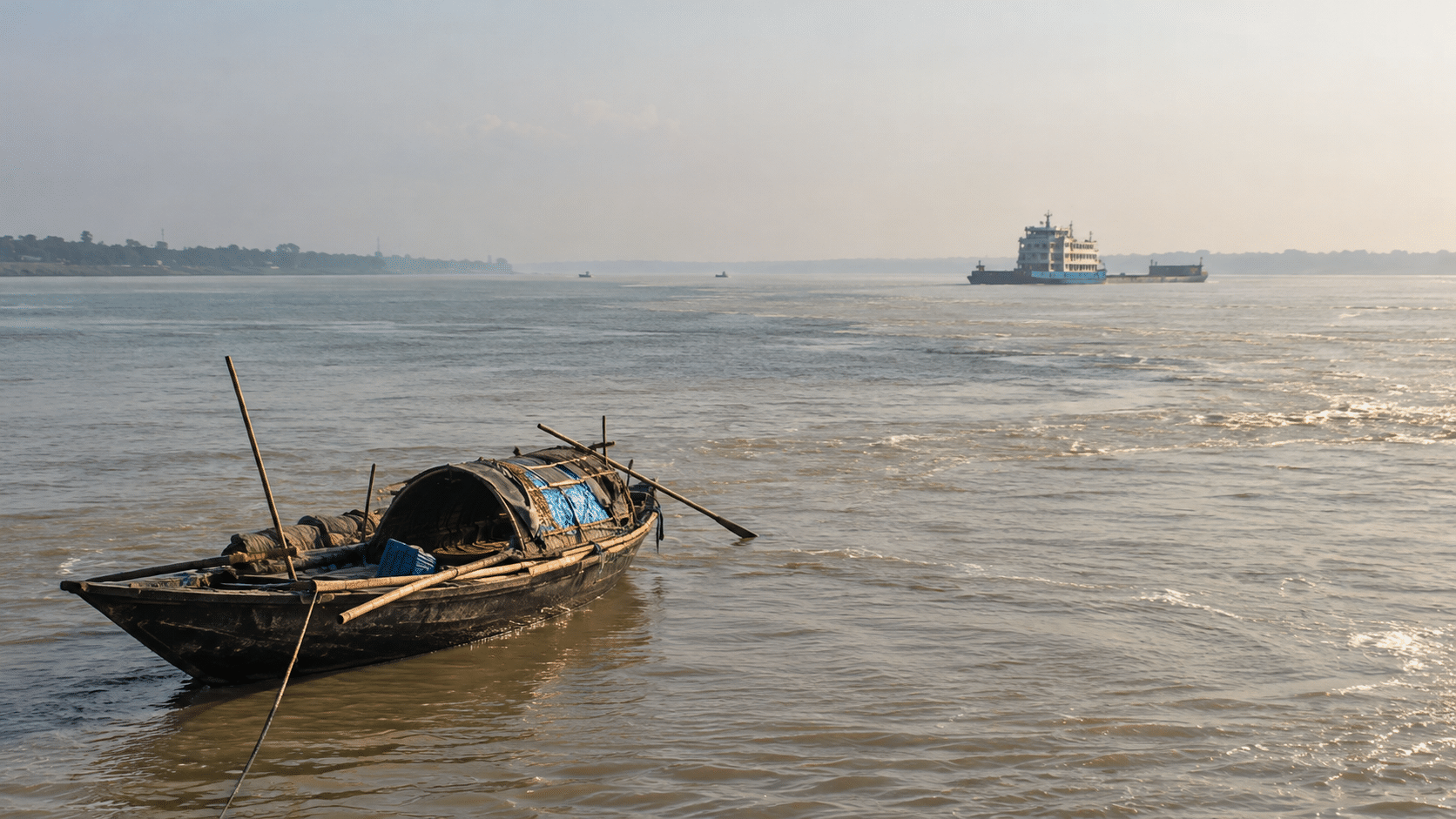
Padma Jamuna Confluence at Goalanda
Share
Facebook Twitter LinkedIn WhatsApp Copy Link

Watching the Padma Jamuna confluence is one of those experiences that makes you go quiet. Two of the biggest rivers in the region slide into each other near Goalanda in Rajbari, and the water simply feels endless. You do not need a plan or a guide. You only need a bank to stand on and a little patience, and the Padma Jamuna confluence will do the rest.

What the Padma Jamuna Confluence Feels Like

The first feeling is scale. The Padma, which carries the Ganges into Bangladesh, meets the Jamuna, the great channel of the Brahmaputra, and together they form a river so wide that the far bank can fade into haze. Standing at the edge, you notice how small everything else looks: boats become dots, ferries become toys, and people on the shore start speaking more softly.

The air feels different too. A cool, damp breeze rolls in off the water, carrying the smell of wet sand and river weed. On a winter morning it can feel almost like standing at the edge of a sea.

What You Will See at the Padma Jamuna Confluence

Water that changes colour

The river is never one colour. In morning light it can look silver, by midday a muddy green-brown, and in the golden hour a warm copper. Small ripples mark where currents meet, and sometimes you can see the line where one stream of water slides under another.

Boats, big and small

Country boats with patched sails, fishing boats and heavy cargo vessels share the same stretch. The big ferries at nearby Daulatdia move slowly, almost like floating buildings. Watching them is hypnotic, and you will probably lose track of time.

Birds and open sky

River birds skim low over the water, and in the cooler months the sky is often wide and clear. Photographers love this place for exactly that reason: the horizon is almost empty, so every cloud and boat stands out.

The Story Behind the Meeting of Rivers

Goalanda was once an important river port, and old accounts describe it as sitting at the junction of the Padma and the Brahmaputra. When the railway reached Goalundo in 1871, travellers swapped trains for steamers here. Knowing this history changes the experience. You are not only looking at water; you are looking at one of the old gateways of Bengal.

Who Will Enjoy the Padma Jamuna Confluence Most

  • Photographers who love big skies and soft light.
  • Slow travellers who enjoy sitting still and watching.
  • History lovers curious about old river ports.
  • Families who want an easy, open-air outing by the water.

Little Things Worth Knowing

  • Cooler months give the clearest air and the softest light.
  • Keep well back from soft, wet riverbank edges.
  • Carry a cap and water, as there is little shade.
  • Ask permission before photographing people on the bank.

Why the Padma Jamuna Confluence Rewards Slow Travel

Some places ask you to do things. The Padma Jamuna confluence asks you to stop. Give it twenty quiet minutes and the view starts to change: you notice slow currents, drifting boats, light moving across the water and the way the river seems to breathe. Many visitors say the Padma Jamuna confluence stays in their memory longer than louder attractions. If you are tired of rushing from spot to spot, this is the place to practise sitting still, and the Padma Jamuna confluence is generous to anyone who does.

Frequently Asked Questions

Where can you see the Padma Jamuna confluence in Rajbari?

The Padma Jamuna confluence can be viewed near Goalanda and Daulatdia in Rajbari District, Dhaka Division.

Why is the Padma Jamuna confluence special?

It is where two of the region’s greatest rivers meet, creating a vast stretch of water with a long history as a river port gateway.

What makes the Padma Jamuna confluence good for photography?

The wide horizon, shifting river light and busy boat traffic create dramatic, uncluttered scenes.

Search
Recent Post
  • Shahriar Zaman Joins the Board of Directors of Global Creative Foundation! November 16, 2026
  • Chandpur District: Where the Great Rivers Meet September 13, 2026
  • Noakhali District: Islands, Estuary, and Gandhian Heritage September 13, 2026
  • Feni District: Migratory Birds, Ancient Tanks, and the Hill-Plains Edge September 13, 2026
  • Khagrachari District: Cave Country, Tribal Heartland, and Hill Panoramas September 9, 2026
  • Cumilla District: Ancient Buddhism and the Highway City September 9, 2026
  • Rangamati District: The Lake District of Bangladesh September 8, 2026
  • Cox’s Bazar District: The World’s Longest Beach September 8, 2026
  • Chattogram District: Bangladesh’s Port City and Hill Country Gateway September 8, 2026
  • Jhenaidah District: Ancient Mosques and Riverine Landscapes September 7, 2026
  • Magura District: Quiet Rivers and Zamindari Remnants September 7, 2026
  • Narail District: Where Art Lives on the River September 5, 2026
  • Kushtia District: The Soul of Bangladesh’s Folk Tradition September 3, 2026
  • Jashore District: The Flower Capital of Bangladesh September 2, 2026
  • Khulna District: Gateway to the World’s Largest Mangrove Forest September 2, 2026
Who We Are

Bangladesh Branding, your premier source for uncovering the treasures of Bangladesh, a land where vibrant culture meets breathtaking landscapes and warm hospitality.

Facebook X (Twitter) Instagram YouTube LinkedIn
Explore
  • Destinations
  • Places to Visit
  • Experiences
  • Travel Stories
  • Events
  • Crafts
Plan your trip
  • Trip Planner
  • Travel Guide
  • Best Time to Visit
  • How to Reach
  • Travel Tips
About
  • About Us
  • Contact Us
  • Partner With Us
  • Media / Press
  • Submit a Place
Search
Copyright © 2026 Bangladesh Branding | Developed by Business Brillianz.

Type above and press Enter to search. Press Esc to cancel.

imunify-bot-check