
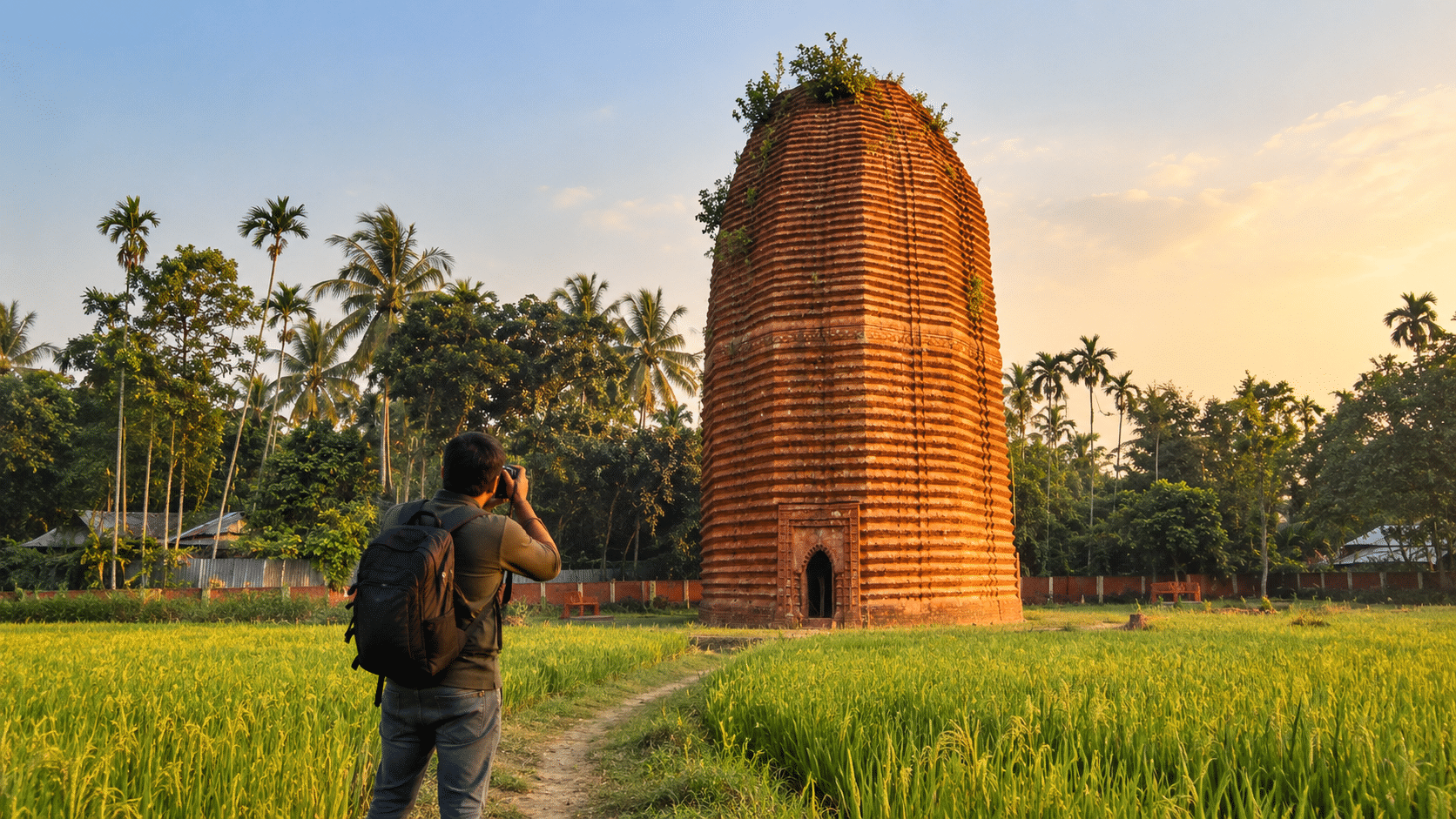
If you want fresh frames that are not another crowded fort or tea garden, photography in Faridpur is a quiet gift. Within a short drive you can shoot a twelve-sided terracotta tower in open paddy fields, a ten-domed Sultani mosque reflected in a giant pond, a ruined zamindar mansion, a village poet’s riverside and the wide Padma at sunset. This two-day trail shows you where to go, when the light works and how to shoot respectfully.
Why Photography in Faridpur Works
Faridpur sits just a few hours from Dhaka across the Padma Bridge, so you can reach it for a weekend. Its monuments are lightly visited, which means clean compositions with few people in frame. Winter brings low sun, soft mist and clear skies, all of which help.
Day One: Heritage Trail
Morning: Pathrail Mosque, Bhanga
Arrive early so the light lands softly on the old brick. Shoot the ten-domed mosque from across the large Pathrail Dighi to catch its reflection, then move closer for terracotta traces on the walls. Keep to the outside unless you have permission to shoot inside.
Late Morning: Satoir Mosque, Boalmari
The nine domes and sunken entrances make good detail shots. The mosque has been heavily renovated, so focus on shapes, the old well and the local village setting.
Afternoon: Mathurapur Deul, Madhukhali
This is the star of any photography in Faridpur. The twelve-sided tower glows orange in late afternoon light, with carved panels of horses, dancers and mythical figures. Use a wide lens for the full tower in the fields, and a short zoom for panels. Never touch or climb the structure, since it is fragile and some bricks are already missing.
Day Two: Town, Ruins and River
Morning: Kanaipur Shikdar Bari
Morning mist and long shadows suit the broken arches and peeling plaster of this old zamindar house on the Kumar River. Stay on open ground, because many walls are unstable, and do not enter damaged rooms.
Midday: Ambikapur and the Kumar River
Photograph the tin-roofed homestead of Pallikabi Jasimuddin and the quiet ghat on the river. Ask before photographing local families who live nearby.
Sunset: Dholar Mor on the Padma
End with the best light of the trip. Fishing boats, sandbars and wide skies make Dholar Mor a natural finale. In December, colourful kites fill the sky during the local festival.
Gear and Settings
- Wide lens: for towers, mosques and river scenes.
- Short telephoto: for terracotta panels, boats and distant fishermen.
- Tripod: optional, but helpful in low light at dawn.
- Polarising filter: cuts glare on the Padma and the dighi.
- Drones: check current local rules and permissions first.
Best Months and Light
November to February gives cool mornings and golden afternoons. Aim to shoot monuments within two hours after sunrise or before sunset. Avoid the monsoon from June to September, when roads turn muddy and skies are flat.
Photography Ethics
- Do not touch, lean on or climb protected monuments.
- Do not photograph people at prayer, and ask before shooting inside mosques or ashrams.
- Always ask before photographing families or children.
- Carry out all your rubbish.
How to Get Around
Hire a CNG or car for each day. The heritage sites lie in different directions, and local buses are irregular to villages. Start before 7:00 AM both days to match the best light.
Quick FAQ
Is photography in Faridpur allowed at the monuments?
Yes, outdoors. Ask permission for interiors, and follow any signs or staff instructions.
Can I do this in one day?
You can cover two or three spots, but two days gives you better light and less rushing.
What is the single best spot?
Mathurapur Deul at late afternoon, followed by a Padma sunset at Dholar Mor.